Plato's Philosophy Explained
Plato's Life
An Aristocrat's Beginning
Plato was born around 428 BCE in Athens, into a world of privilege and power. His family was one of the most distinguished in the city. His father, Ariston, traced his lineage back to the early kings of Athens, while his mother, Perictione, was related to the famous lawmaker Solon. With relatives like Critias and Charmides, who were prominent figures in Athenian politics, a public life seemed almost inevitable for the young Plato.
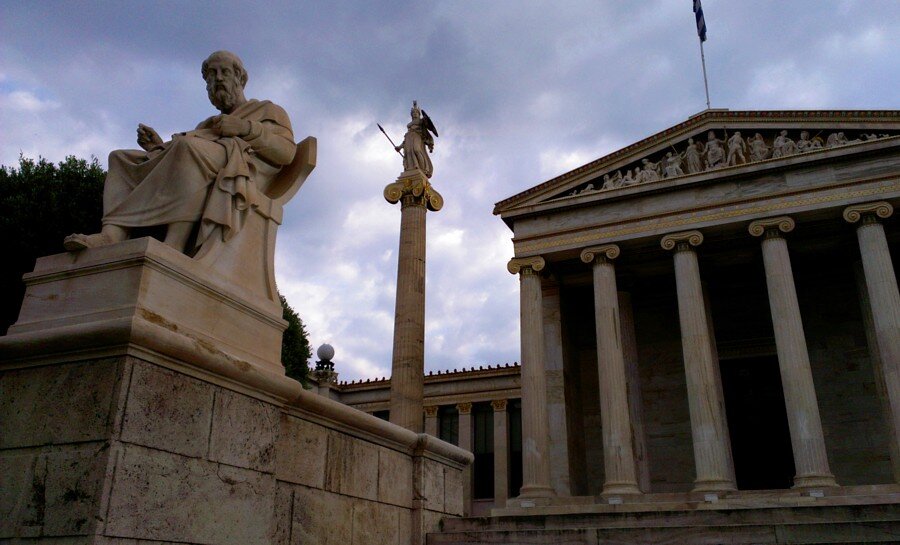
He grew up during the Peloponnesian War, a protracted and devastating conflict between Athens and Sparta. This backdrop of political turmoil and moral questioning undoubtedly shaped his thinking. Initially, he may have considered a career in politics, as was expected of a man of his station. But a fateful encounter would steer his life in a completely different direction.
The Influence of Socrates
In his youth, Plato became a devoted follower of Socrates, a philosopher who challenged conventional wisdom by questioning everyone he met in the Athenian marketplace. Socrates didn't write anything down; his philosophy was a living, breathing dialogue. For Plato, this was a revelation. He spent years listening to Socrates dismantle arguments, expose ignorance, and search for truth through relentless questioning.
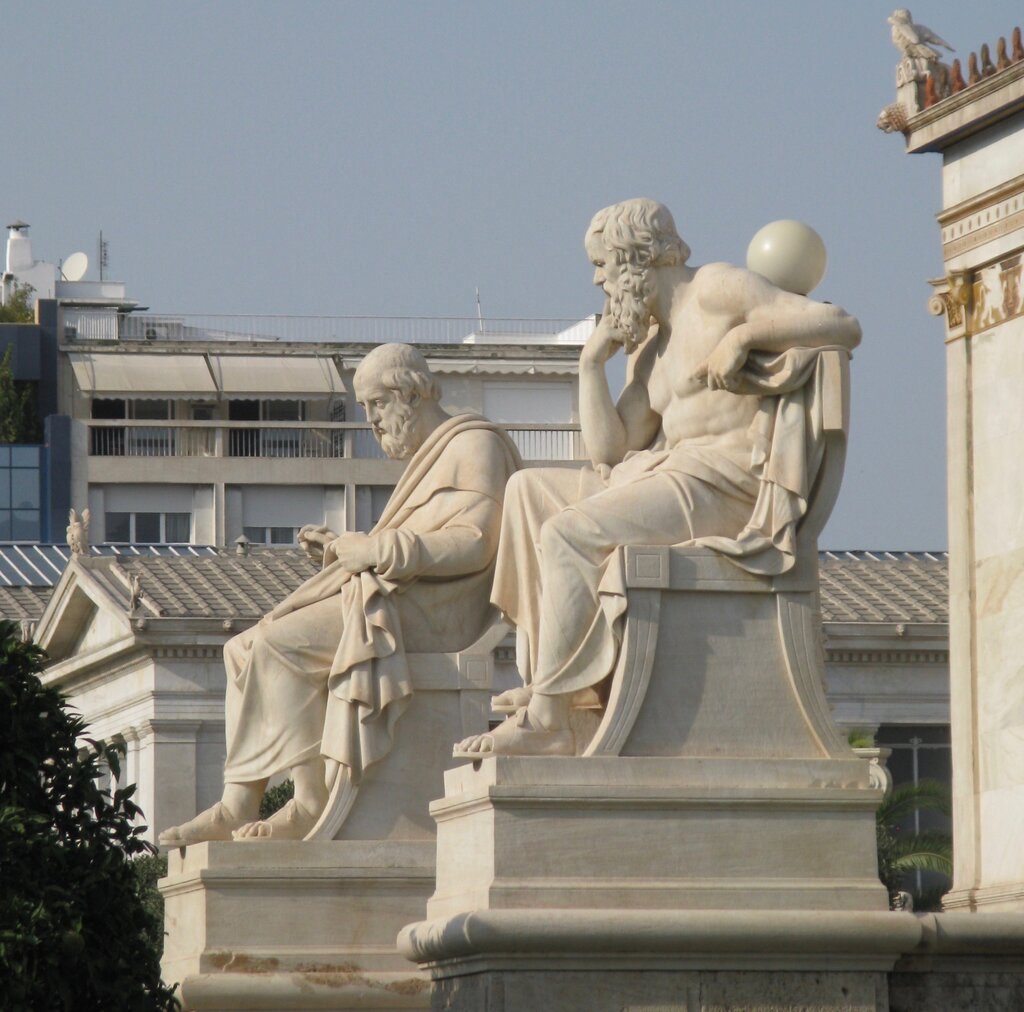
The turning point in Plato's life came in 399 BCE when Athens, a democracy, sentenced the 70-year-old Socrates to death on charges of impiety and corrupting the youth. For Plato, this was more than a personal tragedy; it was a profound indictment of democratic rule. How could the wisest man he knew be executed by the state? This event convinced Plato that politics, as it was practiced, was fundamentally flawed. He concluded that societies would only be just if they were ruled by philosophers, or if their rulers became philosophers.
The execution of Socrates soured Plato on direct political involvement and set him on a quest to find a better way to structure society, one based on reason and justice.
Travels and the Academy
After Socrates' death, Plato left Athens for over a decade. His travels took him to Egypt, where he was impressed by the stability of its ancient civilization, and to Italy and Sicily, where he encountered communities of Pythagoreans. These followers of the mathematician Pythagoras believed that reality was fundamentally mathematical, an idea that would deeply influence Plato's own theories.
Around 387 BCE, Plato returned to Athens and founded a school just outside the city walls, in a grove dedicated to the hero Academus. It became known as the Academy, and it was arguably the Western world's first university. It wasn't just a school for teaching established doctrines. It was a center for research and collaborative inquiry in philosophy, mathematics, astronomy, and political science. Students and scholars came from all over the Greek world to study and debate.
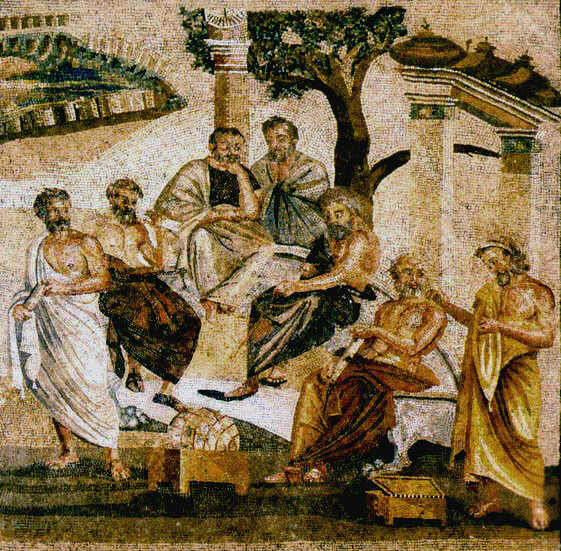
The curriculum focused on training future statesmen and thinkers. Plato believed that a rigorous education, especially in mathematics and philosophy, was essential for anyone who hoped to govern justly. The Academy would operate for nearly 900 years, a testament to the enduring power of its founder's vision.
A Philosopher in Politics
Despite his disillusionment with Athenian politics, Plato couldn't entirely resist the call to put his ideas into practice. On three separate occasions, he traveled to Syracuse, a powerful Greek city-state in Sicily, to tutor its new ruler, Dionysius II. Plato hoped to mold the young tyrant into his ideal of a "philosopher-king."
The experiment was a failure. The Syracuse court was a nest of intrigue and jealousy, and Dionysius II proved to be an unreceptive student. He was more interested in power than in wisdom. Plato’s visits ended in frustration and even personal danger, as he was briefly held against his will. These difficult experiences seemed to confirm his earlier suspicions: true philosophical rule was an ideal that was nearly impossible to achieve in the messy reality of human politics.
Plato spent his final years back in Athens, leading the Academy and writing the philosophical dialogues that would secure his legacy. He died in 348 BCE, leaving behind a body of work that has been a cornerstone of Western thought for over two millennia.
Let's test your knowledge of Plato's life and the key events that shaped his philosophy.
What event was the primary catalyst for Plato's disillusionment with Athenian politics and democracy?
During his travels after leaving Athens, Plato encountered the Pythagoreans, who deeply influenced his own theories. What was a core belief of the Pythagoreans?