Planted Forests and Local Livelihoods
Introduction to Planted Forests
What Are Planted Forests?
When you picture a forest, you might imagine a wild, ancient woodland that grew on its own over centuries. While many forests are like that, a significant and growing number are the result of human effort. These are known as planted forests.
A planted forest is an area where trees have been established by people, either through planting seedlings or by deliberately sowing seeds. They are often composed of a single or a few specific tree species, chosen for their growth rate or suitability for a particular purpose. This deliberate creation sets them apart from natural forests, which regenerate on their own with a wide mix of native species.
More Than Just Timber
Planted forests are created for several important reasons, often serving more than one purpose at a time. Their primary objectives usually fall into a few key categories.
Production: Many planted forests are essentially tree farms. They are managed to efficiently produce wood for lumber, paper pulp, and fuel. This helps meet global demand for wood products while easing logging pressure on natural forests.
Protection: Trees are excellent at holding soil in place and regulating water flow. Planted forests are often established on degraded land to prevent soil erosion, protect watersheds, and act as barriers against wind or desertification.
Restoration: In areas where native forests have been lost, planting trees can be the first step in kickstarting ecosystem recovery. These projects aim to re-establish forest cover, create habitats for wildlife, and restore ecological balance.
A Growing Global Resource
Planted forests cover hundreds of millions of hectares across the globe, and their total area is expanding. This trend is driven by a rising population and growing demand for wood and paper products. As countries look for sustainable resources, planted forests offer a way to provide materials without further depleting natural ecosystems.
Today, planted forests supply a substantial portion of the world's industrial roundwood. They are a critical piece of the global resource puzzle, but their expansion brings an important responsibility.
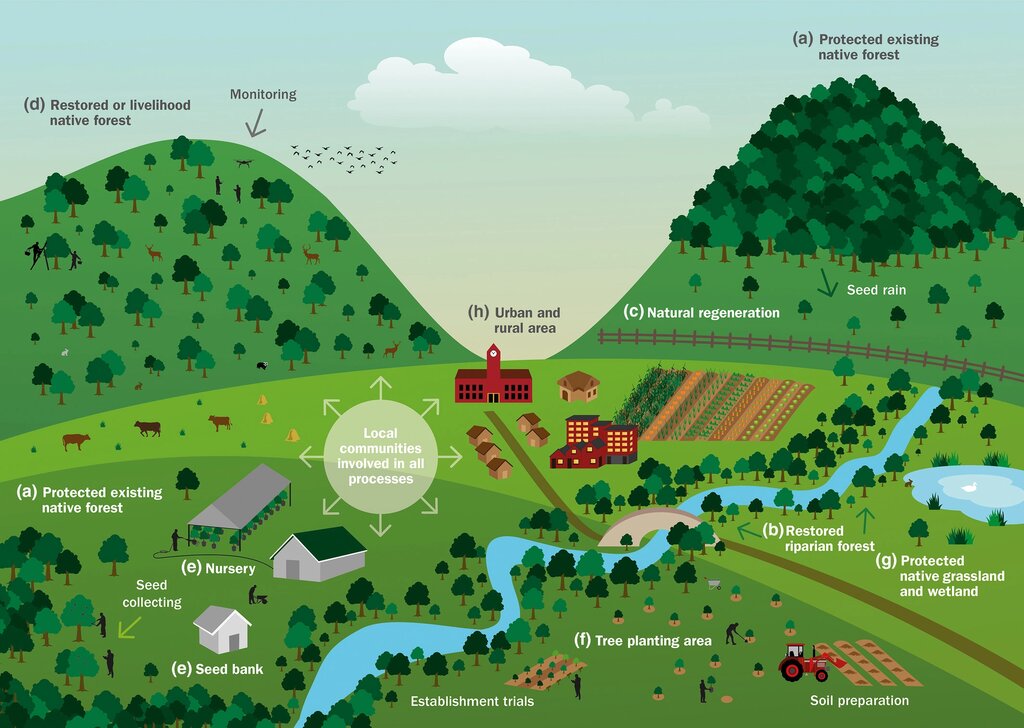
The key to unlocking their potential lies in sustainable management. A well-managed planted forest can provide renewable resources, support local economies, and contribute to environmental health. It involves careful planning, from choosing the right species for the site to considering the forest's impact on local water supplies and biodiversity.
On the other hand, poorly planned projects can cause problems, such as depleting water resources, reducing biodiversity by creating single-species monocultures, or displacing local communities. Sustainability ensures that these forests provide benefits for generations to come without causing harm.
Time for a quick check-in on what you've learned.
What is the primary characteristic that distinguishes a planted forest from a natural forest?
According to the text, what is a primary driver for the global expansion of planted forests?
By understanding what planted forests are and why they matter, we can better appreciate their role in creating a more sustainable future.