Piped Irrigation System Design
Water Flow Principles
Pressure and Flow
Water in a pipe doesn't just sit there; it's pushed by pressure. Think of it as the force that gets water moving. This pressure is often measured in pounds per square inch (psi) or bars. The higher the pressure, the more forcefully the water is pushed.
Another way to think about pressure is in terms of "head." This is the height of a column of water that would create the same amount of pressure. A water tank placed on a hill uses gravity to create pressure, or head, for the pipes below it. The higher the tank, the greater the head and the higher the pressure.
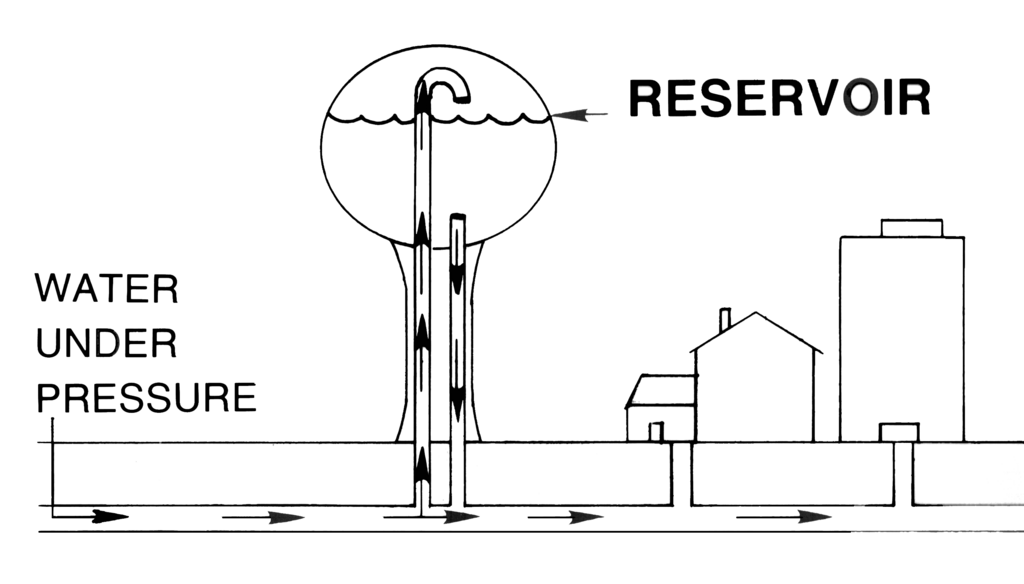
Flow rate, on the other hand, is about volume. It’s the amount of water that passes a certain point in a given amount of time. We usually measure it in gallons per minute (GPM) or liters per second (L/s).
Flow Rate
noun
The volume of fluid which passes per unit time.
While pressure and flow rate are related, they aren't the same thing. You need pressure to create flow. But you can have high pressure with low flow. Imagine putting your thumb over the end of a garden hose. The pressure inside the hose builds, and the water sprays out much faster, but the total amount of water coming out per minute actually decreases.
The relationship between flow rate (), the cross-sectional area of the pipe (), and the velocity of the water () is straightforward:
This means for a pipe of a certain size, a higher water velocity results in a higher flow rate.
The Drag of Friction
As water moves through a pipe, it rubs against the inner walls. This creates friction, which works against the flow and causes a drop in pressure. This pressure drop is called friction loss.
Several factors influence how much pressure is lost:
| Factor | Effect on Friction Loss |
|---|---|
| Pipe Length | The longer the pipe, the more friction and the greater the pressure loss. |
| Pipe Diameter | A smaller pipe forces water through a tighter space, dramatically increasing friction. Doubling a pipe's diameter can reduce friction loss by more than ten times. |
| Pipe Material | Smooth pipes like PVC have less friction than rougher pipes like old cast iron. |
| Flow Rate | The faster the water moves (higher velocity), the more pressure is lost to friction. |
| Fittings | Every elbow, valve, and connector adds a small amount of turbulence and friction, contributing to the total pressure loss. |
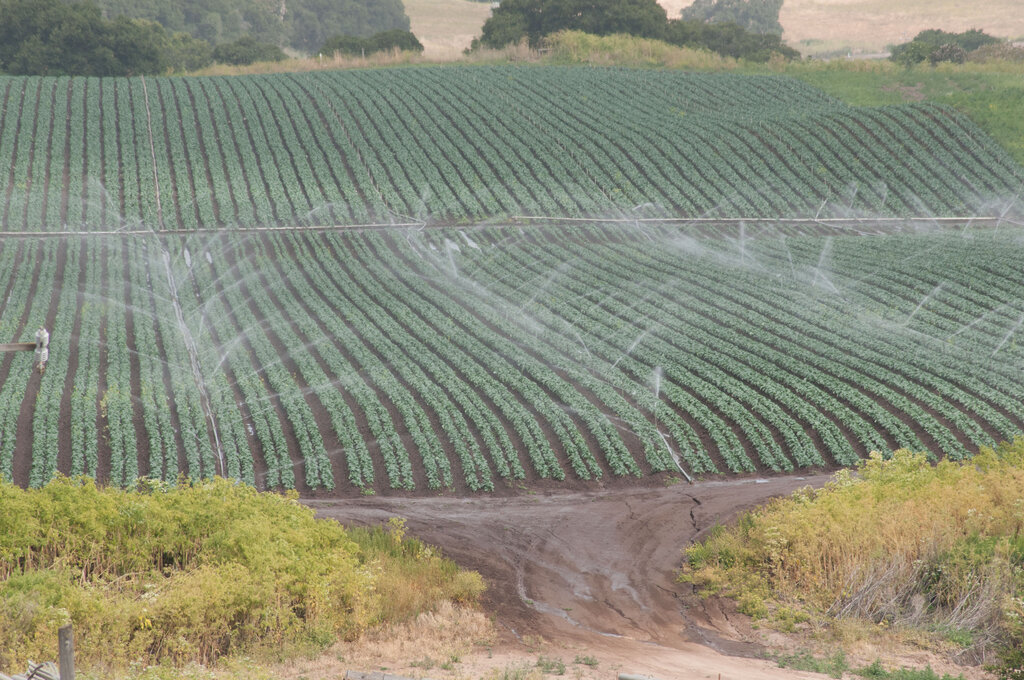
For an irrigation system, friction loss is a critical calculation. If you don't account for it, the sprinklers at the far end of your field might only dribble water, while the ones closest to the pump work perfectly. This leads to uneven watering and poor crop growth.
Balancing the System
Designing an efficient irrigation system is a balancing act between pressure, flow, and friction. The goal is to deliver the right amount of water to every plant, which means ensuring every sprinkler or emitter has enough pressure to operate correctly.
The process starts with the needs of the crops. How much water do they need, and at what rate? This determines the required flow rate. Then, you choose a pump that can provide that flow rate at a pressure high enough to overcome all the friction losses in the pipes and still operate the sprinklers at the very end of the line.
This involves selecting the right pipe diameters. Using pipes that are too small will save money on materials but will result in high friction loss, requiring a more powerful, expensive pump and higher energy costs. Larger pipes cost more upfront but minimize friction loss, saving energy over the long run.
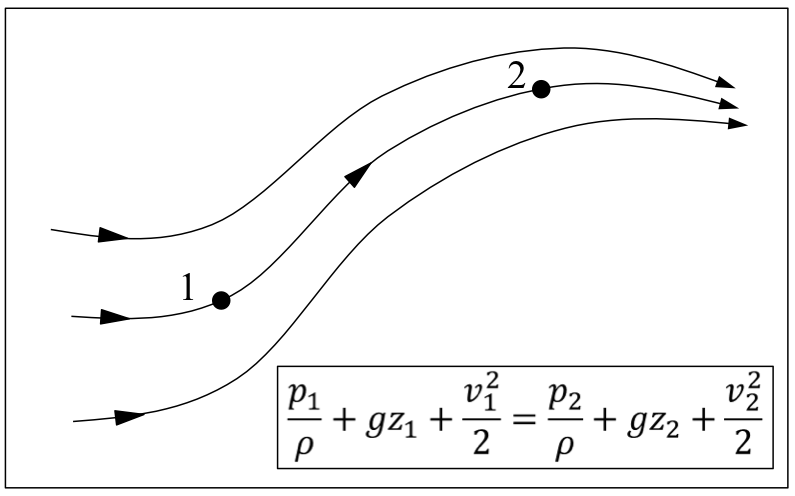
These concepts are summarized in a core principle of fluid dynamics known as the Bernoulli equation. It describes the relationship between pressure, velocity, and elevation. In simple terms, it tells us that if water velocity increases (like in a narrow section of pipe), its pressure decreases, and vice versa. It’s the fundamental hydraulic principle that governs the design of any piped water system.
Time to see what you've learned about how water moves.