Pioneers of Synthetic Biology
Introduction to Synthetic Biology
Biology as a Building Block
Imagine being able to program living cells the way we program computers. Instead of writing code with ones and zeros, you'd write code with A's, T's, C's, and G's—the fundamental units of DNA. This is the core idea behind synthetic biology.
Synthetic Biology
noun
An area of scientific research that involves redesigning organisms for useful purposes by engineering them to have new abilities.
At its heart, synthetic biology is about applying engineering principles to the living world. It aims to make biology easier to engineer by creating standardized biological parts, like LEGO bricks. Scientists can then assemble these parts in new ways to build complex systems with functions not found in nature. This could mean designing a yeast cell that produces a new medicine or a bacterium that detects toxins in the water.
The goal is to move from simply observing biological systems to actively designing and building them.
Beyond Traditional Tweaks
You might be thinking, "Isn't this just genetic engineering?" It's a fair question, as both fields modify the DNA of organisms. However, there's a key difference in approach and scale.
Traditional genetic engineering is often like taking a single useful component from one machine and putting it into another. For example, scientists might take a gene that produces insulin from humans and insert it into bacteria, enabling the bacteria to make insulin for medical use. It's a powerful technique, but it's typically focused on transferring one or two existing genes.
Synthetic biology is more like designing and building a completely new machine from a catalog of standard parts. It involves creating entire genetic circuits or metabolic pathways from scratch. Instead of just cutting and pasting a single gene, synthetic biologists might build a network of genes that work together to perform a complex task, like a sensor that glows green only when it detects a specific disease marker.
| Feature | Genetic Engineering | Synthetic Biology |
|---|---|---|
| Goal | Modify an existing organism | Design and construct new biological systems |
| Approach | Transferring one or a few genes | Building with standardized parts and circuits |
| Analogy | Swapping a part between two cars | Designing a new car from a parts catalog |
| Complexity | Lower; focused on a single function | Higher; creates complex, multi-part systems |
A Team Sport for Science
Building new biological systems is a complex task that requires a wide range of expertise. Synthetic biology isn't just a field for biologists; it's a truly interdisciplinary effort where scientists from different backgrounds collaborate.
- Biologists provide the deep understanding of how cells work, from their genetic code to their metabolic processes.
- Engineers bring principles of design, standardization, and systematic testing. They help create reliable and predictable biological parts and systems.
- Computer Scientists develop software to design and simulate biological circuits before they are ever built in a lab. This design-build-test cycle saves time and resources.
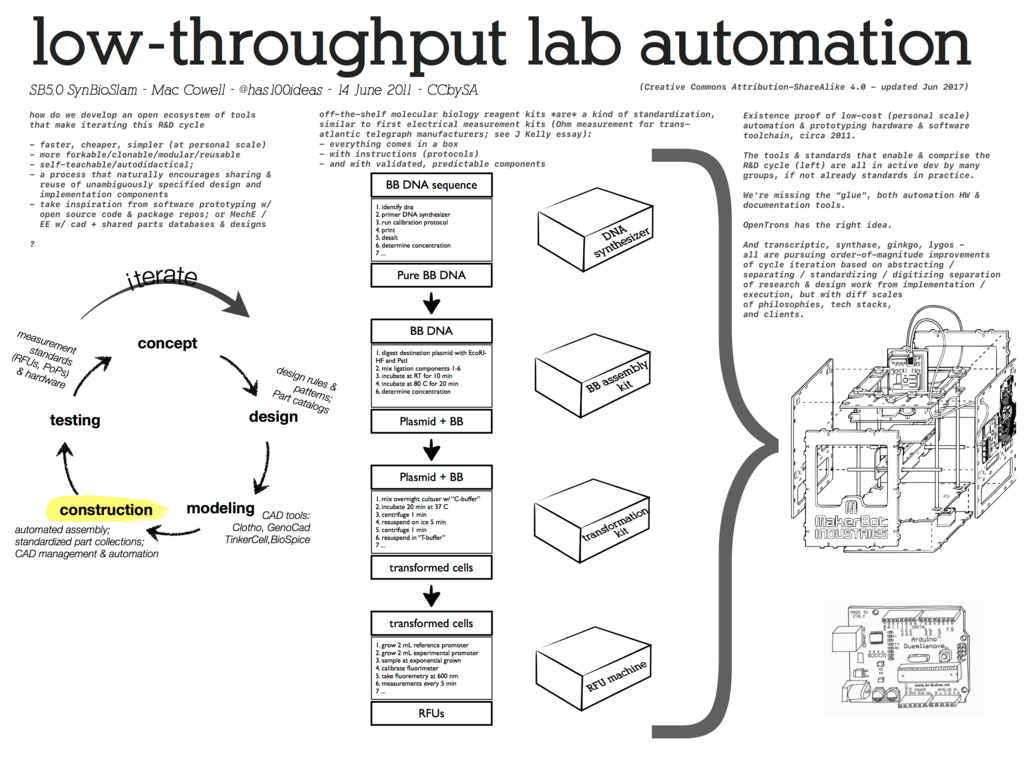
This fusion of disciplines is what makes synthetic biology so powerful. It allows for a systematic and scalable approach to engineering life, moving beyond the trial-and-error methods of the past.
What Can We Build?
The potential applications of synthetic biology are vast and could transform many industries. The ability to program life gives us a powerful tool to solve some of the world's biggest challenges.
Synthetic biology allows us to bioengineer cells to synthesize novel valuable molecules such as renewable biofuels or anticancer drugs.
In medicine, researchers are designing microbes that can live in the gut and produce medicines on demand, or immune cells that are engineered to specifically target and destroy cancer. For the environment, scientists are creating bacteria that can break down plastic waste or clean up oil spills. In agriculture, crops are being redesigned to be more resistant to drought or to produce more nutrients.
From manufacturing and materials to energy and healthcare, synthetic biology is opening up new possibilities. By treating DNA as a programmable code, we're just beginning to explore what we can build.
Let's test your understanding of these foundational concepts.
What is the primary goal of applying engineering principles to biology, as described in synthetic biology?
True or False: The main difference between traditional genetic engineering and synthetic biology is the scale and approach, with synthetic biology focusing on designing entire systems from standardized parts.