Pilates Workshop Design and Delivery
Advanced Pilates Techniques
Beyond the Basics
Once your clients have a firm grasp of the fundamentals, the real artistry of Pilates begins. Advanced work isn’t just about adding more springs or attempting more difficult exercises. It’s about deepening the connection to the core principles: precision, control, and flow. The goal is to perform complex, integrated movements that look and feel seamless, challenging the body and mind in a completely new way.
Before incorporating advanced work, it’s essential to have a firm grasp of beginner and intermediate exercises.
This level of practice demands an instructor who can see beyond the shape of the exercise and focus on the quality of every single movement. It’s your job to guide clients safely into this new territory, pushing their limits while reinforcing the foundation you’ve already built.
The Mat as the Ultimate Test
Advanced matwork strips away all assistance, forcing the body to rely entirely on its own strength and control. These exercises often involve inversions, deep spinal articulation, and sustained powerhouse engagement that require immense stability. Exercises like the Teaser III, Jackknife, and Control Balance are benchmarks of advanced mat practice. They aren't just physically demanding; they require intense concentration to maintain form.
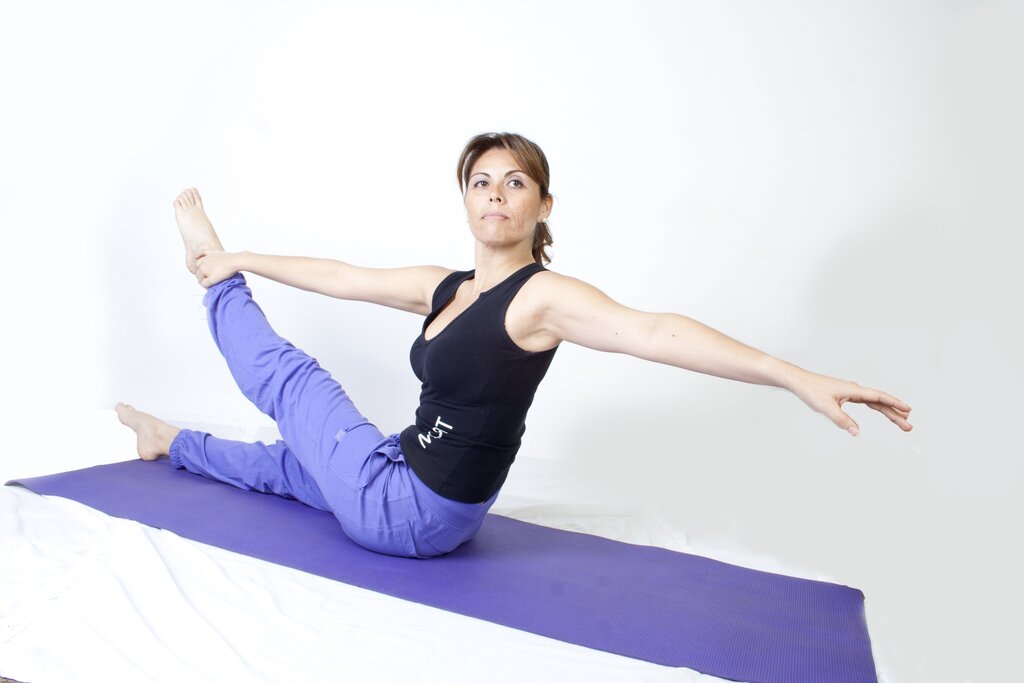
Take the Jackknife, for example. The initial roll-over requires abdominal strength, but the controlled lift of the legs to the ceiling tests the stability of the shoulder girdle and the deep back extensors. The true challenge, however, is in the descent. Lowering the spine back to the mat one vertebra at a time, without momentum, is the essence of advanced control.
Complex Equipment Sequences
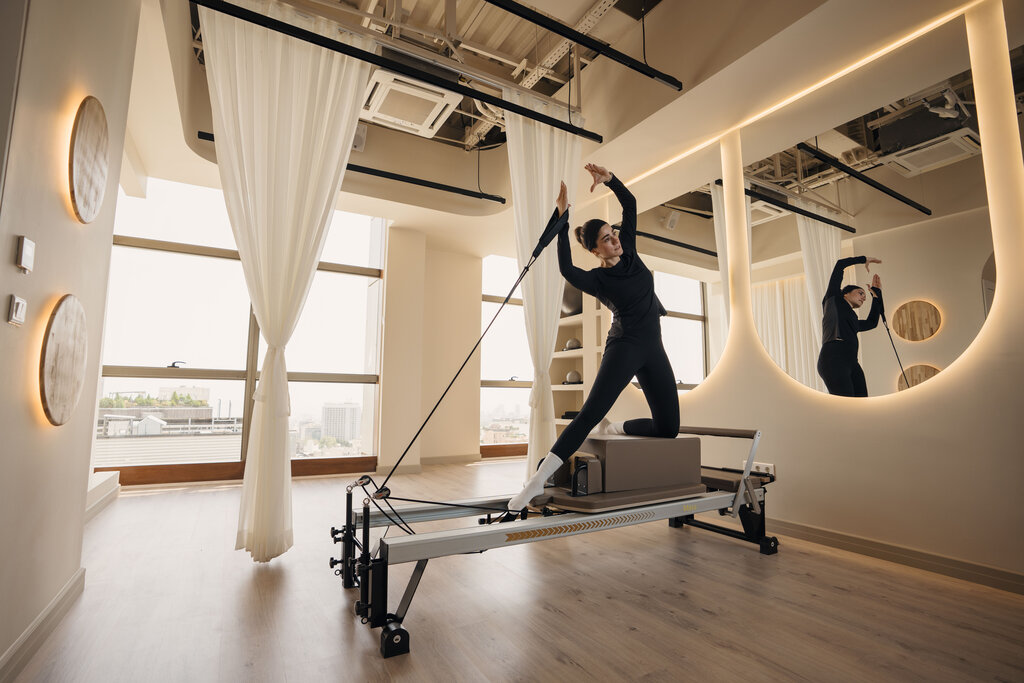
On the equipment, advanced work is defined by dynamic, flowing sequences and intricate choreography. It’s less about performing isolated exercises and more about linking them together into a fluid routine. This requires clients to transition smoothly between movements, often from different body orientations, without losing their center.
On the Reformer, you might create a sequence that moves from a supine exercise like the Short Spine Massage directly into a prone exercise like the Swan. The transition itself becomes an exercise in core stability and coordination, demanding control over the springs and carriage throughout the entire movement.
The Cadillac and Wunda Chair offer unique opportunities for advanced challenges. The Cadillac’s various springs and bars allow for complex movements that integrate the entire body, such as hanging exercises or advanced bridging variations that test strength and control in multiple planes of motion. The Wunda Chair, with its small base of support, is unparalleled for challenging balance and stability. Exercises like the Pike or Tendon Stretch require a powerful powerhouse to control the pedal while maintaining balance.
Tailoring to the Individual
The most important skill for an instructor teaching advanced work is the ability to adapt. Not every client is ready for every advanced exercise, and mastery is not a linear path. Your role is to break down complex movements, identify a client's specific weaknesses, and provide modifications that build them toward the full expression of the exercise.
| Challenge | Modification Strategy |
|---|---|
| Lack of Scapular Stability | Use lighter springs on the Cadillac Push-Thru Bar to build control before adding load. |
| Limited Hamstring Flexibility | Perform the Wunda Chair Pike with bent knees or a reduced range of motion. |
| Weak Core Control | Break down the Reformer Snake Twist into preparatory movements, focusing on rotation from the obliques. |
By focusing on progressions and providing precise cues, you can guide clients safely to new levels of strength and body awareness. Your deep understanding of biomechanics and the Pilates method is what turns a difficult exercise into a transformative experience.
What is the primary goal of advanced Pilates work?
In the advanced mat exercise, the Jackknife, what is described as the true test of control?