Pilates Reformer Fundamentals
Introduction to Pilates Reformer
Meet the Reformer
The Pilates Reformer might look like a complicated piece of equipment, but it's designed with a clear purpose: to add resistance and support to Pilates exercises. It was invented by Joseph Pilates to help bedridden patients in a hospital setting, using bedsprings for resistance. Today’s version is more polished, but the core idea remains the same.
Unlike mat Pilates, where you work against your own body weight, the Reformer uses a system of springs, straps, and a sliding platform to challenge your body in new ways. This setup helps you build strength, improve flexibility, and fine-tune your balance and coordination. It’s a versatile tool that can make exercises more accessible for beginners or more challenging for advanced practitioners.
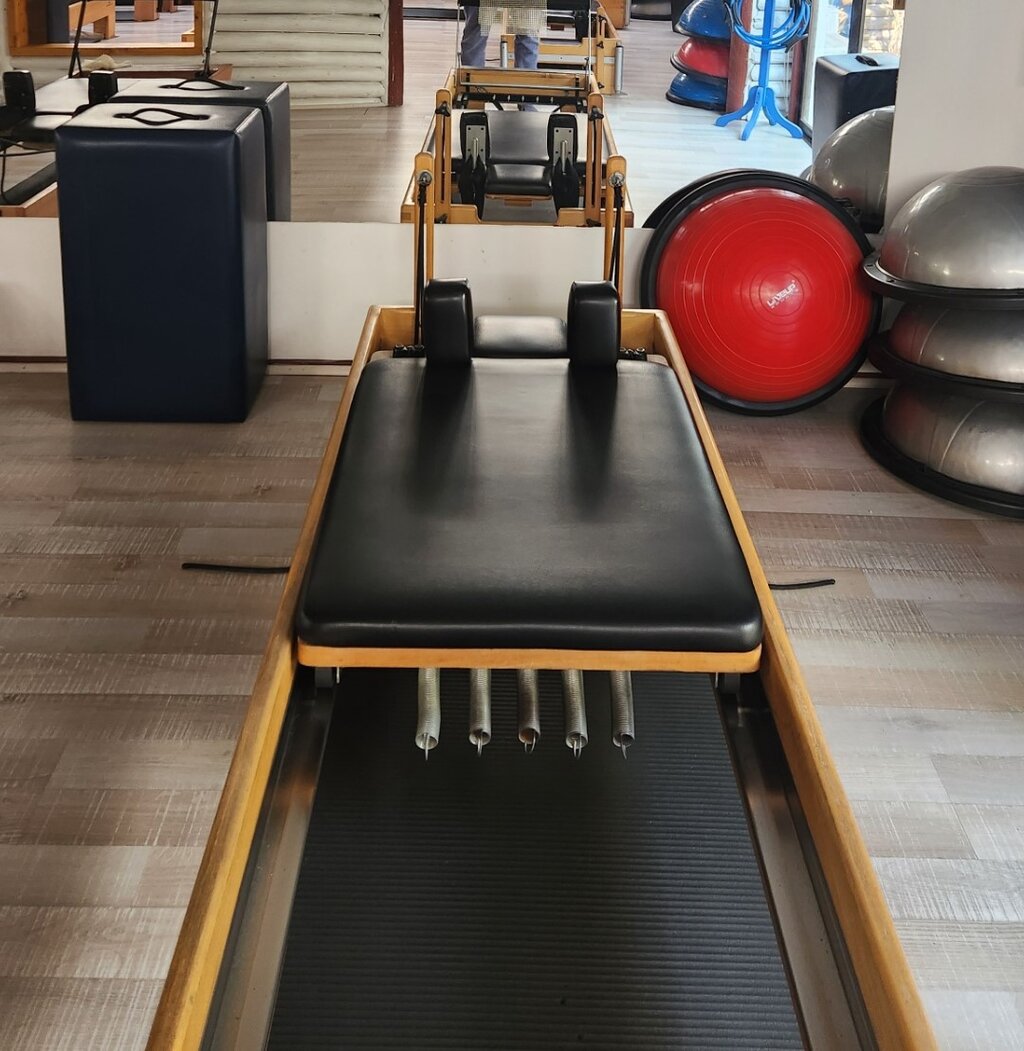
Anatomy of a Reformer
To understand how the Reformer works, let's break down its key parts. Each component plays a specific role in your workout.
Here’s a closer look at what each part does:
- Carriage: This is the moving platform you'll sit, lie, or stand on. It slides back and forth along the Reformer's frame. The movement should always be smooth and controlled.
- Springs: These provide the resistance. Most Reformers have several springs, often color-coded by tension (heavy, medium, light). Adding or removing springs changes how difficult an exercise is. More springs doesn't always mean harder—sometimes, fewer springs requires more stability and control from your core.
- Footbar: This adjustable bar can be used by your feet or hands to push the carriage. Its position can be changed to accommodate different body sizes and exercises.
- Shoulder Blocks: These padded blocks keep you from sliding off the carriage as you push or pull. You'll press your shoulders against them for some exercises and your feet or hands for others.
- Straps: The long ropes with handles or loops on the ends are used for exercises that involve your arms or legs. They are attached to pulleys at the top of the machine, allowing for a wide range of motion.
Safety and Awareness
Working with any piece of equipment requires attention to safety. The Reformer is no different. Before you start any workout, it's crucial to understand how to use it correctly to prevent injury.
First, always work with a qualified instructor, especially when you're new. An instructor can ensure the machine is set up properly for your body and guide you on correct form. They'll teach you how to adjust the springs, footbar, and other components for each exercise.
Proper body positioning is key. Your movements should be deliberate and controlled, not jerky or rushed. Pay close attention to your alignment—keeping your spine neutral, your shoulders relaxed, and your core engaged. This focus not only prevents strain but also ensures you're working the intended muscles.
Finally, listen to your body. Pilates is not about pushing through pain. If something doesn't feel right, stop and ask your instructor for a modification. The goal is mindful movement that strengthens your body, not stresses it.
The Guiding Principles
The Reformer is just a tool. The real magic of Pilates comes from the six foundational principles that guide every movement, whether on a mat or a machine.
These principles turn simple exercises into a full-body, mindful practice.
- Centering: All movement originates from your core, or
your "powerhouse." By focusing on your center—the muscles of your abdomen, lower back, hips, and glutes—you create a stable foundation for every exercise.
-
Concentration: To get the most out of each movement, you have to be fully present. This mind-body connection ensures that you're performing each exercise with intention, not just going through the motions.
-
Control: Pilates is about controlled, deliberate movement. On the Reformer, this means managing the carriage's slide and the springs' tension. You control the machine; it doesn't control you.
-
Precision: Every movement has a purpose. Precision is about maintaining correct form and alignment down to the smallest detail. It's quality over quantity.
-
Breath: Your breath is the engine that fuels the movement. Proper breathing helps engage your core muscles and allows for deeper, more effective work. In Pilates, you'll typically inhale to prepare for a movement and exhale during the exertion.
-
Flow: Exercises are meant to transition smoothly from one to the next. This creates a sense of rhythm and grace, turning the workout into a flowing, continuous motion.
Applying these principles on the Reformer will deepen your practice and help you achieve better results.
Ready to test your knowledge? Let's see what you've learned about the Pilates Reformer.
What was the original purpose for the invention of the Pilates Reformer?
Which part of the Reformer is the moving platform that you sit, lie, or stand on during exercises?
Understanding the components, safety measures, and principles of Pilates is the first step in building a strong and effective Reformer practice. By focusing on these foundations, you set yourself up for a safe and rewarding journey.