Pickleball Rules Explained
Introduction to Pickleball
The Rise of Pickleball
Pickleball is a paddle sport that feels like a mix of tennis, badminton, and table tennis. It’s played with a solid paddle and a plastic ball with holes, on a court about the size of a doubles badminton court. The game is fast-paced, easy for beginners to learn, but can develop into a quick, strategic game for experienced players.
The story begins in the summer of 1965 on Bainbridge Island, Washington. Three dads—Joel Pritchard, Bill Bell, and Barney McCallum—returned from a game of golf to find their families bored. They tried to set up a badminton game, but couldn't find a full set of rackets. Improvising, they grabbed some table tennis paddles and a plastic ball, lowered the badminton net, and started hitting the ball back and forth. A new game was born.
The objective is straightforward: score points by hitting the ball over the net so your opponent can't return it legally. You can only score when your team is serving, and games are typically played to 11 points, though you must win by at least two.
Pickleball, invented in Washington State in 1965, has grown explosively in the United States, especially since the COVID-19 pandemic.
The Playing Field
A standard pickleball court is a rectangle measuring 44 feet long and 20 feet wide. The net is hung at 36 inches on the ends and 34 inches in the center. The court is striped like a tennis court, with right and left service courts and a seven-foot non-volley zone in front of the net, often called "the kitchen."
Gearing Up
One of pickleball's appeals is its simple equipment. You only need a paddle and a ball to get started.
The Paddle: A pickleball paddle is larger than a table tennis paddle but smaller than a tennis racket. The surface is solid and can be made from various materials, including wood, composite, and graphite. The rules regulate the paddle's size, but the weight and thickness can vary, allowing players to choose one that suits their style.
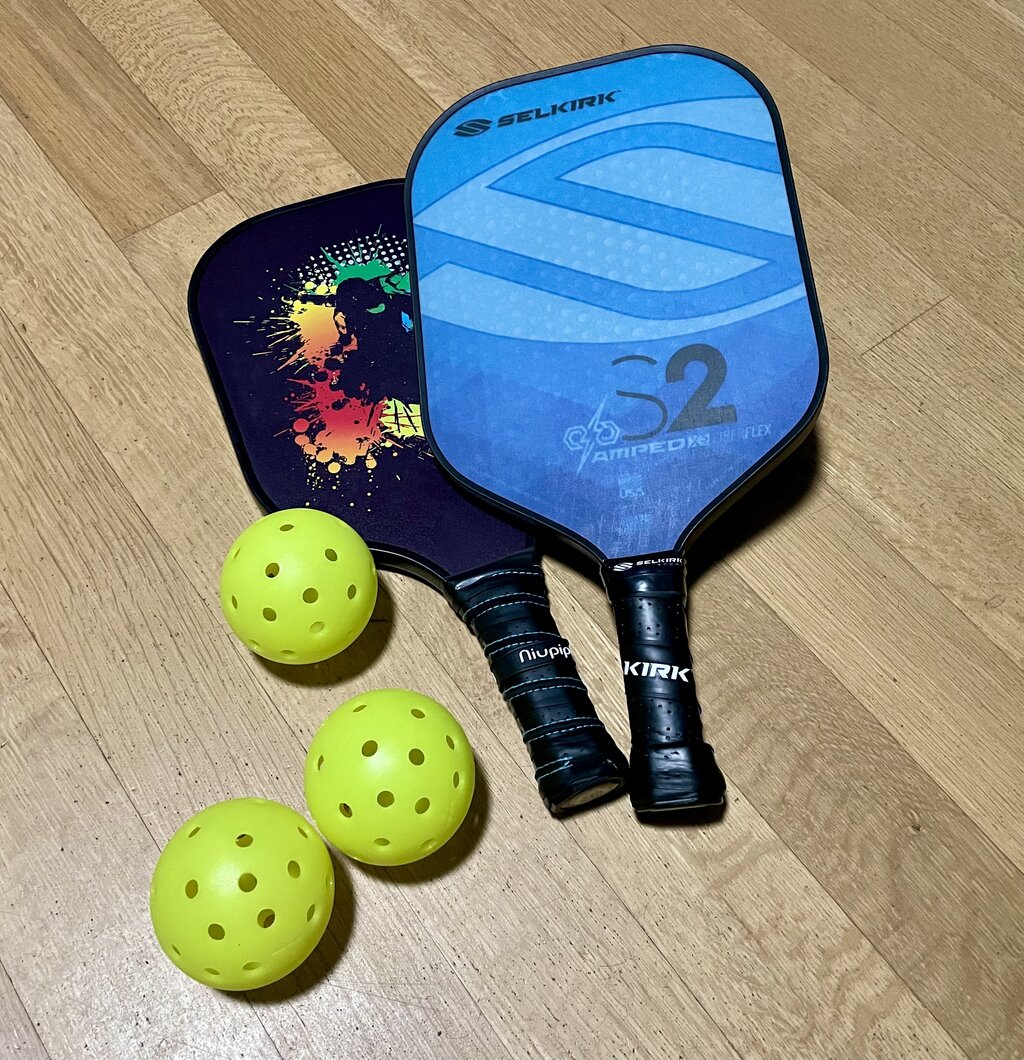
The Ball: The ball is made of plastic and is covered in holes, much like a wiffle ball. This design makes it fly slower than a tennis ball and with less bounce. There are slight differences between indoor and outdoor balls. Outdoor balls are typically harder, heavier, and have smaller, more numerous holes to resist wind. Indoor balls are softer and have larger holes.
Now that you understand the court, equipment, and basic goal, you have a foundation for playing the game.