Piano Theory for Young Maestros
Piano Layout
A Pattern of Keys
Look at a piano keyboard. You'll see a long row of white keys with shorter black keys set above them. It might seem like a lot to learn, but there's a simple, repeating pattern that makes it easy to find your way around.
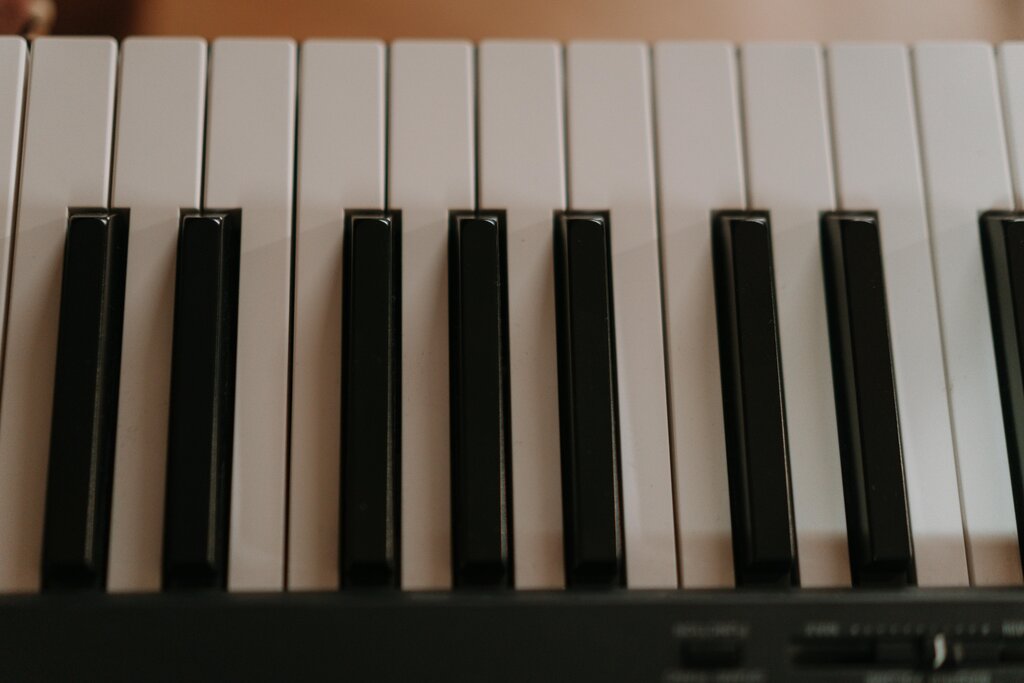
Notice the black keys. They aren't evenly spaced. They come in groups of two, then a group of three, then a group of two, and so on, all the way up the keyboard. This pattern of two and three black keys is your map. Once you see it, you'll never get lost.
Naming the White Keys
The white keys are named after the first seven letters of the alphabet: A, B, C, D, E, F, and G. This sequence repeats over and over.
To figure out which key is which, use the black keys as landmarks. Find any group of two black keys. The white key immediately to the left of that group is always C.
Once you've found C, the rest of the white keys follow in alphabetical order. Moving to the right, the next white key is D, then E, F, G. After G, the alphabet starts over with A, then B, and then you'll find the next C, located to the left of the next group of two black keys.
The Center of the Keyboard
One C on the piano is particularly important: Middle C. It's the central note on the keyboard and acts as a home base for musicians. On most pianos and keyboards, Middle C is the C closest to the very center of the instrument, often located right below the manufacturer's name.
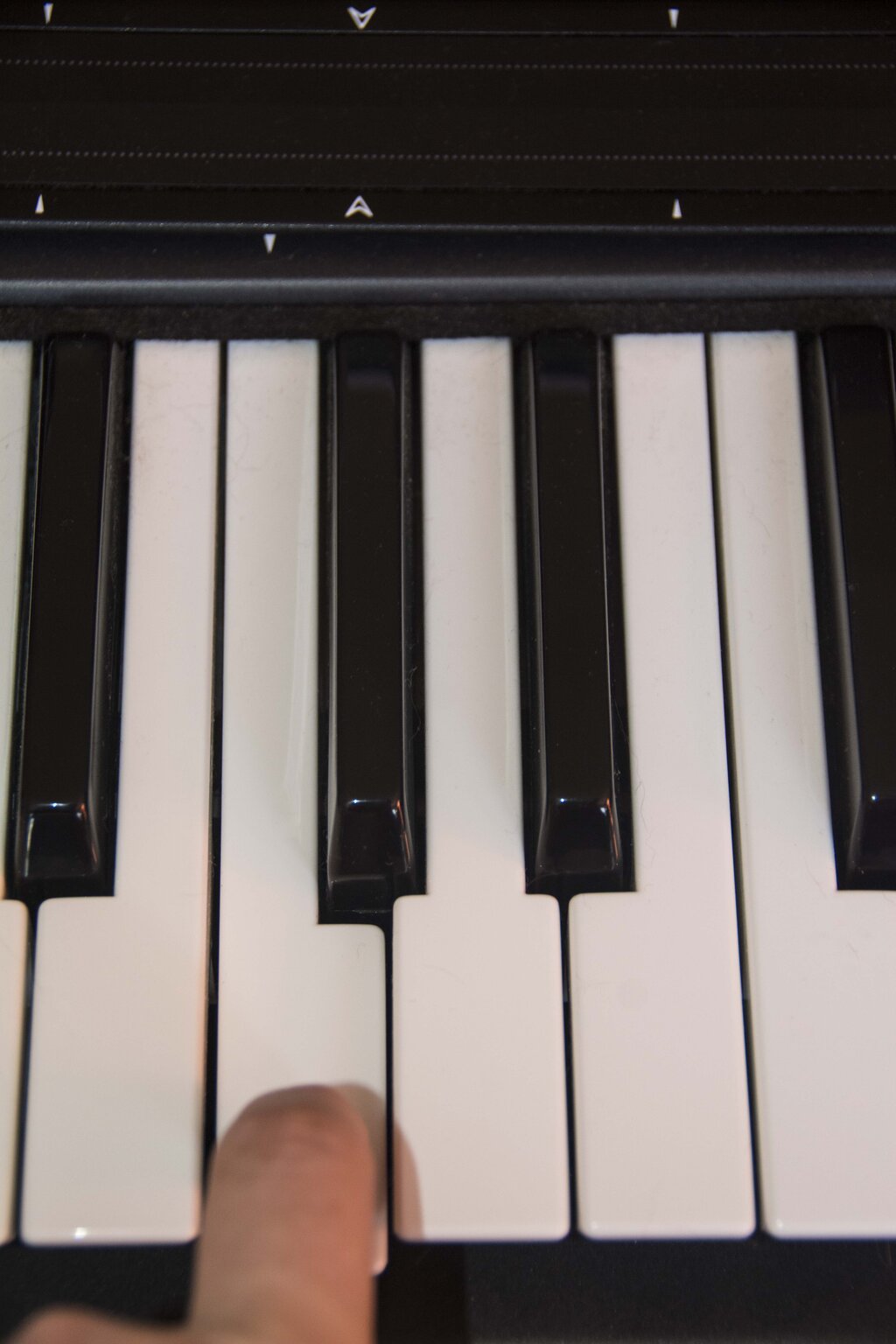
Finding Middle C gives you a reliable starting point. From here, you can navigate to any other note on the keyboard by moving up (to the right, for higher pitches) or down (to the left, for lower pitches).
Octaves and Repetition
The piano keyboard is made of repeating segments. The distance from one note to the next note of the same name, like from one C to the next C, is called an octave.
An octave consists of twelve keys total: seven white keys and five black keys. This entire pattern repeats all the way up and down the keyboard.
This means that if you can find all the notes in one octave, you can find them everywhere else. The C to the right of Middle C sounds higher, but it's still a C. The G to the left of Middle C sounds lower, but it's still a G. Understanding this repetition is the key to mastering the piano's layout.
Ready to check your understanding? Let's see if you can identify the keys on your own.
How can you locate the note C on a piano keyboard?
If you are moving up the keyboard (to the right) from the note G, what is the very next white key you will play?
Now that you're familiar with the keyboard's layout, you have the foundation you need to start playing.