Piano Fundamentals and Music Reading
Piano Basics
A Tour of the Keys
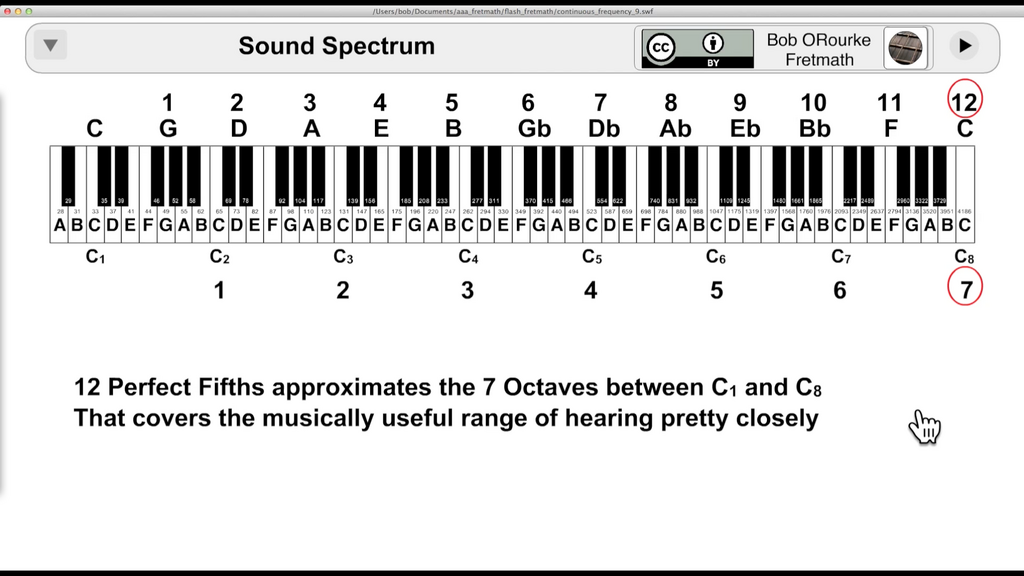
Look at a piano keyboard and you'll see a repeating pattern of white and black keys. The black keys are grouped in twos and threes. This pattern is your map to finding any note.
Let's start with the note C. Find any group of two black keys. The white key immediately to the left of that group is always C. From there, the white keys follow the musical alphabet: C, D, E, F, G, A, B. After B, the pattern repeats with the next C.
The white key to the left of a group of three black keys is F. Use C and F as your anchor points, and you’ll never get lost. The most important C on the piano is Middle C, located right in the center of the keyboard. It's often the starting point for beginners.
Octaves and Range
The distance from one C to the next C is called an octave. An octave includes all eight white keys (C to C) and the five black keys in between. The notes get higher in pitch as you move to the right and lower as you move to the left.
Octave
noun
The interval between one musical pitch and another with double or half its frequency. On a piano, it's the distance from a note to the next note of the same name.
A standard, full-sized piano has 88 keys. This range covers a little more than seven octaves, which is a huge spectrum of sound, from deep, rumbling bass notes to sparkling high notes.
Using the Pedals
Down at your feet, you’ll usually find three pedals. These are tools that change the way the piano sounds, adding color and expression to your playing.
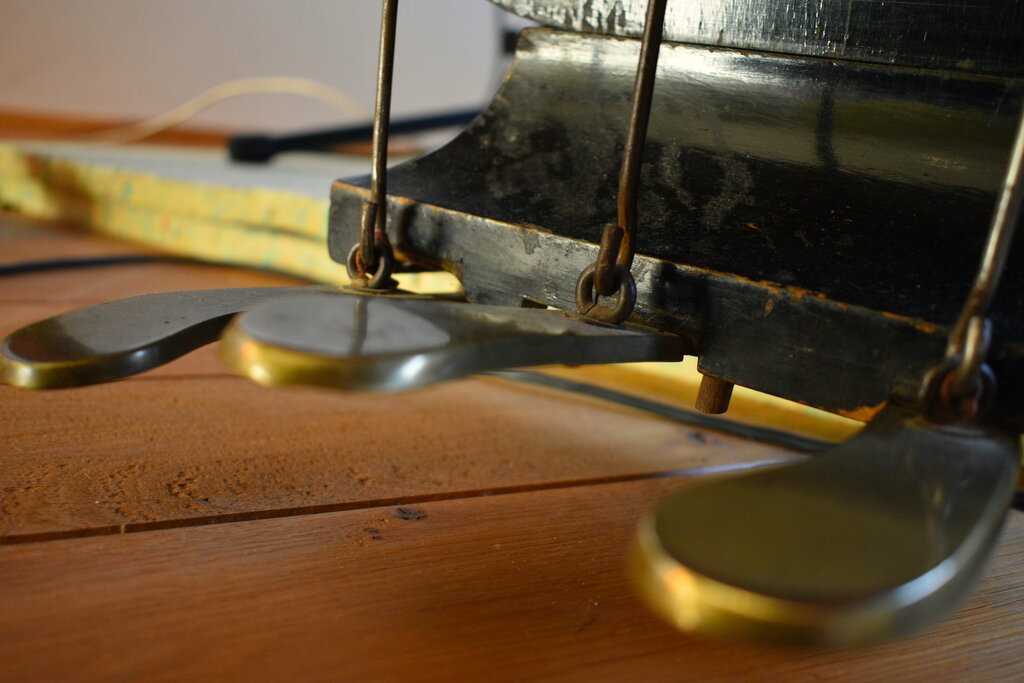
The pedal on the right is the sustain pedal, also called the damper pedal. When you press it, any notes you play will continue to ring out even after you lift your fingers from the keys. This is the most frequently used pedal, creating a smooth, connected sound.
Think of the sustain pedal like the blur tool in a photo editor. It blends the edges of your notes together.
The pedal on the left is the soft pedal. Its job is to make the sound quieter and often a bit mellower in tone. It's useful for moments that require a more delicate touch.
The middle pedal is the sostenuto pedal. It's a bit more specialized. It sustains only the notes that are being held down at the exact moment you press the pedal, while any new notes you play are unaffected. Not all pianos have this pedal, and it’s used mostly in advanced classical music.
Now that you know your way around the keyboard, it's time to test your knowledge.
How can you locate the note C on a piano keyboard?
The pedal on the right, known as the sustain pedal, makes the notes quieter.
With these fundamentals, you have a solid map of the piano. You know how to find any note, you understand the range of the instrument, and you know what the pedals do. The next step is to start making music.