Piano Foundations Music Theory and Reading
Introduction to the Piano
Getting to Know the Piano
The piano is a keyboard instrument. When you press a key, a small hammer inside strikes a string, which vibrates to create a sound. Let's look at its main parts.
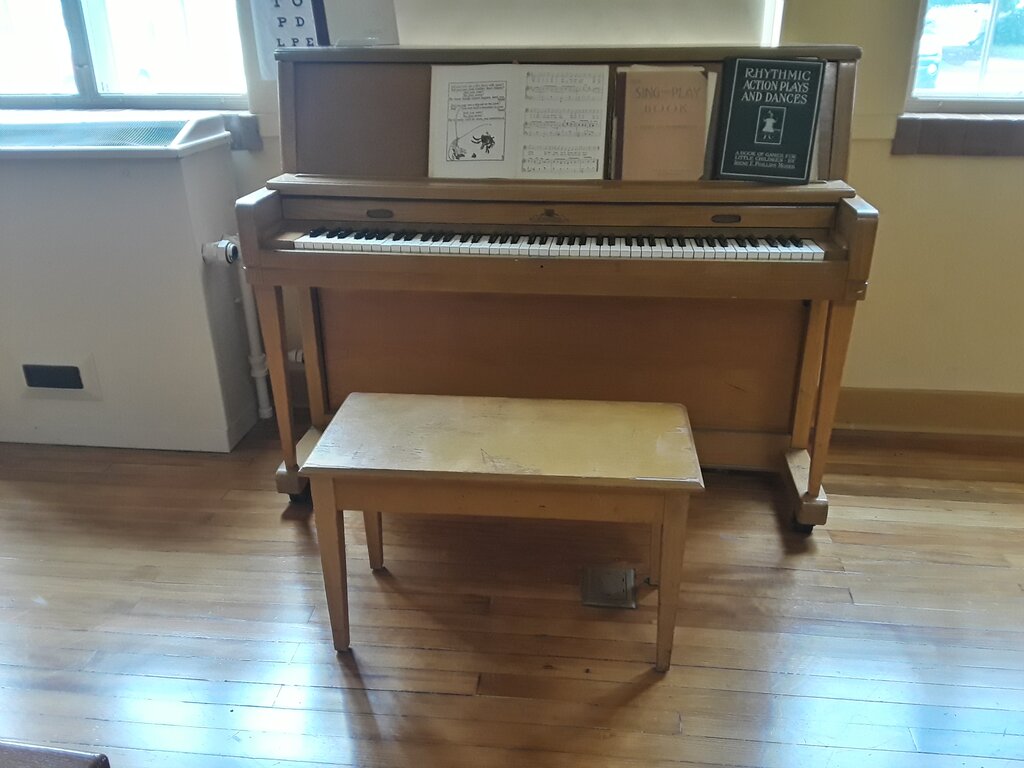
Every piano has three main components you'll interact with: the keyboard, the pedals, and the case that houses everything. The keyboard is the set of black and white keys you use to make music. The pedals, located at your feet, change the sound's quality—making it longer, shorter, or softer. The case is simply the piano's wooden body.
How to Sit at the Piano
Good posture is the first step to playing well. It helps you stay comfortable, avoid strain, and play more expressively. Think of it as your foundation.
First, sit on the front half of the bench, centered with the middle of the keyboard. You should be able to reach both the low and high notes without leaning too much.
Next, adjust your distance. Your elbows should be slightly in front of your body, and your forearms should be level with the keys. Your feet should be flat on the floor, one slightly forward to help you balance.
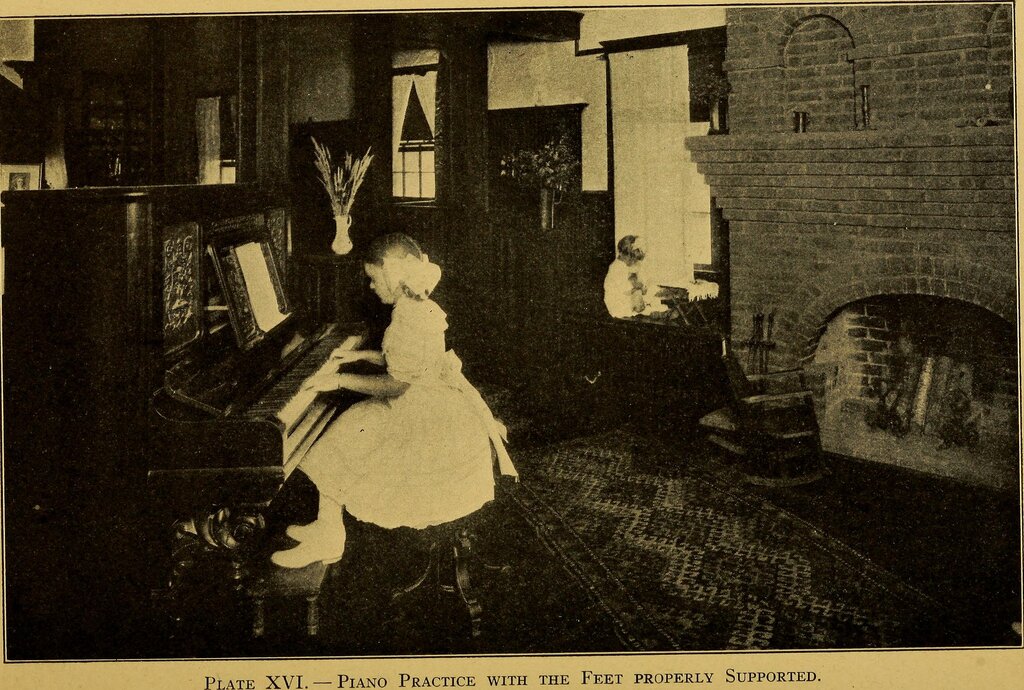
Keep your back straight but relaxed. Let your shoulders drop, and don't hunch over. Your arms should feel loose and free to move.
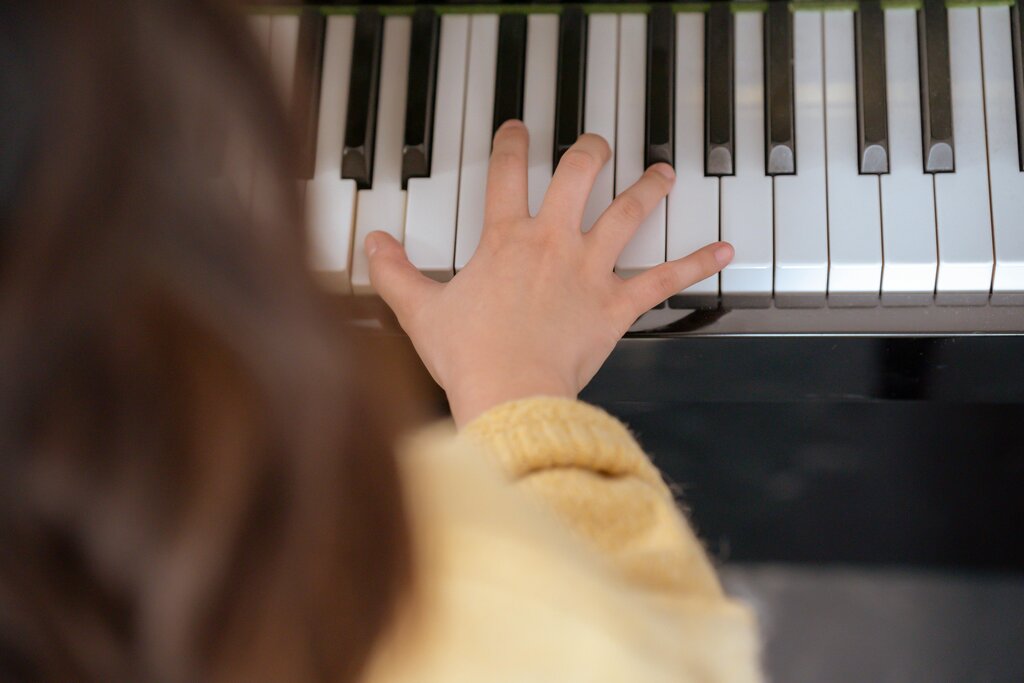
Now for your hands. Curve your fingers naturally, as if you're holding a ball. Your wrists should be level and flexible, not bent at a sharp angle. This position gives you strength and control without creating tension.
The Keyboard Layout
The piano keyboard might look intimidating, but it's based on a simple, repeating pattern. The notes are named after the first seven letters of the alphabet: A, B, C, D, E, F, G. After G, the cycle starts over again with A.
As you move to the right on the keyboard, the notes sound higher. This is called going up the keyboard. As you move to the left, the notes sound lower. This is called going down the keyboard.
The easiest way to find your way around is by looking at the black keys. You'll see they are grouped into sets of two and three. Every white key immediately to the left of a group of two black keys is a C. Find all the C's on your keyboard.
Once you find any C, you can name all the other white keys by moving up the alphabet. The key to the right of C is D, then E, F, G, A, B, and then the next C starts the pattern again.
The black keys are named relative to their white-key neighbors. They are called sharps (#) or flats (b). A sharp is the key immediately to the right (higher), and a flat is the key immediately to the left (lower). So, the black key between C and D can be called C-sharp or D-flat. They are the same note.
Take some time to get comfortable with the keyboard. Find all the C's. Then try finding all the G's. Say the names of the white keys out loud as you press them, moving up and down the piano.
What is the primary function of the pedals on a piano?
Which of the following describes the correct posture for playing the piano?
You've taken the first and most important step: getting acquainted with the instrument. Now you understand its parts, how to sit correctly, and the layout of the keys.