Physiological Dynamics of Vitamin B6 and Micronutrient Synergies
PLP Coenzymatic Mechanisms
The Versatile Chemistry of Vitamin B6
Vitamin B6 is not a single molecule, but a family of related compounds called vitamers. The three primary forms are pyridoxine (found mainly in plants), pyridoxal, and pyridoxamine (both common in animal tissues). While their side chains differ slightly, they all share a core pyridine ring structure. For our purposes, the star of the show is pyridoxal, because its aldehyde group is the key to its biochemical activity.
In the body, these vitamers are converted into their active coenzyme form: pyridoxal 5'-phosphate (PLP). An enzyme called pyridoxal kinase adds a phosphate group to the hydroxymethyl group at the 5th position of the ring. This phosphorylated form is what binds to enzymes and does the heavy lifting in over 140 different reactions, primarily in amino acid metabolism.
The Schiff Base Linkage
Before an enzyme can use PLP, it has to grab onto it. PLP doesn't just float freely in the active site; it forms a covalent bond. The aldehyde group of PLP reacts with the amino group of a specific lysine residue within the enzyme's active site. This reaction forms a linkage, creating what's known as an internal aldimine. This anchors the coenzyme, keeping it poised for action.
Once an amino acid substrate enters the active site, a fascinating swap occurs. The amino group of the substrate attacks the internal aldimine. This process, called transimination, kicks the enzyme's lysine residue off the PLP and forms a new Schiff base between the PLP and the substrate. This new complex is called the external aldimine. The substrate is now covalently bonded to the coenzyme, perfectly positioned for catalysis.
The Electron Sink
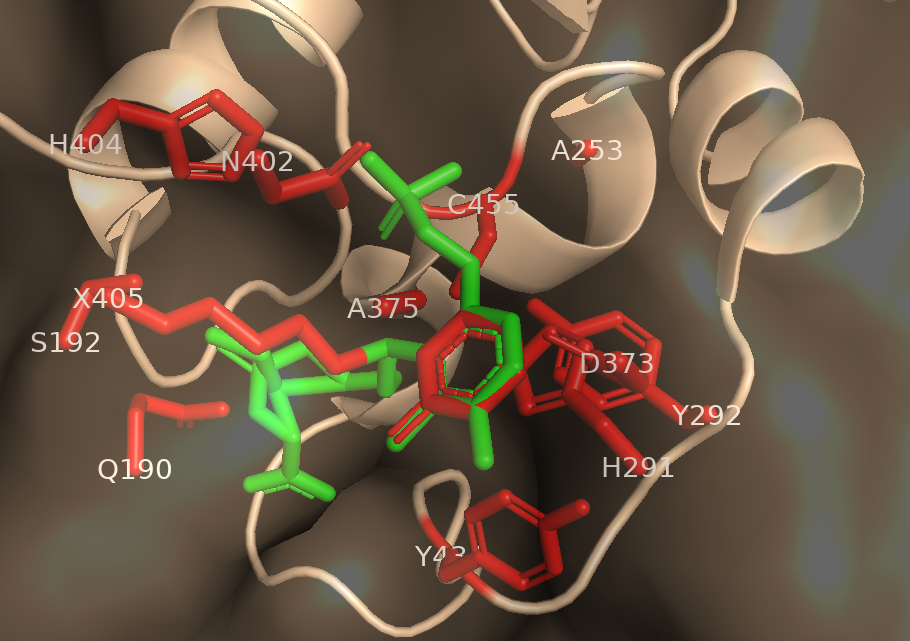
With the substrate locked in as an external aldimine, PLP's true power is unleashed. The pyridine ring of PLP has a protonated nitrogen atom, making it highly electronegative. This allows it to act as an , pulling electron density away from the substrate and down into the ring system. This destabilizes the bonds around the alpha-carbon (Cα) of the amino acid, making them easier to break. This is the foundational principle behind PLP's versatility.
By stabilizing this negative charge, PLP can facilitate the breaking of any of the three bonds connected to the Cα: the bond to its carboxyl group (decarboxylation), the bond to its side chain (various elimination/addition reactions), or the bond to its α-hydrogen (transamination and racemization).
The enzyme itself provides the final layer of control. Through precise positioning of the substrate, a principle known as stereoelectronic control, the enzyme orients the substrate so that the bond destined to be broken is perfectly aligned perpendicular to the PLP ring system. This optimal alignment ensures maximum orbital overlap, making that specific bond the weakest and dictating which of the many possible reactions will actually occur.
What is the active coenzyme form of Vitamin B6, which is directly involved in metabolic reactions?
The primary biochemical role of PLP's protonated pyridine ring during catalysis is to act as a(n) __________, which destabilizes the bonds around the amino acid's alpha-carbon.