Physics Units and Measurements Explained
Introduction to Physical Quantities
Describing the World with Physics
Physics is the science of how things work. From the smallest particles to the largest galaxies, it aims to describe the universe in a clear and predictable way. To do this, we can't just talk about things in vague terms. We need to measure them.
Think about baking a cake. You need to know how much flour, how much sugar, and the oven's temperature. These measurable properties are the building blocks of physics. They are called physical quantities.
Physical Quantity
noun
A property of a material or system that can be quantified by measurement.
Every day, you interact with physical quantities. When you check the time, you're measuring a quantity. When you weigh vegetables at the grocery store, you're measuring mass. When you follow a map, you're dealing with distance. Physics simply gives us a structured way to talk about and work with these everyday concepts.
Two Flavors of Quantities
Not all measurements are the same. Some are simple numbers, while others need a bit more information to be useful. Physical quantities fall into two main categories: scalars and vectors.
A scalar is a physical quantity that is fully described by its magnitude, which is just a fancy word for its size or numerical value.
Temperature is a perfect example of a scalar. If you say it's 25°C outside, you've told the whole story. There's no direction involved. Mass, time, and distance are also scalars. A bag of apples has a mass of 2 kilograms. A movie lasts for 120 minutes. You ran a total distance of 5 kilometers. These numbers speak for themselves.
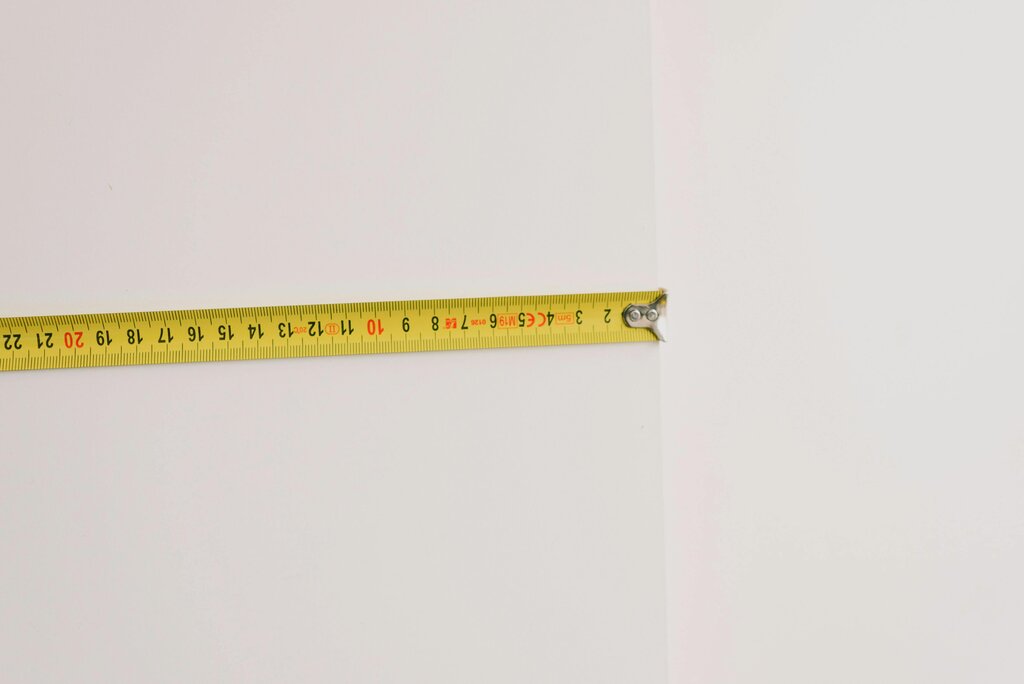
But what if you're giving someone directions? Simply saying "walk 5 kilometers" isn't very helpful. They need to know which way to walk. This is where vectors come in.
A vector is a physical quantity that has both magnitude and direction.
Force is a classic vector. If you push a box, you're applying a force of a certain strength (magnitude) in a specific direction. Velocity is another one. A car traveling at 60 kilometers per hour (magnitude) heading east (direction) has a velocity. If it were heading west, its velocity would be different, even if its speed was the same.
To keep them straight, we often represent vectors as arrows. The length of the arrow shows the magnitude, and the way it points shows the direction.
The table below summarizes the key differences and provides a few more examples.
| Feature | Scalar | Vector |
|---|---|---|
| Definition | Has magnitude only | Has magnitude and direction |
| Example | Speed (10 m/s) | Velocity (10 m/s North) |
| Example | Distance (20 meters) | Displacement (20 meters Down) |
| Example | Mass (5 kg) | Force (5 Newtons Right) |
Why Measurement Matters
So why is this all so important? Because measurement turns our observations about the world into data we can work with. It allows us to be objective. Instead of saying a car is "fast," we can say it's moving at 100 kilometers per hour. This precision allows us to make predictions, build technology, and test our ideas about how the universe works.
Every experiment, from a simple classroom activity to the complex operations at a particle accelerator, is built on measuring physical quantities. By understanding these fundamental concepts, you're taking the first step into the world of physics.
What is the primary difference between a scalar quantity and a vector quantity?
Which of the following is an example of a vector quantity?