Physics Meets Maths
Introduction to Mathematical Physics
The Language of the Universe
Physics and mathematics are deeply intertwined. Physicists observe the universe, from the orbit of a planet to the behavior of a subatomic particle, and search for the underlying rules. Mathematics provides the language to write those rules down. It transforms fuzzy observations into precise, testable laws.
Think of it like this: a physicist might notice that a ball always falls in a particular curved path. That's an observation. A mathematician provides the equation for a parabola, a tool that perfectly describes that path. With this mathematical tool, the physicist can now predict where the ball will be at any moment in its flight. This partnership allows us to not only describe what we see but also to predict what we can't see.
A Historical Partnership
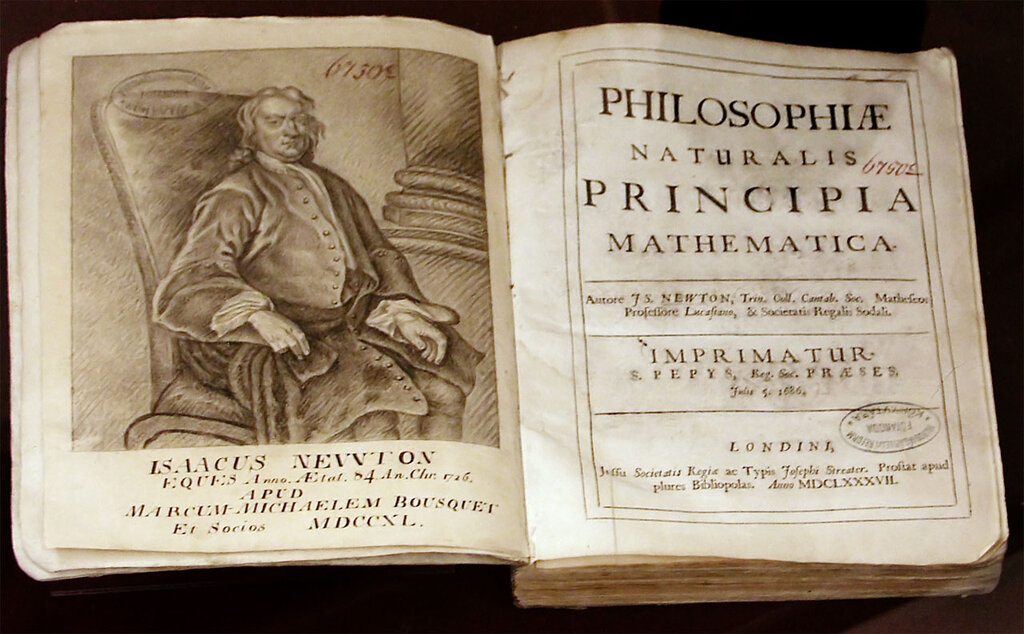
This collaboration has a long history. In the 17th century, Isaac Newton wanted to describe the laws of motion and gravity. He faced a problem: the mathematics of his time was great for static objects, but it couldn't handle things that were constantly changing, like the speed of a falling apple or the position of the Moon.
He needed a new mathematical language to describe change. So, he invented one: calculus. This wasn't a side project; it was a necessary tool to formulate his laws of physics. The physical problem of motion directly spurred a revolution in mathematics. Newton's work showed that physics and math could grow together, each pushing the other to new heights.
Centuries later, Albert Einstein faced a similar challenge. He had a revolutionary idea about gravity, proposing that it wasn't a force, but a curvature in the fabric of spacetime. To describe this, he needed a specific kind of geometry for curved surfaces, something far beyond the familiar angles and lines of Euclid.
Fortunately, the math already existed. About 60 years earlier, Bernhard Riemann had developed the very geometry Einstein needed as a purely abstract, theoretical exercise. It was a mathematical solution waiting for a physical problem to solve. Einstein's theory of general relativity is a prime example of physics finding the perfect, pre-existing mathematical framework to express a new understanding of the universe.
Why Does It Work So Well?
The success of this partnership raises a fascinating philosophical question. Why is the universe describable by mathematics? Physicist Eugene Wigner called this "the unreasonable effectiveness of mathematics in the natural sciences." It's almost magical that abstract concepts, often created with no thought of the real world, turn out to be the key to unlocking the universe's secrets.
Is the universe inherently mathematical, or is mathematics simply the most effective tool humans have invented to understand it?
There are different schools of thought. Some believe that math is a fundamental feature of the universe that we discover, like finding a fossil. Others argue that math is a human invention, a powerful language we created that just happens to be very good at modeling the world around us.
Either way, the relationship is undeniable. For instance, a field of abstract algebra called group theory was developed in the 19th century for purely mathematical reasons. A century later, physicists discovered it was the perfect tool for classifying the zoo of elementary particles, forming the foundation of the Standard Model of particle physics.
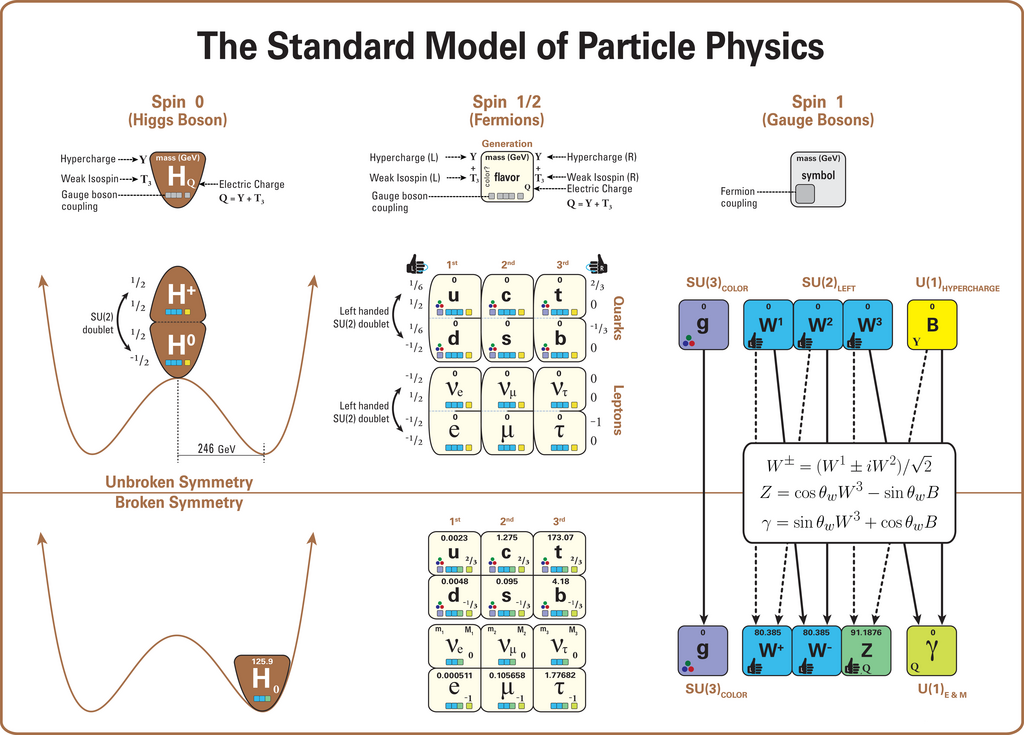
This deep and often surprising connection between abstract ideas and physical reality is the heart of mathematical physics. Let's see how well you've grasped these foundational concepts.
What is the primary role of mathematics in the field of physics?
Isaac Newton's development of calculus was primarily driven by the need to solve a physical problem.
This interplay, where physical inquiry drives mathematical innovation and abstract math provides tools for physical theories, has powered scientific progress for centuries.