Phrases and Clauses Mastery
Subject-Predicate Identification
The Basic Unit of Thought
Words rarely act alone. They cluster together into groups that function as a single unit of meaning. Think of a sentence like a machine. These word groups are the components, each performing a specific job. But not all components are built the same way. Some are simple parts, while others are like tiny engines, complete with their own power source.
The most fundamental way to classify these word groups is to check for a subject and a predicate. A subject is who or what performs the action. A predicate is the action itself, anchored by a verb. If a group of words contains both working together, it's a clause. If it's missing one or both, it's a phrase. This is the Subject-Predicate Test, and it's the key to understanding sentence architecture.
A clause has a subject and a predicate. A phrase does not.
Consider the sentence: "The dog with the floppy ears ran toward the old red ball."
Let's break it down:
- "The dog with the floppy ears" -> This is a unit of meaning describing the actor. It contains a noun ("dog") but no verb that the dog is performing.
- "ran" -> This is the core action.
- "toward the old red ball" -> This unit tells us where the dog ran. It has nouns ("ball") but no subject performing an action.
The group "The dog with the floppy ears" is a noun phrase. The group "toward the old red ball" is a prepositional phrase. Neither can stand alone as a complete thought. But combine the subject ("The dog with the floppy ears") with its predicate ("ran toward the old red ball"), and you get a complete clause, a mini-sentence.
Finding the Verb's Engine
The heart of a predicate is a special kind of verb called a finite verb. A finite verb is one that is anchored to a subject and a tense (like past, present, or future). It's the engine of the clause. Without it, you just have parts sitting on the workshop floor.
Verbs can also appear in forms called verbals. These look like verbs but act like other parts of speech. The three main types are gerunds (verbs ending in -ing used as nouns), participles (verbs used as adjectives), and infinitives (the 'to' form of a verb).
A phrase might contain a verbal, but it will never contain a finite verb that has its own subject. That's a critical distinction.
| Word Group | Subject? | Finite Verb? | Type |
|---|---|---|---|
| The girl laughing loudly | Yes ("girl") | No ("laughing" is a participle) | Phrase |
| To run a marathon | No | No ("to run" is an infinitive) | Phrase |
| Because she trained | Yes ("she") | Yes ("trained") | Clause |
In the table, "laughing loudly" describes the girl, acting as an adjective. "To run a marathon" functions as a concept, a noun or adverb, but has no one performing the action. Only "Because she trained" has a clear subject and a tensed verb, making it a clause. This highlights the structural gap in phrases. They're always missing the core subject-verb connection.
Complete and Incomplete Predicates
Once you've found a predicate, you can look at its own structure. The predicate includes the finite verb and everything that follows it, explaining what the subject is doing or being. We can divide the predicate into two parts: the simple predicate and the complete predicate.
- Simple Predicate: This is just the finite verb or verb phrase. It's the absolute core of the action.
- Complete Predicate: This includes the verb and all the words that modify it or receive its action (like objects and adverbs).
Let's go back to our example: "The dog with the floppy ears ran toward the old red ball."
- The subject is "The dog with the floppy ears."
- The simple predicate is just "ran."
- The complete predicate is everything else: "ran toward the old red ball."
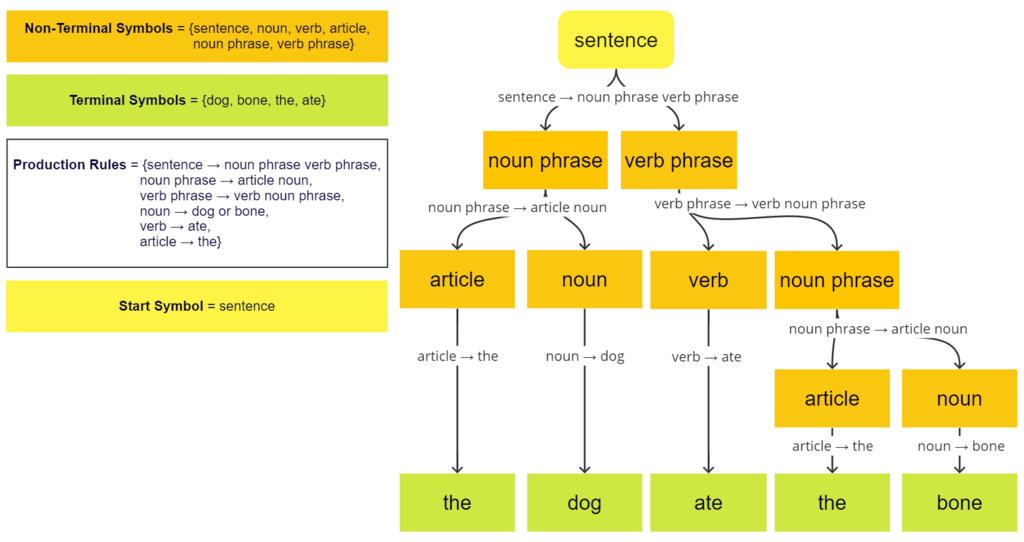
Understanding this distinction helps you see sentences not just as strings of words, but as layered structures. At the top level, you have the subject and the complete predicate. Within the predicate, you have the simple predicate doing the heavy lifting. This framework is essential for diagnosing sentence errors and building more complex, elegant sentences of your own.
What is the fundamental difference between a phrase and a clause?
Which of the following word groups is a clause?
Being able to split sentences into their core parts is the first step toward mastering grammar.