Photosynthesis Explained
Introduction to Photosynthesis
How Plants Make Food
Plants can't just walk to the fridge when they're hungry. They have to make their own food. They do this through a remarkable process called photosynthesis. It’s a way of turning simple, raw ingredients—sunlight, water, and air—into energy-packed sugar.
Essentially, photosynthesis converts light energy from the sun into chemical energy that the plant can use to grow and function.
This process isn't just important for plants; it's essential for almost all life on Earth. The energy captured by plants travels through the food web, feeding everything from tiny insects to giant whales. As a bonus, photosynthesis releases the oxygen we breathe. Every breath you take is a gift from plants and other photosynthetic organisms.
The Recipe for Sunlight
Like any good recipe, photosynthesis has key ingredients and a specific outcome. The plant takes in carbon dioxide from the air, pulls up water from the soil, and harnesses energy from sunlight.
Chlorophyll
noun
The green pigment found in plants that absorbs sunlight, giving them the energy needed to start the process of photosynthesis.
Inside the plant's cells, a green pigment called chlorophyll captures the sun's energy. This energy drives a chemical reaction that transforms the carbon dioxide and water into two crucial products: glucose (a type of sugar) and oxygen.
Glucose is the plant's food. It provides the energy for growth and repair. The oxygen is released back into the atmosphere as a byproduct.
The overall chemical equation for photosynthesis looks like this:
The Planet's Power Source
Photosynthesis is the foundation of our planet's ecosystems. Organisms that perform photosynthesis, like plants, algae, and some bacteria, are known as producers. They form the base of the food chain.
Animals, fungi, and other organisms that can't make their own food are called consumers. They get their energy by eating producers or by eating other consumers. Whether it's a rabbit nibbling on clover or a hawk swooping down on the rabbit, the original source of that energy was the sun, captured through photosynthesis.
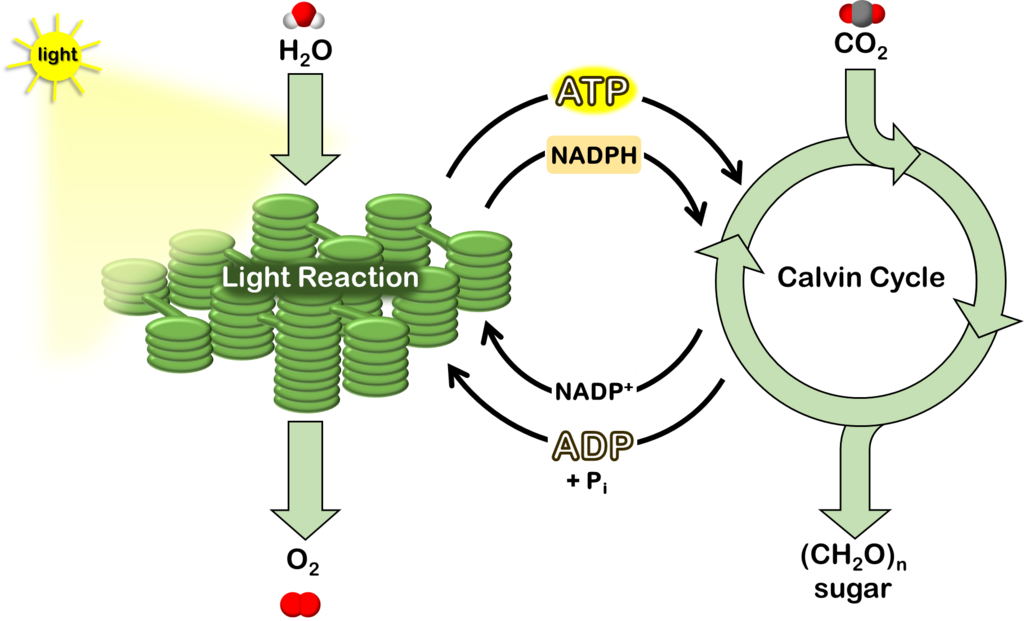
So, from the air we breathe to the food we eat, nearly everything can be traced back to this elegant chemical reaction. It's a quiet, constant process that sustains the vibrant web of life on our planet.