Photosynthesis Explained
Introduction to Photosynthesis
The Planet's Power Plant
Plants don't eat the way animals do. They can't hunt for food or graze in a field. Instead, they create their own fuel through a remarkable process called photosynthesis. Think of a plant as a tiny, solar-powered sugar factory. It takes in simple ingredients from the environment and uses the sun's energy to cook up a meal.
This process is the foundation for nearly all life on Earth. It produces the oxygen we breathe and the energy that flows through ecosystems, from the smallest insect to the largest whale.
Photosynthesis is a vital process that allows plants, algae, and certain bacteria to convert sunlight into energy, producing oxygen and food essential for most living organisms.
The Recipe for Life
The recipe for photosynthesis involves three key ingredients: carbon dioxide (), water (), and sunlight. Plants absorb carbon dioxide from the air through tiny pores in their leaves, and they draw water up from the soil through their roots. Sunlight provides the energy to kickstart the chemical reaction.
The magic happens inside plant cells, specifically in tiny structures called chloroplasts. These are the green parts of the plant that contain a pigment called chlorophyll, which is excellent at absorbing light energy. Using this energy, the plant transforms the ingredients into two crucial products: glucose (a type of sugar) and oxygen ().
Let’s break down this equation:
- $6CO_2$: Six molecules of carbon dioxide.
- $6H_2O$: Six molecules of water.
- $C_6H_{12}O_6$: One molecule of glucose. This sugar is the plant's food, providing the energy it needs to grow and function.
- $6O_2$: Six molecules of oxygen. This is released back into the atmosphere as a byproduct.
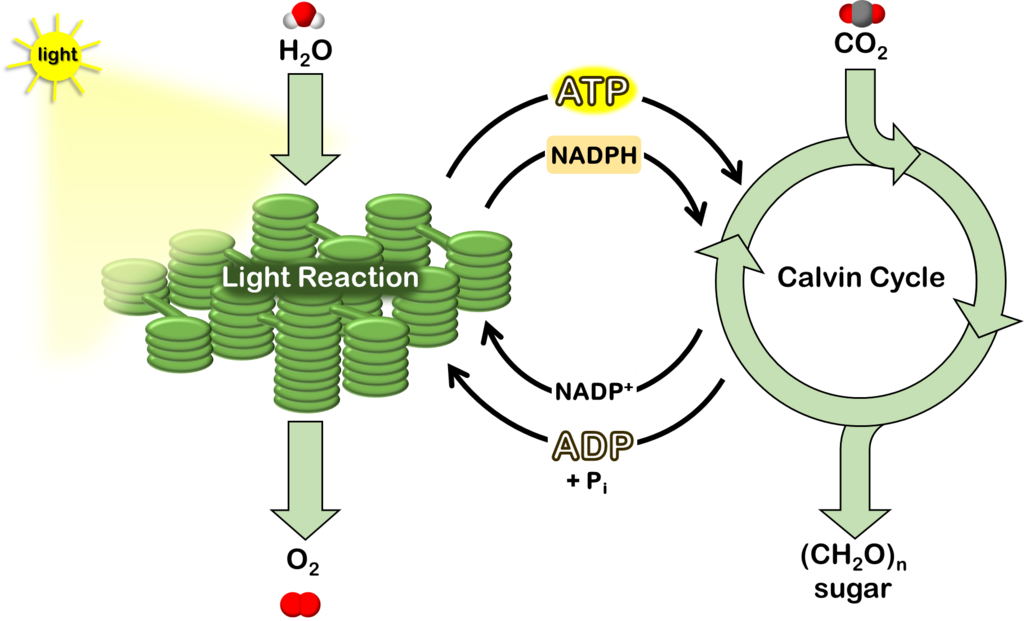
The glucose is the plant’s energy source. It can be used immediately, or it can be stored for later, much like we store energy in our bodies. The oxygen, while a waste product for the plant, is essential for most animals, including humans, for breathing.
A Global Impact
Photosynthesis isn't just a clever survival strategy for plants; it shapes our entire planet. It's a cornerstone of the global carbon cycle, the continuous movement of carbon atoms between the atmosphere, oceans, land, and living organisms.
Plants and other photosynthetic organisms act as Earth's lungs. They pull vast amounts of carbon dioxide, a greenhouse gas, out of the atmosphere. This process helps regulate the planet's climate. The carbon is then locked away in the plant's structure, becoming part of its leaves, stems, and roots.
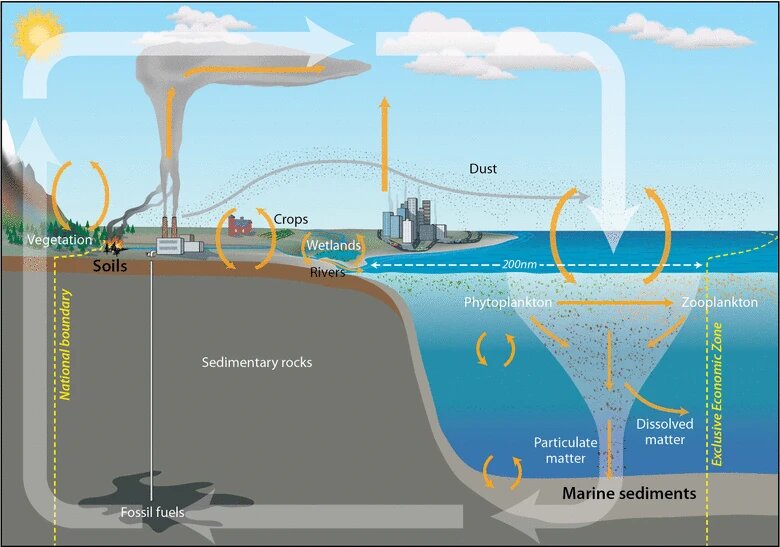
When animals eat plants, they are consuming this stored energy and carbon. The energy moves up the food chain, sustaining entire ecosystems. Without producers—the organisms that perform photosynthesis—there would be no food for consumers.
From the air we breathe to the food we eat, we depend on this quiet, constant work of plants. It’s a fundamental process that connects the sun's energy to life on Earth.
Ready to test your knowledge? Let's see what you've learned about the basics of photosynthesis.
What is the primary purpose of photosynthesis for a plant?
Which of the following is a product of photosynthesis, not an ingredient?
This simple process of turning sunlight into energy is the engine that drives life on Earth, connecting every living thing to the sun.