Photonics and ASIC Design
Introduction to Photonics
The Science of Light
Photonics is the science and technology of light. It deals with generating, guiding, manipulating, and detecting light particles, called photons. While the term might sound futuristic, the principles of photonics are at work all around you, from the fiber-optic cables that bring you the internet to the laser scanners at the grocery store.
photon
noun
A particle representing a quantum of light or other electromagnetic radiation. A photon carries energy proportional to the radiation frequency but has zero rest mass.
A Wave and a Particle
One of the strangest and most fundamental ideas in modern physics is that light has a dual nature. Sometimes it behaves like a wave, and other times it acts like a particle. It’s not one or the other; it’s somehow both at once.
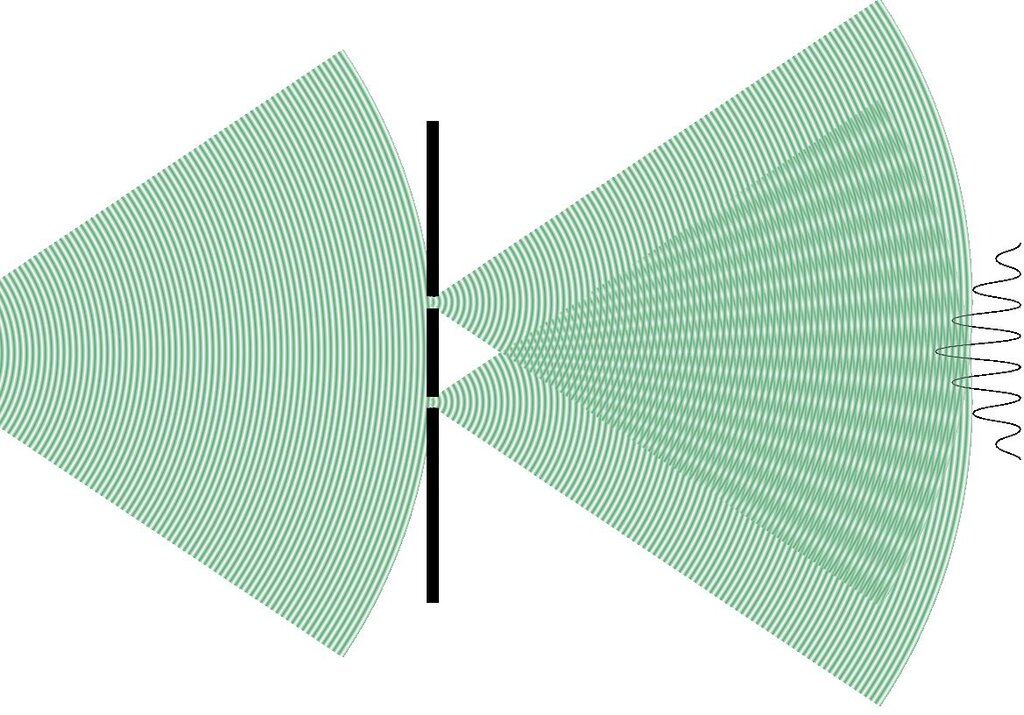
Evidence for light’s wave-like nature comes from experiments showing that light can bend around corners (diffraction) and that light waves can interfere with each other, creating patterns of light and dark. The classic double-slit experiment shows this perfectly. When you shine light through two narrow slits, the waves interfere with each other on the other side, creating a distinct pattern you wouldn't see if light were just a stream of tiny bullets.
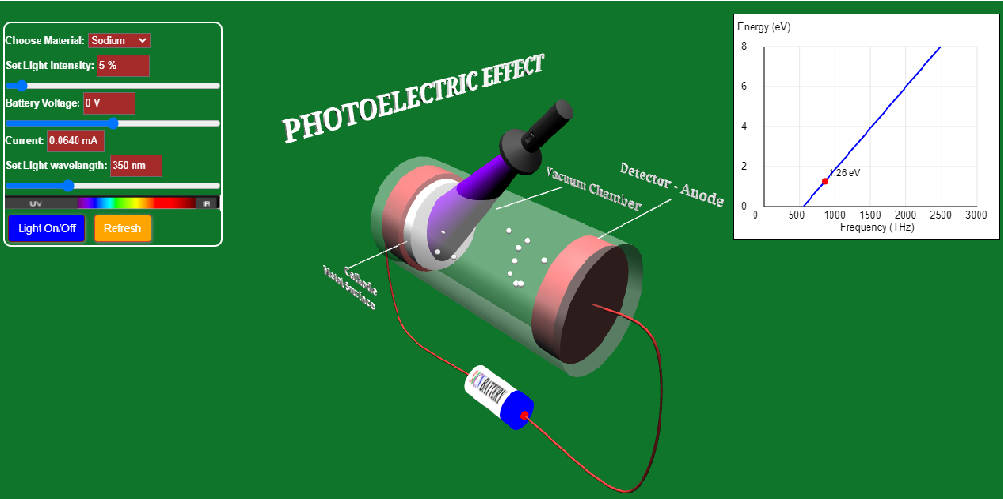
But that's not the whole story. At the turn of the 20th century, scientists studying the photoelectric effect found something puzzling. When light hits a metal surface, it can knock electrons loose. They discovered that the energy of the ejected electrons depended on the light's frequency (its color), not its intensity (its brightness). A dim blue light could eject electrons while a very bright red light could not.
This led Albert Einstein to propose that light itself is made of discrete packets of energy: photons. A single photon of blue light has more energy than a single photon of red light. To knock an electron free, a single photon needs to have enough energy on its own. It doesn't matter how many low-energy red photons you throw at the metal; if none of them has enough energy individually, no electrons will be ejected.
So, what is light? It's a wave when it travels, but it's a particle (a photon) when it interacts with matter. This concept, called wave-particle duality, is a cornerstone of quantum mechanics.
The Spectrum of Light
The visible light we see is just a tiny slice of a much broader range of light called the electromagnetic spectrum. All electromagnetic radiation travels at the speed of light and is made of photons, but these photons come in a huge range of energies and wavelengths.
At one end of the spectrum, we have long-wavelength, low-energy radio waves. As we move up in energy, we encounter microwaves, infrared radiation (which we feel as heat), visible light, ultraviolet (UV) light, X-rays, and finally, the highest-energy gamma rays.
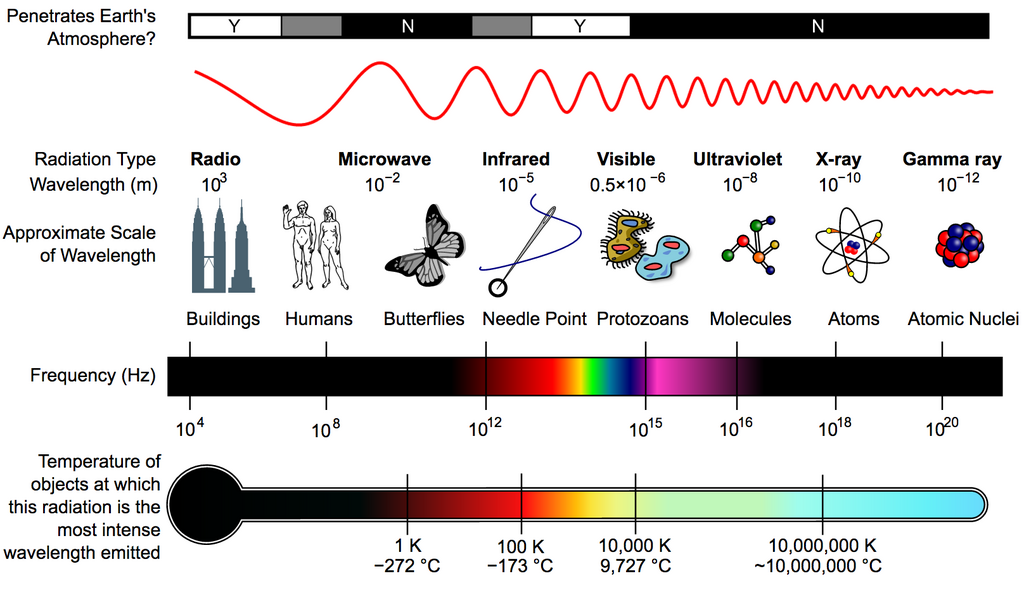
Photonics works across this entire spectrum, but many common applications, like telecommunications and computing, operate in the infrared and visible regions.
How Light and Matter Mix
The interaction between light and matter is at the heart of nearly all photonic technology. When a photon encounters an atom, one of three basic things can happen: absorption, emission, or transmission.
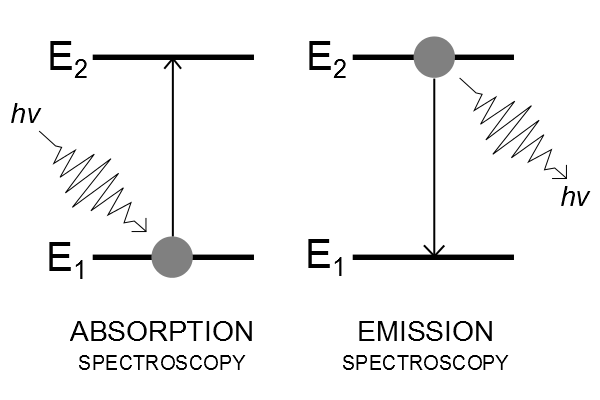
Absorption: If a photon's energy matches the difference between two energy levels in an atom, the atom can absorb the photon. An electron in the atom uses that energy to jump up to a higher, more energetic level. The photon is gone, and its energy is now stored in the atom.
Emission: An atom with an electron in a high energy level is unstable. It will eventually fall back to a lower energy level. When it does, it releases the extra energy by spitting out a photon. The energy of this new photon precisely matches the energy difference between the two levels. This is the principle behind lasers and LEDs.
Transmission: If a photon's energy does not match any of the possible energy jumps within an atom, the atom can't absorb it. The photon simply passes through the material as if it weren't there. This is why glass is transparent to visible light—the energy of visible photons doesn't match the energy gaps in the glass molecules.
By carefully choosing materials and designing structures that control how photons are absorbed, emitted, and transmitted, we can build powerful devices that shape our modern world.
Let's check your understanding of these fundamental ideas.
The photoelectric effect provides crucial evidence for which aspect of light's nature?
You shine a dim blue light on a metal plate, and it ejects electrons. According to the principles of photonics, what will happen if you replace the dim blue light with a very bright red light?
Understanding these core principles—the dual nature of light, the vast electromagnetic spectrum, and the ways light interacts with matter—is the first step into the world of photonics.