Photonic Quantum Computing Explained
Introduction to Quantum Computing
Beyond Bits and Bytes
Classical computers, from your smartphone to the most powerful supercomputers, think in terms of bits. A bit is the smallest unit of data, and it can only be in one of two states: a 0 or a 1. It's like a light switch that is either on or off. Simple, reliable, and the foundation of the entire digital world.
Quantum computing operates on a completely different set of rules, borrowed from the strange world of quantum mechanics. Instead of bits, it uses quantum bits, or qubits. A qubit isn't limited to just 0 or 1. It can be a 0, a 1, or both at the same time.
This ability to exist in multiple states at once is called superposition, and it’s the first key to unlocking the power of quantum computers.
The Power of Superposition
Imagine spinning a coin. While it's in the air, spinning, is it heads or tails? In a way, it's both. Only when it lands and you measure it does it settle into a single, definite state. A qubit is like that spinning coin. It exists in a combination of both 0 and 1, a state of superposition, until it's measured.
This isn't just a clever trick. It fundamentally changes the amount of information a system can hold. Two classical bits can store one of four possible combinations (00, 01, 10, or 11). But two qubits in superposition can store all four of those combinations simultaneously. As you add more qubits, the information capacity grows exponentially. With just 300 qubits, you could represent more classical states than there are atoms in the known universe.
This massive parallelism is why quantum computers have the potential to solve certain problems that are impossible for even the most powerful classical supercomputers. They can explore a vast number of possibilities at once, rather than having to check each one sequentially.
Entanglement A Spooky Connection
The second key principle is entanglement. It's a counterintuitive phenomenon that Albert Einstein famously called "spooky action at a distance." When two or more qubits become entangled, their fates are linked. No matter how far apart they are, the state of one instantly affects the other.
Think of it like having a pair of magic gloves. You put each one in a separate box and mail one to a friend on the other side of the planet. Before anyone opens a box, you don't know which glove is which. But the moment your friend opens their box and sees a left-handed glove, you instantly know, without looking, that you have the right-handed one. The state of your glove was determined the moment your friend's was measured.
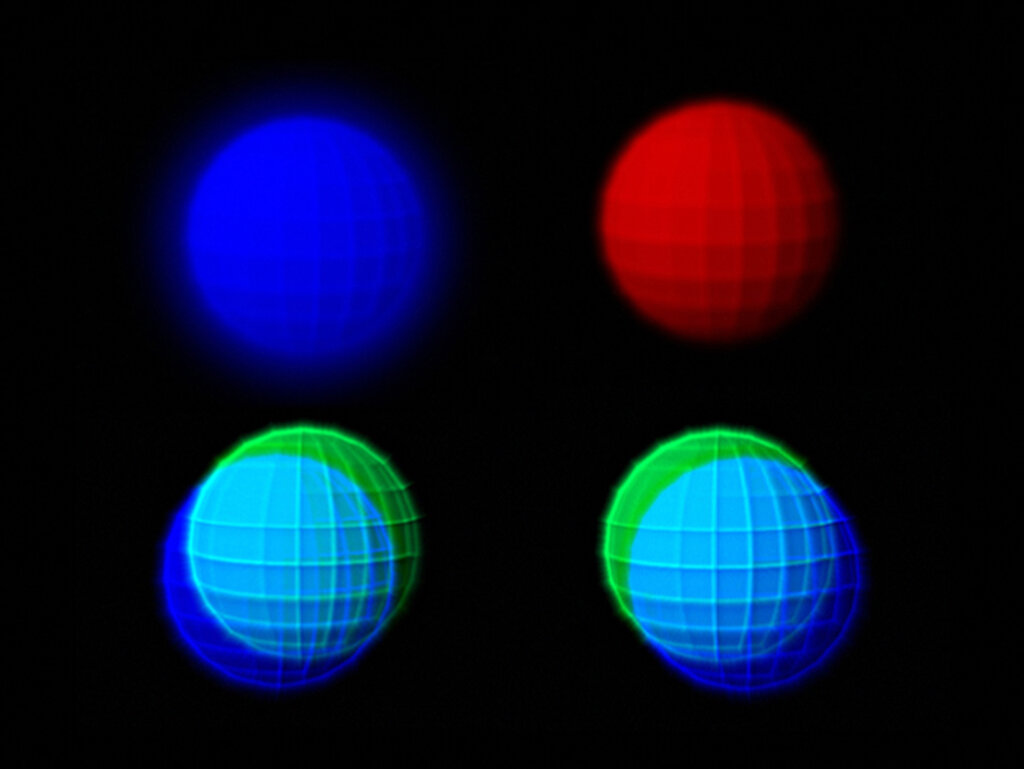
In quantum computing, entanglement allows for the creation of complex, correlated states across multiple qubits. This intricate web of connections enables powerful computational tricks and is a crucial ingredient in many quantum algorithms.
Quantum vs Classical
So, how do these two approaches to computing stack up? While a quantum computer won't replace your laptop for browsing the internet or writing an email, it represents a fundamentally different and more powerful way to tackle specific kinds of problems.
| Feature | Classical Computing | Quantum Computing |
|---|---|---|
| Basic Unit | Bit | Qubit |
| State | 0 or 1 | Superposition of 0 and 1 |
| Core Principle | Deterministic logic | Probabilistic quantum mechanics |
| Scaling | Add more bits (linear growth) | Add more qubits (exponential growth) |
| Best For | Everyday tasks, most software | Optimization, simulation, cryptography |
Understanding superposition and entanglement is the first step into this new frontier. These principles allow quantum computers to process information in a way that has no parallel in the classical world, opening the door to solving some of humanity's most complex challenges.
What is the fundamental unit of information in a classical computer?
Which analogy from the text best describes the concept of a qubit in a state of superposition?