Photography in Tamil Culture
Introduction to Photography
Drawing with Light
At its core, photography is the art of capturing light. The word itself comes from Greek words meaning "drawing with light." Every photograph you've ever seen, from a quick phone snapshot to a stunning landscape, is a record of light hitting a sensitive surface.
The earliest ancestor of the camera was a simple device called the camera obscura, which is Latin for "dark room." It's a box or a room with a tiny hole in one side. Light from outside passes through the hole and projects an upside-down image of the scene onto the opposite wall. The challenge for early inventors was finding a way to make that fleeting image permanent.
How a Camera Works
Modern cameras are far more complex, but they operate on the same basic principle. They are essentially boxes designed to control light. A few key components work together to capture an image.
Lens: A series of glass elements that gathers light from a scene and focuses it onto the sensor or film. Aperture: An adjustable opening inside the lens, much like the pupil of your eye. It can get bigger (dilate) to let in more light or smaller (constrict) to let in less. Shutter: A curtain in front of the sensor that opens and closes. It controls how long light is allowed to hit the sensor. Sensor (or Film): A light-sensitive surface at the back of the camera that records the image projected by the lens.
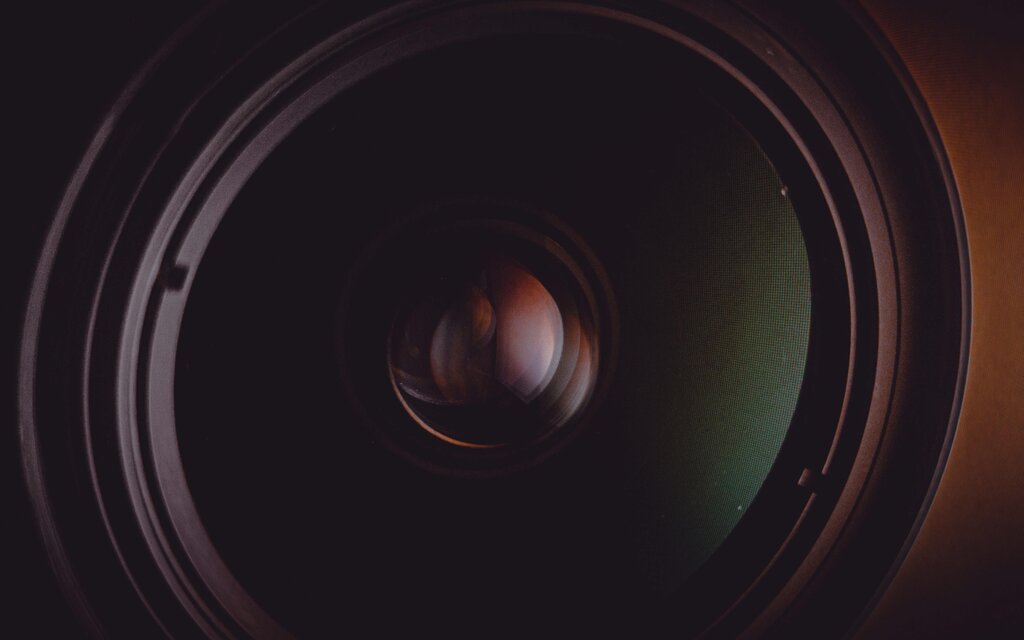
Capturing Light
The combination of aperture, shutter speed, and the sensor's sensitivity determines the exposure—the total amount of light used to create the image. Getting the exposure right is the foundation of photography.
-
Aperture is measured in f-stops (like f/1.8, f/4, f/11). A smaller f-number means a wider opening, which lets in more light. A larger f-number means a smaller opening, letting in less light.
-
Shutter Speed is how long the shutter stays open, measured in seconds or fractions of a second (like 1/1000s or 2s). A fast shutter speed freezes motion, while a slow shutter speed creates a blur from moving objects.
-
ISO represents the sensor's sensitivity to light. A low ISO (like 100) is less sensitive and works best in bright light. A high ISO (like 3200) is very sensitive, which is useful in dark situations, but can create digital "noise" or graininess in the image.
These three settings are interconnected. If you change one, you often need to adjust another to maintain the same level of brightness in your photo. For example, if you use a faster shutter speed (less light), you might need to use a wider aperture (more light) to compensate.
Framing Your Shot
Beyond the technical settings, photography is about deciding what to include in your picture and how to arrange it. This is called composition. A strong composition guides the viewer's eye and makes an image more interesting.
One of the most common compositional guidelines is the Rule of Thirds. Imagine your frame is divided into nine equal rectangles by two horizontal and two vertical lines. The rule suggests placing important elements along these lines or at the points where they intersect.
This simple guideline helps create more balanced and dynamic photos than simply placing your subject in the dead center of the frame. It's a starting point for thinking about how to arrange the world within your photograph.
The word "photography" has its roots in Greek. What does it literally mean?
If you want to let the maximum amount of light into your camera through the lens, which of these aperture settings would you choose?
Mastering these fundamentals of light, camera controls, and composition is the first step on any photographic journey.