Phishing Defense for Corporate Networks
Understanding Phishing
What is Phishing?
Phishing is a type of cybercrime where attackers try to trick you into giving them sensitive information, like passwords or credit card numbers. Think of it like a fisherman casting a baited hook. The attacker, or "phisher," sends a fraudulent message designed to look like it's from a legitimate source, such as your bank, a social media site, or even a colleague.
The goal is simple: to lure you into clicking a malicious link or opening a dangerous attachment, getting you to reveal information you otherwise wouldn't.
These scams are effective because they prey on trust. By impersonating a familiar brand or person, attackers bypass our natural skepticism. They create convincing fakes of websites and emails we use every day, making it easy to fall for the trap if you're not paying close attention.
Types of Phishing Attacks
Not all phishing attacks are the same. Some are like casting a giant net, while others are like using a custom-made lure for a specific fish. Let's look at the most common types.
Email Phishing
noun
The most common form of phishing, where attackers send thousands of fraudulent emails to a broad audience, hoping a small percentage will fall for the scam.
This is the classic, mass-market approach. Attackers blast out generic messages hoping to hook anyone who has an account with the impersonated company. These emails often look like password reset notifications, shipping confirmations, or alerts about suspicious account activity.
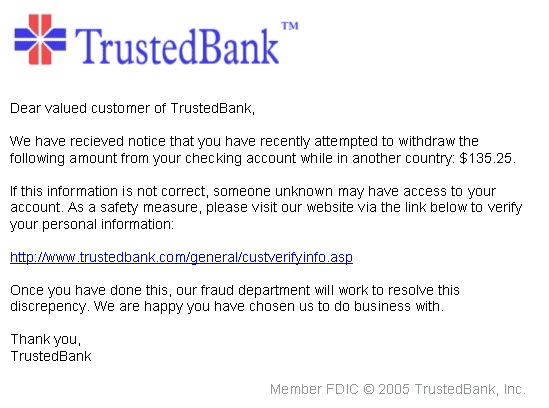
A more targeted and dangerous variant is spear phishing. Instead of sending one message to millions, an attacker researches a specific individual or organization. The email is customized with personal details, like the target's name, job title, or information about a project they're working on. This personalization makes the message seem much more credible.
For example, you might receive an email that appears to be from your IT department asking you to test a new login portal for a software system your team actually uses. Because it contains specific, relevant details, you're more likely to trust it.
Spear phishing is handcrafted for its victim, making it much harder to detect than a generic phishing email.
Whaling is a specific type of spear phishing that targets high-profile individuals—the "big fish." These targets are typically senior executives like CEOs, CFOs, or other leaders who have access to highly sensitive company information or the authority to make large financial transfers.
A whaling attack might come in the form of a fake legal subpoena from a government agency or an urgent, confidential request from another executive. The stakes are much higher, as a successful whaling attack can lead to significant financial loss or a major data breach.
The Psychology of the Scam
Phishing is fundamentally about manipulating human psychology. Attackers exploit our natural emotional responses to bypass logical thinking. They know that when we're panicked, curious, or rushed, we're more likely to make mistakes.
Most phishing attacks create a sense of immediacy and influence fear to extract information from end-users.
Here are some of the key psychological tactics they use:
-
Urgency: Messages often create a false sense of a deadline. You might see phrases like "Your account will be suspended in 24 hours" or "Immediate action required." This pressure is designed to make you act first and think later.
-
Fear: Many phishing emails threaten you with a negative consequence. Common examples include warnings about a data breach, a failed payment, or suspicious activity on your account. The fear of something bad happening can override your caution.
-
Authority: We're conditioned to respect authority figures. Attackers exploit this by impersonating people or organizations we trust, such as a boss, a government agency like the IRS, or a well-known company. An email that appears to come from your CEO is more likely to get an immediate response.
-
Greed and Curiosity: Some scams appeal to our desire for a reward or our curiosity. Messages offering a prize, a tax refund, or access to a secret document can be powerful motivators for clicking a link.
By understanding these tactics, you can start to recognize the emotional triggers in a message. This awareness is the first step toward spotting a phishing attempt before it's too late.