Phishing Defense for Corporate Networks
Understanding Phishing
The Digital Con Game
Phishing is a type of online scam where criminals impersonate legitimate organizations or people to trick you into revealing sensitive information. Think of it as a digital con artist. The goal is usually to steal things like passwords, credit card numbers, or bank account details. Sometimes, the aim is to get you to install malicious software, known as malware, on your device.
This isn't a new problem. The term "phishing" emerged in the mid-1990s, when hackers targeted America Online (AOL) users. They would pose as AOL employees to get users to reveal their passwords. The tactics have grown much more sophisticated since then, but the basic principle remains the same: deception.
Our observation shows that phishers are dynamic and depend more on social engineering techniques rather than software vulnerabilities.
The Many Faces of Phishing
Phishing attacks come in many forms, each using a different channel to reach potential victims. While the goal is the same, the methods vary.
Phishing
noun
The fraudulent practice of sending deceptive communications that appear to come from a reputable source, in order to steal sensitive data.
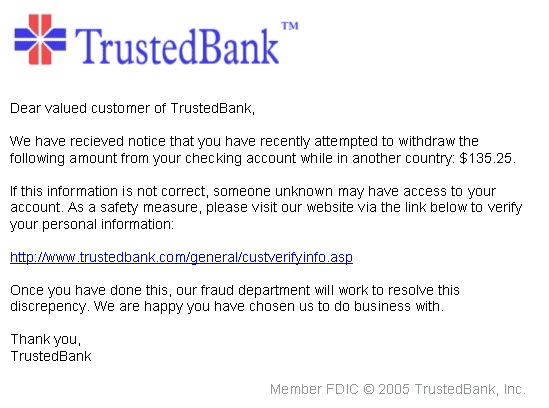
The most common type is email phishing. This is a numbers game. Attackers send out thousands, or even millions, of generic emails. They might look like they're from a bank, a social media site, or an online store. Because they're sent so widely, the messages are often impersonal, starting with "Dear Customer" or something similar. The hope is that out of all the recipients, a few will take the bait.
A more targeted and dangerous version is spear phishing. Instead of a wide net, this is a targeted attack on a specific individual or organization. The attacker often does their homework, gathering personal details from social media or other public sources to make the message highly convincing.
Spear phishing targets individuals: instead of "Dear Customer" an email might address you by name, refer to a recent transaction you've made and/or draw on other information that you've shared online – often on social networks.
Phishing has also moved beyond email:
- Vishing: This is voice phishing. Attackers call you, often using automated systems, pretending to be from your bank, the government, or a tech company. They might claim there's a problem with your account and ask you to "verify" personal information.
- Smishing: This is phishing via SMS, or text messages. You might get a text with a link, claiming you've won a prize, have a package delivery, or need to update your account information. These links lead to fraudulent websites.
- Quishing: A newer method that uses QR codes. An attacker might place a sticker with a malicious QR code over a legitimate one on a menu or poster. When you scan it, you're taken to a fake website designed to steal your data.
The Psychology of the Scam
Phishing works because it exploits human psychology. Attackers don't just rely on fake logos; they manipulate our emotions and natural instincts to make us act without thinking.
Social engineering is the art of exploiting human psychology to manipulate people into giving up confidential information or taking actions that are harmful to themselves or others.
One of the most common tactics is creating a sense of urgency. Messages often claim your account will be closed, you'll be charged a fee, or you'll miss out on a great deal if you don't act immediately. This pressure is designed to make you panic and click before you have a chance to question the message's legitimacy.
Fear is another powerful motivator. A phishing email might warn you that your account has been compromised or that suspicious activity has been detected. To solve the scary problem, you're told to click a link and log in, which is exactly how they steal your credentials.
Attackers also leverage our tendency to respect authority. By impersonating a CEO, a government agency like the IRS, or a police department, they make their requests seem official and non-negotiable.
Finally, they play on our curiosity or desire for a reward. An email might promise a large sum of money, a free vacation, or exclusive information. The lure of a prize can be enough to make someone overlook the warning signs and click a dangerous link.
Now that you understand the different types of phishing and the psychology behind them, let's test your knowledge.
What is the primary goal of most phishing attacks?
An attacker calls you pretending to be from your bank and asks you to confirm your account number. What is this specific type of attack called?
Understanding these tactics is the first step. By recognizing the methods scammers use to trick people, you're better equipped to spot a phish in the wild.