Phishing Defense for Corporate Networks
Understanding Phishing
The Art of Deception
Cyberattacks often sound like complex, high-tech operations. But one of the most common and effective methods relies on a very old trick: deception. This is the core of phishing.
phishing
noun
A type of cyberattack where attackers impersonate a trustworthy entity to trick people into giving up sensitive information like usernames, passwords, and credit card details.
Think of it like a fisherman casting a lure. The attacker, or “phisher,” sends out bait, usually in the form of a fraudulent email, text message, or website. The goal is to hook a victim and reel in their private data. The term itself is a play on the word “fishing,” with “ph” being a common hacker variant.
While phishing can target individuals, it's a massive threat to organizations. A single employee falling for a scam can compromise an entire corporate network.
Types of Phishing
Not all phishing attacks are the same. They range from broad, generic attempts to highly targeted, personal messages. Understanding the different types helps reveal how sophisticated these scams can be.
Email Phishing: This is the most common form. Attackers send mass emails to thousands of people, hoping a few will bite. These emails often look like they're from a well-known company, like a bank, a social media site, or a shipping service.
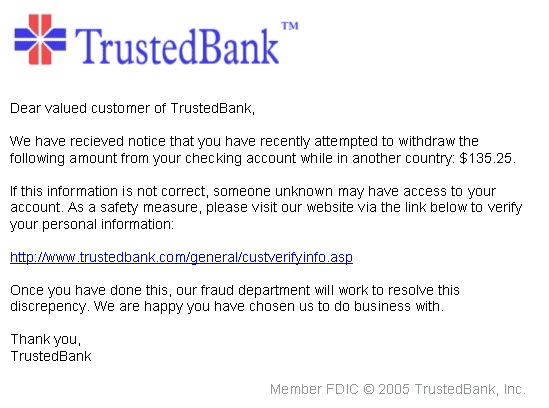
A more targeted and dangerous approach is spear phishing.
Spear Phishing: Unlike the wide-net approach of general phishing, spear phishing targets a specific individual or group. The attacker often researches their target beforehand, using information from social media or company websites to make the email seem more personal and legitimate. It might mention a colleague's name or a project the target is working on.
Then there's whaling, which takes spear phishing to the next level.
Whaling: This is a spear phishing attack aimed at high-profile targets within an organization, such as a CEO, CFO, or other senior executives. The goal is often to trick the executive into making a large wire transfer or revealing confidential company strategy. The “whale” is a big catch, and the potential payoff for the attacker is huge.
Tactics and Impact
Phishing attacks succeed by exploiting human psychology. They create a sense of urgency or fear to make people act rashly. You might get an email saying your account has been compromised and you must click a link immediately to fix it. Or, it could be a message promising a prize or a great deal that's about to expire.
These messages often contain cloned logos, familiar-looking layouts, and email addresses that are just one or two characters off from the real thing. The links might look correct, but they lead to fake websites designed to harvest your login credentials.
The consequences for a company can be devastating.
- Data Breach: Sensitive customer information, trade secrets, or employee data can be stolen and sold or released publicly.
- Financial Loss: Attackers can use stolen credentials to access bank accounts or trick employees into making fraudulent payments.
- Reputation Damage: A successful attack erodes customer trust, which can be difficult and expensive to regain. It can also lead to legal action and regulatory fines.
Real-World Incidents
Phishing isn't just a theoretical threat. It's behind some of the largest security breaches in history.
In 2016, the presidential campaign of John Podesta was compromised through a simple spear phishing email. The email, disguised as a security alert from Google, tricked him into revealing his password. This gave hackers access to tens of thousands of sensitive emails.
Another famous case involved the tech company Ubiquiti Networks in 2015. Attackers used a whaling attack, impersonating company executives to trick the finance department. They successfully initiated fraudulent wire transfers, resulting in a loss of over $40 million.
These examples show how a single deceptive email can have far-reaching consequences, affecting everything from politics to corporate finance. It highlights the critical need for awareness, as technology alone cannot always stop an attacker who is manipulating human trust.