Phishing Attack Detection for Corporate Networks
Understanding Phishing
What is Phishing?
Think of phishing as digital bait. An attacker, pretending to be someone you trust like your bank or a popular online store, dangles an enticing or alarming message in front of you. The goal is to trick you into "biting" by clicking a malicious link or revealing personal information.
Phishing
noun
A type of social engineering attack where attackers deceive people into revealing sensitive information, such as login credentials or credit card numbers, by masquerading as a trustworthy entity.
These attacks are incredibly common because they play on human psychology rather than complex code. If successful, they can lead to identity theft, financial loss, or unauthorized access to personal and work accounts. The attacker isn't hacking your computer; they're hacking your trust.
Common Bait
Phishing attacks come in many forms, but most fall into a few common categories. The most classic method is email phishing.
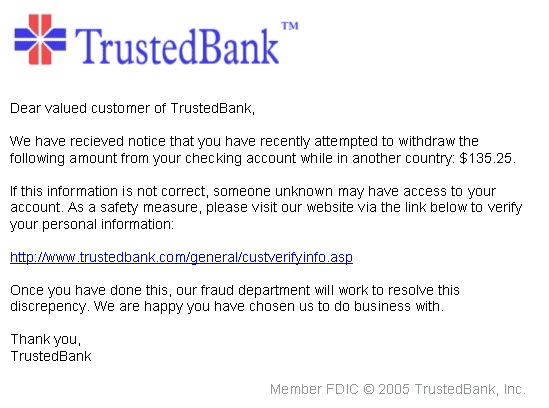
These emails often look official, complete with company logos and formatting. They might claim there's a problem with your account, a suspicious login attempt, or an issue with a payment. The goal is always the same: get you to click a link that leads to a fake website where you'll be prompted to enter your credentials.
Another popular method is smishing, which is just phishing delivered via SMS text message.
Your package has a customs fee due. Follow this link to pay and schedule delivery: [malicious link]
Because text messages are short and often viewed on the go, people can be less skeptical. The links might look shortened and legitimate, but they lead to the same kinds of malicious sites as email attacks.
Finally, there's vishing, or voice phishing. This happens over the phone. An attacker might call you pretending to be from tech support, your bank's fraud department, or even a government agency. They use a convincing tone and made-up scenarios to coax sensitive information out of you, such as your social security number or a password reset code that was just sent to your phone.
The Psychology of the Scam
Phishing works by exploiting human emotions and natural responses. Attackers don't need sophisticated software when they can manipulate you into giving them what they want. They rely on a few key tactics.
Most phishing attacks create a sense of immediacy and influence fear to extract information from end-users.
A message saying "Your account will be suspended in 24 hours unless you take action" triggers a panic response. When you're worried, you're less likely to think critically and more likely to act rashly. This sense of urgency is an attacker's best friend.
Another tactic is appealing to authority. We are conditioned to trust figures like bank managers, government officials, or IT administrators. Phishers impersonate these roles to make their requests seem legitimate and non-negotiable. They might use official-sounding language or titles to enhance the illusion.
Finally, attackers exploit curiosity and greed. An unexpected email promising a large tax refund, a prize, or a special discount can be tempting. The desire for a reward can override caution, leading you to click a link or download an attachment without thinking about the potential risks.
What is the primary goal of a phishing attack?
An attack that uses a phone call to trick someone into giving up personal information is known as what?