Phenomenology Through the Eyes of Jean-Luc Marion
Introduction to Phenomenology
The Study of Experience
How do we experience the world? Not what is the world made of, but what is it like to see a color, feel a pang of regret, or hear a piece of music? This is the central question of phenomenology. It's a branch of philosophy that focuses on the structures of consciousness and experience from a first-person perspective.
phenomenology
noun
The philosophical study of the structures of experience and consciousness as experienced from the first-person point of view.
Instead of asking whether an object is 'real' in an objective, scientific sense, a phenomenologist asks, 'What is my experience of this object?' It's a shift from the world as it is to the world as it appears to us.
The Founder: Edmund Husserl
Phenomenology as a formal discipline began with the German philosopher Edmund Husserl. He wanted to make philosophy more rigorous, turning it into a science of consciousness itself. To do this, he developed a few core concepts.
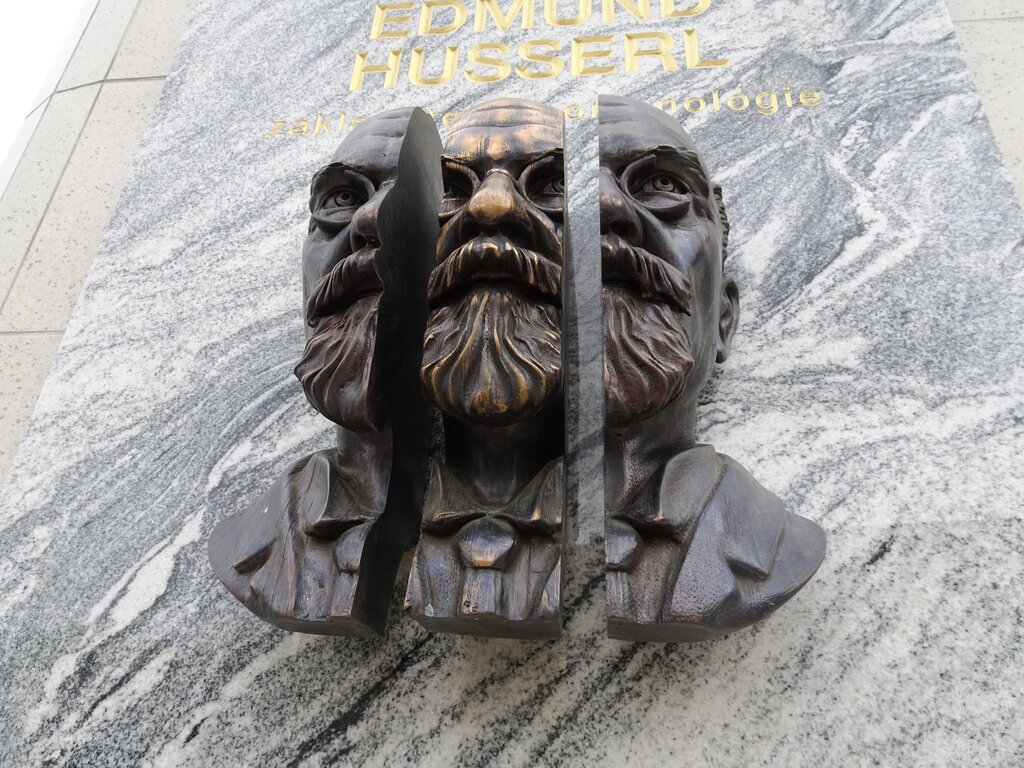
First is the idea of intentionality. Husserl argued that consciousness is always directed at something. You don't just think; you think about your upcoming vacation. You don't just see; you see a tree outside your window. Every mental act has an object, whether real or imagined. This directedness is a fundamental feature of our minds.
intentionality
noun
The quality of mental states (e.g., thoughts, beliefs, desires) that consists in their being directed toward some object or state of affairs.
To study these experiences purely, Husserl proposed a method called the phenomenological reduction, or epoché. This involves 'bracketing' or setting aside all our assumptions about the external world. We suspend judgment on whether the tree we see truly exists or what its chemical properties are. The goal is to describe the experience of seeing the tree, exactly as it appears to consciousness, without any preconceived notions.
The epoché is like pausing a film to analyze a single frame. You're not concerned with what happens next or whether the actors are 'real people.' You are only focused on what is presented in that moment.
epoché
noun
The suspension of judgment concerning the truth or reality of a thing.
Beyond Consciousness
Husserl's students took his ideas in new directions. Martin Heidegger, one of his most famous pupils, shifted the focus from pure consciousness to the experience of being human in the world.
Heidegger argued that we aren't detached observers who bracket the world. Instead, our fundamental state is Dasein, a German term that translates to 'being-there.' We are always already involved in the world, engaged in projects, using tools, and having concerns. For Heidegger, a hammer isn't first an object of wood and steel that we observe; it's something we use for hammering. Its meaning comes from its use in our everyday lives. This is what he called being-in-the-world.
For Husserl, the question was 'What is the structure of conscious experience?' For Heidegger, it was 'What does it mean to exist as a human being?'
Another key figure, Emmanuel Levinas, took phenomenology in an ethical direction. Influenced by his experiences in the Holocaust, Levinas believed the most fundamental experience is the ethical encounter with another person, or the 'Other.'
For Levinas, seeing the face of another person is not just perceiving a physical object. The face makes an ethical demand on us. It calls us to be responsible for that person. This face-to-face encounter is the basis of all ethics, and it happens before we even have time to think or reason about it. It's a primary, gut-level responsibility.
These three thinkers—Husserl, Heidegger, and Levinas—laid the groundwork for phenomenology, each building on and reacting to the last. Husserl provided the method, Heidegger applied it to existence, and Levinas centered it on ethics.
Let's check your understanding of these foundational concepts.
What is the primary question that phenomenology seeks to answer?
According to Edmund Husserl, 'intentionality' means that consciousness is always directed toward an object.
Understanding these core ideas is the first step in exploring how philosophers analyze the rich and complex nature of human experience.