Ph.D. Synthesis: The Evolution and Creation of Culture Green
Defining Culture Green
Defining Culture Green
The term 'green culture' extends far beyond surface-level environmentalism or corporate sustainability reports. It represents a multi-dimensional construct that integrates values, behaviors, and material forms across society. For a robust analytical framework, we must conceptualize it through three interdependent pillars: the urban and spatial, the organizational, and the societal. This framework allows us to examine green culture not as a static set of principles, but as a dynamic force that shapes our physical environments, governs our institutions, and redefines our collective values.
These pillars are not discrete categories but deeply intertwined systems. Changes in one domain catalyze and are reinforced by changes in the others, creating a feedback loop that drives cultural transformation.
The Urban and Spatial Pillar
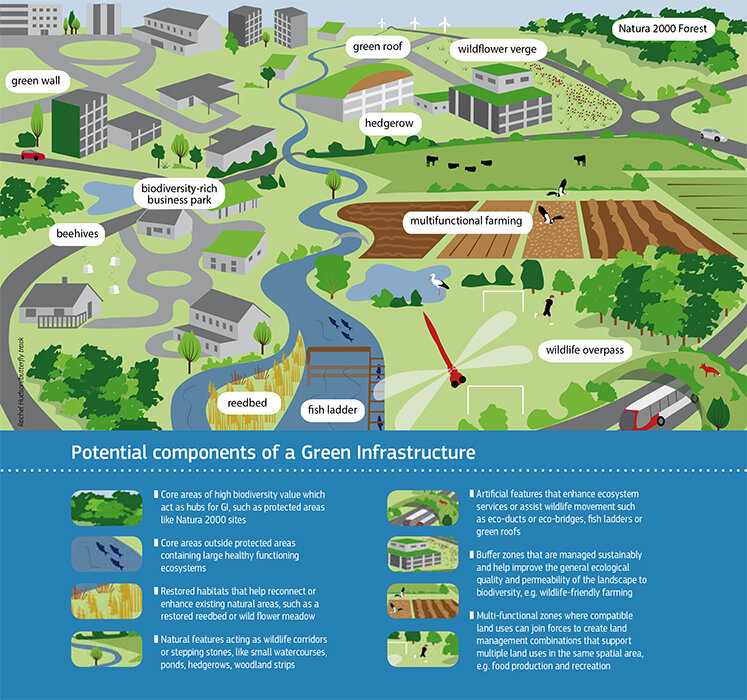
Green culture becomes tangible in the urban landscape. It is inscribed in the design of our cities, buildings, and public spaces. This dimension moves beyond functional environmental solutions, like drainage systems or energy grids, to encompass the aesthetic, social, and psychological integration of nature into urban life. Concepts such as biophilic design, which incorporates natural elements into architecture, and the development of extensive green infrastructure networks are direct manifestations of a cultural shift. They signal a collective desire for cities that are not just efficient, but also restorative and ecologically connected.
In this context, urban renewal becomes a cultural project. An 'integrated green-culture' approach reframes revitalization not as a series of isolated retrofits, but as a holistic transformation of the urban fabric. This involves embedding ecological principles into zoning laws, transportation planning, and community development, reflecting a fundamental change in how a society values and interacts with its environment.
The Organizational Pillar
Within organizations, a green culture is far more than a corporate social responsibility (CSR) initiative or a marketing strategy. It is a deeply embedded ethos that shapes strategy, operations, and identity. To analyze its presence, we must consider three metrics: degree, diffusion, and depth.
Degree refers to the intensity of commitment. Is sustainability a core strategic imperative or a peripheral concern? A high degree is evident when environmental and social goals are weighted equally with financial objectives in executive decision-making.
Diffusion measures how widely green values are shared across the organization. Does the commitment reside only within a specialized sustainability department, or is it understood and acted upon by employees in finance, marketing, and logistics? Broad diffusion creates a cohesive culture where innovation can emerge from any level.
Depth relates to the internalization of these values. Is behavior driven by compliance and external pressure, or by a genuine belief in the organization's mission? Deep internalization is the ultimate goal, where employees act as autonomous stewards of the company's environmental and social principles, innovating proactively rather than reacting to mandates.
An organization with a mature green culture does not simply 'do' sustainability; it 'is' sustainable at its core. This distinction is critical for moving beyond incremental improvements to transformative innovation.
The Societal Pillar and the Cycle of Change
The societal pillar represents the bedrock of shared values, norms, and beliefs that underpin any lasting transformation. It is the collective mindset that makes green behaviors in cities and organizations not only possible but expected. This cultural foundation is not static; it evolves through a continuous cycle of development, renewal, and creation.
-
Development: This phase involves the initial emergence and articulation of green values. It is often driven by social movements, scientific consensus, and educational initiatives that raise public consciousness and build a case for change.
-
Renewal: As these values gain traction, they begin to challenge and renew existing institutions. This is where policy shifts occur, urban plans are redrawn, and corporations adapt their business models in response to new stakeholder expectations. Renewal is about reforming the old in the image of the new.
-
Creation: The final phase is marked by true innovation. Having internalized new values and renewed existing structures, society begins to create entirely new systems, technologies, and social arrangements that are inherently sustainable. This goes beyond fixing the problems of the old paradigm and involves building the foundations of a new one.
By incorporating these types of activities, you’ll help students make the connection between science, sustainability, and everyday problem-solving, all while encouraging them to think critically about how they can contribute to a more sustainable world.
This cycle illustrates how green culture acts as the primary tool for transitioning from incremental environmental fixes to fundamental societal and spatial transformations. It is the cultural software that runs on the hardware of our cities and organizations, enabling a shift from a mechanistic worldview to one based on ecological integration and long-term resilience.
According to the provided framework, what are the three interdependent pillars used to analyze green culture?
Within an organization, if a company's commitment to sustainability is understood and acted upon by employees in finance, marketing, and operations, not just the sustainability department, which metric is being demonstrated?
This multi-pillar framework provides a comprehensive lens for analyzing 'Culture Green.' It allows researchers to dissect the complex interplay between values, behaviors, and physical spaces, offering a more nuanced understanding of the mechanics of sustainable transformation.