PhD Cybersecurity Thesis Completion
Understanding Cybersecurity Fundamentals
The Core Principles
Cybersecurity is built on three foundational principles, often called the CIA Triad. This isn't the intelligence agency, but a model for thinking about information security. Every security measure, from a simple password to a complex defense system, aims to protect one or more of these principles.
Let's break them down.
Confidentiality is about keeping secrets. It ensures that data is accessible only to authorized users. Think of it as privacy protection.
When you use your banking app, confidentiality ensures that no one else can see your account balance or transaction history. Passwords, access control lists, and encryption are all tools used to enforce confidentiality.
Integrity means keeping data trustworthy and accurate. It prevents unauthorized modification or destruction of information.
Imagine a hospital's patient records. The integrity of that data is critical. A change in a patient's blood type or allergy information could have life-threatening consequences. Hashing algorithms and digital signatures are common methods for verifying data integrity.
Availability ensures that information and systems are accessible to authorized users when they need them.
If a website like an online retailer goes down, it's an availability failure. Customers can't shop, and the company loses money. This principle is about preventing system downtime, whether it's from a hardware failure, a software bug, or an attack.
Common Cyber Threats
Threats are actions that could potentially harm a computer system or network. Understanding the most common types is the first step toward defending against them.
Malware
noun
Short for "malicious software," it's any software intentionally designed to cause damage to a computer, server, client, or computer network.
Malware is a broad category that includes viruses, worms, trojan horses, ransomware, and spyware. Each type behaves differently, but the goal is always malicious. A virus might corrupt your files, while ransomware encrypts them and demands a payment for their release.
Phishing is a type of social engineering attack where attackers trick people into revealing sensitive information, like passwords or credit card numbers.
This is often done through deceptive emails or websites that look legitimate. The attacker might pose as your bank, a social media site, or even your boss, creating a sense of urgency to get you to act without thinking.

A Denial-of-Service (DoS) attack aims to make a machine or network resource unavailable to its intended users by flooding it with traffic.
Imagine a single road leading to a popular store. A DoS attack is like sending thousands of extra cars to create a massive traffic jam, preventing legitimate customers from reaching the entrance. A Distributed Denial-of-Service (DDoS) attack is even more powerful, using many computers (often a botnet of infected devices) to launch the attack from multiple locations at once, making it much harder to block.
Basic Defense Mechanisms
While threats are numerous, a set of fundamental tools and techniques forms the first line of defense in any cybersecurity strategy.
A firewall is a network security device that monitors incoming and outgoing network traffic and decides whether to allow or block specific traffic based on a defined set of security rules.
Think of a firewall as a security guard for your network. It stands at the entrance, checks the credentials of everyone trying to get in or out, and only lets approved traffic pass. This helps prevent unauthorized access to or from a private network.
An Intrusion Detection System (IDS) is a device or software application that monitors a network or systems for malicious activity or policy violations.
If a firewall is a security guard at the door, an IDS is like the network of security cameras inside the building. It doesn't necessarily block activity, but it watches for suspicious behavior and alerts a security administrator when it finds something. For example, it might flag an unusually large data transfer or repeated failed login attempts.
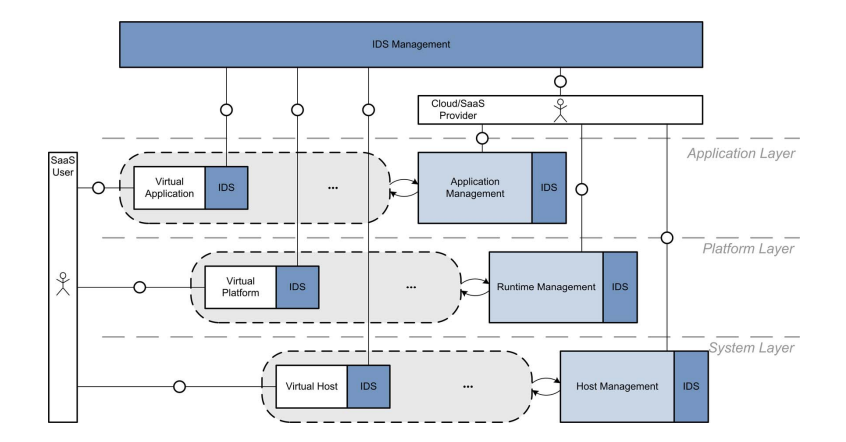
Encryption is the process of converting information or data into a code, especially to prevent unauthorized access.
Encryption scrambles readable data (plaintext) into an unreadable format (ciphertext) using a key. Only someone with the correct key can decrypt the data back into its original form. This is fundamental to protecting data both when it's stored on a device (data at rest) and when it's being transmitted over a network (data in transit).
Ready to test your knowledge? Let's see what you've learned about these foundational concepts.
A malicious actor gains access to a hospital's database and changes a patient's recorded blood type. Which principle of the CIA Triad has been primarily violated?
Which security tool is best described as a network of security cameras that monitors for suspicious behavior and raises an alarm, rather than actively blocking the activity?
These core principles, common threats, and basic defenses form the bedrock of cybersecurity. Mastering them is the first essential step in understanding the field's complexities.