Pharma Product Development Strategy
Drug Discovery
Starting at the Source
Before a single drug can be created, scientists must understand exactly what’s going wrong in the body. Curing a disease is like fixing a complex machine; you first need to find the broken part. This means diving deep into the biology of an illness to understand its mechanism.
Researchers study how a disease works at the molecular level. They might investigate which genes are mutated, which proteins aren't functioning correctly, or how cells are communicating improperly. This foundational work involves mapping out intricate biological pathways, which are like chains of chemical reactions inside our cells. By identifying a critical step in a pathway that has gone awry, scientists can pinpoint a potential weakness to exploit.
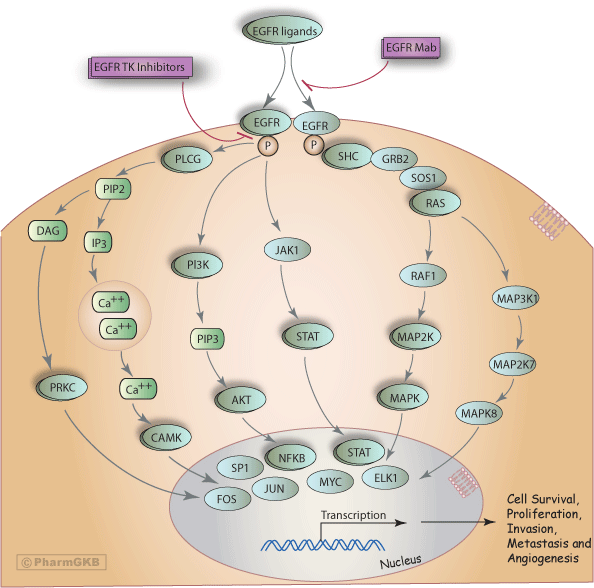
This research builds on decades of collective knowledge and can take many years. It’s a painstaking process of experiments and analysis that eventually reveals the root cause of a disease, paving the way for a targeted solution.
Finding the Bullseye
Once a disease mechanism is understood, the next step is to identify a specific “drug target.” A target is typically a single molecule, usually a protein, that plays a crucial role in the disease. Think of it as the master switch for the problem. If you can control that switch, you can control the disease.
The goal is to find a molecule that a drug can interact with, like a key fitting into a lock. The drug is the key, and the target is the lock. The interaction should alter the target's function, either by blocking it or activating it, to correct the course of the disease.
Target
noun
A molecule in the body, usually a protein, that is associated with a particular disease and that can be acted upon by a drug to produce a desired effect.
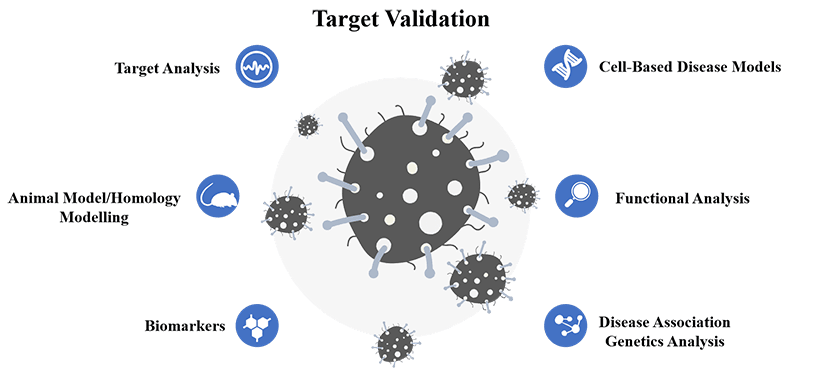
Choosing the right target is critical. A good target is “druggable,” meaning its structure has a specific site where a small molecule can bind and have an effect. Scientists also have to ensure that targeting this molecule won't cause unintended problems elsewhere in the body. This process of confirming that a target is both crucial to the disease and safe to interact with is called target validation.
The Great Chemical Search
With a validated target in hand, the hunt for a drug begins. Scientists need to find a chemical compound that can act as the “key” for their target “lock.” This search starts with screening, where thousands or even millions of different compounds are tested to see if any of them interact with the target.
One common method is called High-Throughput Screening (HTS). In this process, robotic systems test huge libraries of chemical compounds against the target in a rapid, automated fashion. Each compound is added to a sample containing the target molecule, and a detector measures whether an interaction occurred.

Another approach is virtual screening. Instead of using physical chemicals, scientists use computer models to predict how well different compounds might bind to the 3D structure of the target. This method, also known as molecular docking, can quickly narrow down a vast digital library of compounds to a smaller, more manageable number of promising candidates for physical testing.
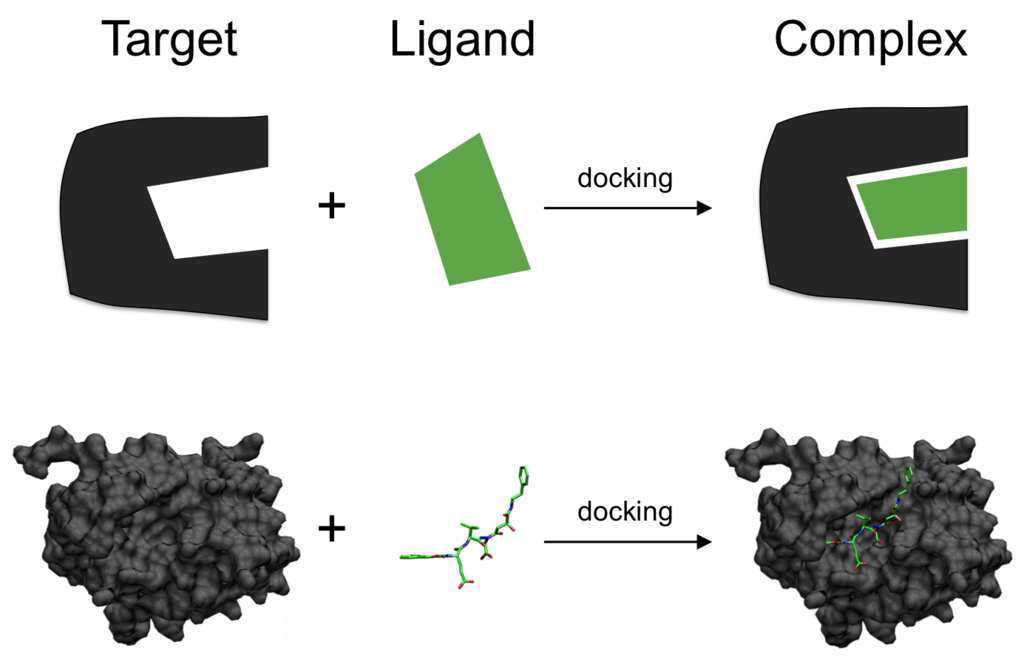
The compounds that show a positive interaction in these screens are called “hits.”
From Hit to Lead
Screening typically produces hundreds or even thousands of hits. However, most of these aren't suitable to become drugs. Some might be too weak, some might be toxic, and others might have chemical properties that make them difficult for the body to absorb.
The next step is to turn these initial hits into more refined “lead compounds.” A lead is a compound that not only binds to the target but also shows promise for further development. Scientists analyze the hits, group them into chemical families, and select the most promising ones for further study. This process is often called a hit-to-lead campaign.
A lead compound is not yet a drug, but it's the starting point. It's the prototype that chemists will spend months or years modifying and perfecting.
Medicinal chemists take these lead compounds and begin a process of optimization. They tweak the chemical structure bit by bit, trying to improve its properties. Their goal is to increase its potency (how strongly it binds to the target), enhance its selectivity (so it doesn't affect other molecules), and ensure it has the right characteristics to travel through the body and reach its destination. This iterative process of synthesis and testing eventually refines a lead compound into a drug candidate, which is ready for the next stages of testing.
Now, let's test your understanding of the first steps in drug discovery.