Pharma Ontologies Explained
Introduction to Ontologies
Structuring Knowledge
Imagine trying to find a book in a library where all the books are just thrown into one big pile. It would be nearly impossible. Libraries work because they have a system: the Dewey Decimal System or the Library of Congress classification. These systems organize books based on their subject, creating a map that anyone can follow. An ontology does something similar, but for data.
It’s a formal way of representing knowledge in a specific area. It defines a set of concepts and the relationships between them, creating a shared vocabulary that both people and computers can understand. Think of it as a blueprint for how information is organized.
At its core, an ontology in data management is a way to represent the knowledge of a particular domain.
The main goal is to create a common framework. When different systems or teams use the same ontology, their data can be easily shared, combined, and understood. This removes ambiguity and ensures everyone is speaking the same language.
The Building Blocks
Ontologies are built from a few simple, powerful components. Understanding these parts is key to seeing how they bring structure to complex information.
Classes: These are the main concepts or categories in your domain. If we were creating an ontology for a hospital, our classes might be
Patient,Doctor, andTreatment. They are like the nouns of our data language.
Each class represents a group of individual things, called instances. For example, Jane Doe would be an instance of the Patient class.
Properties: These are the attributes that describe a class. A
Patientclass might have properties likedateOfBirth,medicalRecordNumber, andhasAllergies. Properties are like adjectives; they give us details about the concepts.
Properties help define the specific data we want to capture for each instance of a class.
Relationships: These are the connections between classes. They act as the verbs that link our concepts together. For instance, a
Doctortreats aPatient. APatientreceives aTreatment. These relationships show how the different pieces of information are interconnected.
By combining these three components, we can build a comprehensive map of any knowledge domain. The design principles are simple: be clear, be consistent, and focus on representing the reality of the domain as accurately as possible.
The Power of Integration
The real value of an ontology shines when you need to bring data together from different sources. Most organizations have information scattered across various departments and systems. Research data might be in one database, clinical trial results in another, and manufacturing records in a third. These systems often use different terms for the same thing, creating data "silos."
This is where an ontology acts as a universal translator. By mapping the data from each system to a common ontology, we create interoperability. It allows us to ask complex questions that span across different datasets. For example, we could link a specific batch of a manufactured drug all the way to the outcomes of patients who received it in a clinical trial.
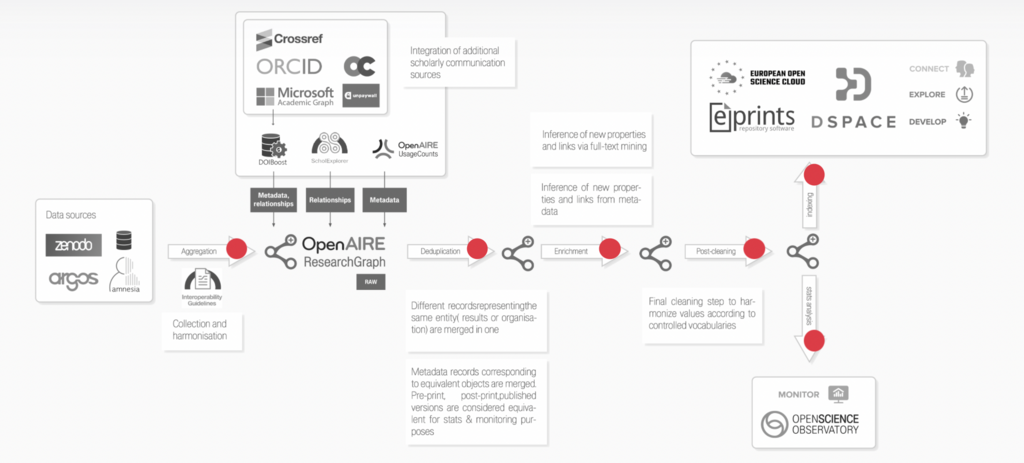
This ability to integrate and query disparate information is crucial. It enables deeper insights, more efficient research, and better decision-making by creating a complete picture from fragmented data.
Ready to check your understanding?
What is the primary purpose of an ontology in the context of data management?
If 'Medication' is defined as a class in an ontology, which of the following would be an instance of that class?
With these fundamentals in place, we can now explore how ontologies are specifically applied to solve challenges in the pharmaceutical world.