Pharaoh Seti I His Reign and Royal Tomb
Introduction to Seti I
The Pharaoh Before the Great
Pharaoh Seti I is often overshadowed by his famous son, Ramesses II, also known as Ramesses the Great. But Seti I was a powerful and influential ruler in his own right. He was the second pharaoh of Egypt's 19th Dynasty, a period of renewed strength and prosperity known as the New Kingdom.
The New Kingdom of Ancient Egypt, spanning from approximately 1550 to 1070 BC, stands as one of the most illustrious periods in the country's long and storied history.
Seti I's reign, though relatively short (around 1290 to 1279 BCE), marked a crucial turning point. He inherited a kingdom still recovering from a period of religious and political upheaval. A few decades earlier, the pharaoh Akhenaten had upended centuries of tradition by enforcing the worship of a single god, the Aten. This era, known as the Amarna Period, left Egypt unstable. The pharaohs who followed, including Tutankhamun, worked to restore the old ways, but the kingdom needed a strong hand to fully reassert its power. That's where Seti's family came in.
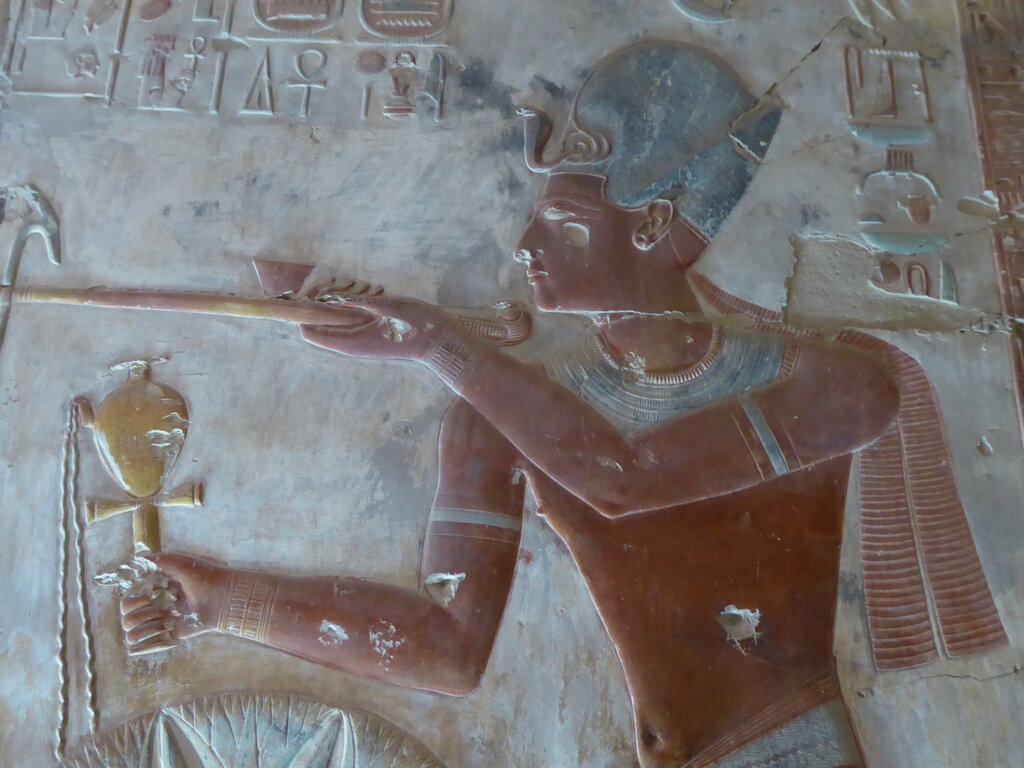
A New Royal Line
Seti I wasn't born into a long line of pharaohs. His family's roots were in the military, not the palace. His father, Ramesses I, was a career soldier who rose through the ranks to become the top military commander and vizier (a high-ranking official) under the previous pharaoh. When that pharaoh died without an heir, Ramesses I was chosen to rule, founding the 19th Dynasty.
His reign was very brief, lasting less than two years. When he died, the throne passed to his son, Seti I. Seti was already an experienced military leader and had been named co-regent, ensuring a smooth transition of power. He was married to Tuya, and together they had at least two children: a son, the future Ramesses II, and a daughter named Tia.
This new dynasty brought a fresh, militaristic energy to the throne. Having come from a family of soldiers, Seti I understood the importance of a strong army and a secure empire. His primary goal was to restore Egypt to the glory it had known before the disruption of the Amarna period. He sought to reclaim lost territories and re-establish Egyptian influence abroad, all while honoring the traditional gods and goddesses whose worship had been suppressed.
Seti's name itself means "He of Set," signaling his devotion to the powerful god Set, who was associated with strength, the desert, and warfare.
Seti's reign was a bridge between the instability of the late 18th Dynasty and the celebrated peak of the New Kingdom under his son. He laid the foundation for the successes of Ramesses the Great by stabilizing the country, securing its borders, and beginning ambitious building projects that re-emphasized the power and piety of the pharaoh.
What was the primary background of Seti I's family before his father founded the 19th Dynasty?
True or False: Seti I's main religious policy was to continue the worship of the single god Aten, established during the Amarna Period.
His legacy is one of restoration and renewal, paving the way for one of ancient Egypt's most famous eras.