Petroleum Explained
Petroleum Basics
What is Petroleum?
Petroleum is a naturally occurring substance found beneath the Earth's surface. It's not a single thing, but a complex mixture of different molecules. Think of it like a soup with many ingredients, but instead of vegetables and broth, it's made of compounds called hydrocarbons.
Hydrocarbon
noun
An organic compound consisting entirely of hydrogen and carbon atoms. They can be simple, like methane (), or incredibly complex chains and rings.
These hydrocarbon molecules are the reason petroleum is such a powerful energy source. The chemical bonds holding the hydrogen and carbon atoms together store a huge amount of energy. When we burn petroleum products, we break these bonds and release that energy as heat and light.
While mostly carbon and hydrogen, petroleum also contains small amounts of other elements like sulfur, nitrogen, and oxygen, which can affect its quality and how it's processed.
A Recipe Millions of Years in the Making
Petroleum isn't made in a lab. It's the result of a slow, natural process that takes millions of years. It all starts with tiny marine organisms, like algae and plankton, that lived in ancient oceans and lakes.
When these organisms died, they sank to the bottom and were buried by layers of sediment like sand and silt. Over eons, the weight of these layers built up, creating immense pressure and heat. This geological slow-cooking transformed the organic matter into a waxy substance called kerogen.
With even more heat and time, the kerogen breaks down further, forming liquid crude oil and natural gas. Because oil and gas are less dense than the rock around them, they tend to migrate upwards through porous rock layers. They keep moving until they hit an impermeable layer of rock, called a cap rock, which traps them in underground reservoirs.
A ‘good’ source rock that yields commercial volumes of petroleum must have a high organic content and have compounds of both carbon and hydrogen molecules.
Forms of Petroleum
Petroleum isn't a one-size-fits-all substance. It exists in several forms, each with different properties. The three main types you'll encounter are crude oil, natural gas, and bitumen.
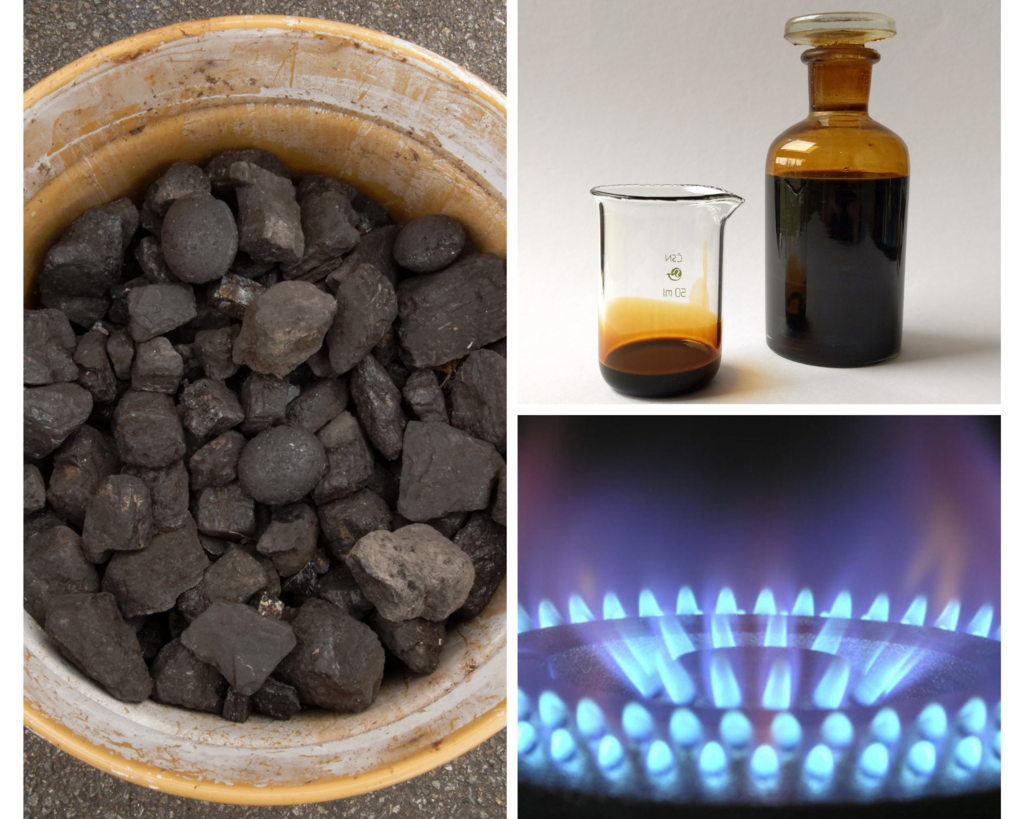
Crude Oil is the most familiar form. It's a liquid mixture of hydrocarbons that can range from a thin, light-colored fluid to a thick, black tar. Its properties depend on the specific mix of hydrocarbons it contains.
Natural Gas is the lightest fraction of petroleum. It's primarily composed of methane () and is a gas at standard temperature and pressure. It's often found alongside crude oil in reservoirs.
Bitumen is an extra-heavy and thick form of petroleum, often compared to cold molasses. It's so viscous that it doesn't flow easily on its own. It's found in large quantities in oil sands, where it's mixed with sand, clay, and water.
| Type | State | Key Characteristic |
|---|---|---|
| Crude Oil | Liquid | Varies from thin to thick; the source for most liquid fuels. |
| Natural Gas | Gas | The lightest hydrocarbon; primarily methane. |
| Bitumen | Semi-solid | Extremely viscous and heavy; found in oil sands. |
These different forms of petroleum are all products of the same ancient geological processes. Their final state depends on the specific conditions of their formation, such as the temperature, pressure, and type of original organic material.
Time to check your understanding of these fundamental concepts.
What is the primary source material for the formation of petroleum?
Petroleum is primarily a complex mixture of which type of molecules?
Understanding what petroleum is and how it forms is the first step. Next, we'll explore how these resources are found and extracted from deep within the Earth.