Perspectives on Divine Existence
Existential Tension and Choice
The Fork in the Road
Existentialism places the individual at the center of a universe without inherent meaning. But from that common starting point, the path splits. Two major figures, Søren Kierkegaard and Jean-Paul Sartre, represent this fundamental divergence. Both agreed that abstract systems and societal norms couldn't provide life's purpose. The burden of creating meaning falls squarely on our shoulders. Yet, they arrived at radically different conclusions about how to bear that weight.
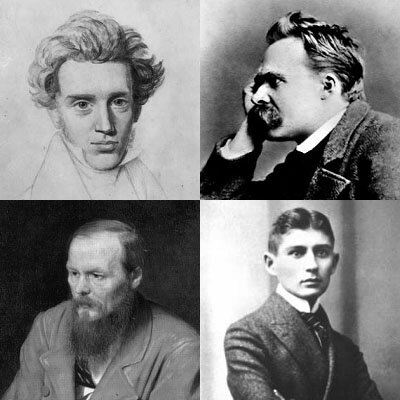
Kierkegaard, writing in the 19th century, argued against the dominant philosophy of his time, Hegelianism, which sought to explain everything through a universal, rational system. To Kierkegaard, this was an absurd abstraction. He believed truth wasn't something to be discovered through objective logic but experienced subjectively. The most important truths, he argued, are personal and passionate. This led him to his most famous idea: the leap of faith an individual must make to find meaning in a relationship with God. It is not a reasoned conclusion but a commitment made in the face of uncertainty and doubt.
For Kierkegaard, objective uncertainty is the very thing that makes faith possible and powerful. If God's existence could be proven, faith would be unnecessary.
Freedom's Burden
A century later, Jean-Paul Sartre took the absence of objective certainty in a different direction. An avowed atheist, Sartre declared that "existence precedes essence." This means we are born without a pre-defined nature or purpose. We simply are. It is through our choices and actions that we define who we are. There is no divine plan or human nature to guide us. We are, in his famous words, "condemned to be free." This freedom is absolute but also a heavy burden.
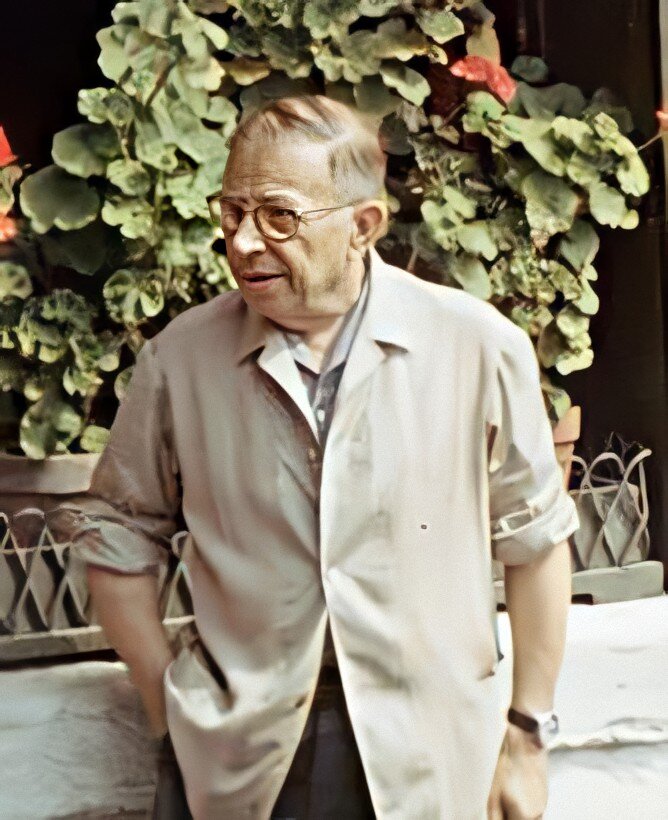
Sartre's concept of describes the given, unchangeable facts of our existence, such as our birthplace, past choices, and physical body. While we cannot change these facts, we are entirely free to choose how we interpret and respond to them. This freedom creates a profound sense of responsibility, not just for ourselves but for all of humanity, as every choice we make posits a certain image of what a human being ought to be. This weight is the source of existential anguish.
Anguish and Meaning
Both philosophers saw anguish, or dread, as an essential part of the human condition. However, the source and solution differ.
For Kierkegaard, anguish is the dizziness of freedom when facing infinite possibilities. It's the anxiety of choosing one's own path, particularly the path toward God. The resolution is the leap of faith, which anchors the self in a relationship with the infinite, providing a framework for meaning.
For Sartre, anguish is the realization of our total freedom and responsibility in a godless universe. There is no higher authority, no objective moral code. We are entirely alone in our choices. The only way to deal with this is to embrace it, to live authentically by accepting our freedom and the weight that comes with it. To pretend otherwise is to live in "bad faith."
| Concept | Søren Kierkegaard (Theistic) | Jean-Paul Sartre (Atheistic) |
|---|---|---|
| Source of Meaning | A subjective, passionate relationship with God. | The individual's own choices and actions. |
| Truth | Subjective; found in personal commitment and passion. | No objective truth; we create our own values. |
| Freedom | Freedom to choose one's relationship with the divine. | Absolute and total; we are "condemned to be free." |
| Anguish | The dizziness of possibility before the leap of faith. | The weight of total responsibility in a void. |
| Resolution | The "leap of faith" into a relationship with God. | Authentic action and acceptance of radical freedom. |
Ultimately, the tension between these two paths highlights the core challenge of existentialism. If there is no objective, universal map for life, we are forced to draw our own. Kierkegaard finds his compass in a subjective turn toward God. Sartre insists we must navigate using only the tools of our own freedom, creating the compass as we go.
For existentialists like Sartre, freedom and responsibility go hand in hand.
Both perspectives demand immense courage. Kierkegaard's path requires abandoning the comfort of rational certainty, while Sartre's requires facing the void without any external support. The choice between them is, itself, an existential one.
Time to test your understanding of these core ideas.
What is the fundamental difference between how Søren Kierkegaard and Jean-Paul Sartre propose an individual should create meaning?
What does Jean-Paul Sartre's phrase "existence precedes essence" mean?
This fundamental split between theistic and atheistic approaches defines the landscape of existential thought, forcing each individual to confront where they will find, or create, their own purpose.