Personalized Learning Strategies
Introduction to Personalized Learning
What is Personalized Learning?
Imagine a classroom where lessons are not a one-way street. Instead of every student doing the same thing at the same time, the learning experience adapts to each person's unique strengths, interests, and needs. That's the core idea behind personalized learning.
At its core, personalized learning emphasizes a student-centered approach, allowing learners to take an active role in their educational journey.
It’s a fundamental shift from the traditional, one-size-fits-all model of education. The goal is to create a more effective and engaging path for every single learner, recognizing that people learn differently and at different speeds.
The Core Principles
Personalized learning isn't just one single practice; it's a combination of several key ideas working together. These principles guide how instruction is designed and delivered.
Let's break these down:
-
Student-Centered: The entire experience revolves around the individual learner. Instruction is tailored to their specific needs, skills, and interests, making education relevant and meaningful.
-
Flexible Pace: Students progress through material at their own speed. Some may move quickly through concepts they grasp easily, while others can take more time with challenging topics, ensuring no one is left behind or held back.
-
Learner Agency: Students are given a voice and choice in their education. This could mean choosing topics for a project, setting personal learning goals, or deciding how to demonstrate their understanding. This ownership boosts motivation.
-
Mastery-Based: Advancement is tied to demonstrating mastery of a concept, not just completing a unit. Students must prove they understand a topic before moving on to the next one, leading to a stronger foundation of knowledge.
A New Approach to Education
The traditional classroom model has served generations, but it often struggles to meet the diverse needs of modern students. Personalized learning offers a different path. Seeing them side-by-side makes the contrast clear.
| Feature | Traditional Approach | Personalized Approach |
|---|---|---|
| Pacing | Teacher-led, fixed for all students | Student-led, flexible and individual |
| Instruction | One-size-fits-all lessons | Differentiated for individuals/groups |
| Student Role | Passive receiver of information | Active participant in learning |
| Assessment | Typically standardized tests at the end | Ongoing, used to inform instruction |
| Curriculum | Rigid and uniform | Customized and adaptable |
This doesn't mean abandoning structure. It means building a more responsive and supportive learning environment that can adapt to the person within it.
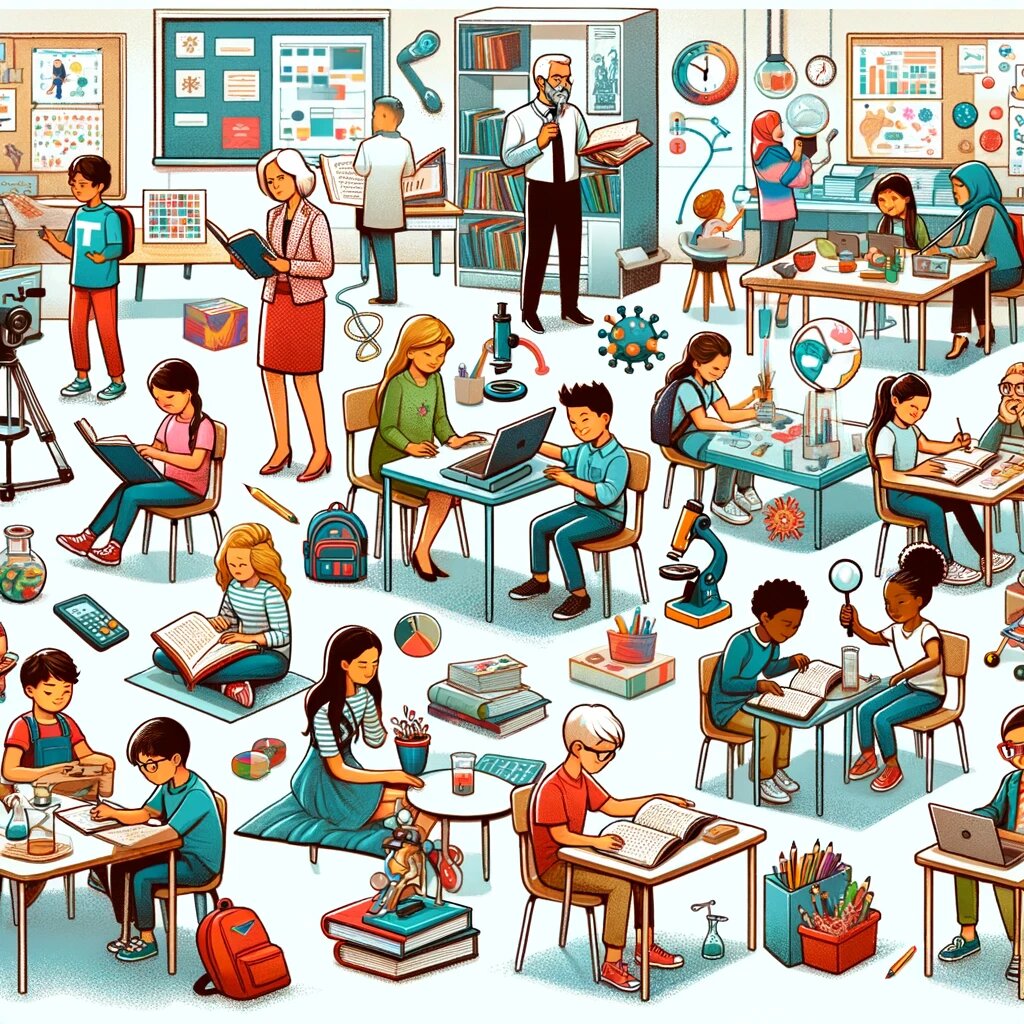
The Impact on Students
When learning is tailored to the individual, the benefits become obvious. Students are no longer just passive audience members in their own education. They become active drivers.
The most significant impact is on engagement. When content is relevant to a student's interests and presented at the right level of challenge, they are naturally more motivated to learn.
This increased engagement leads to better academic outcomes. By focusing on mastery, students build a deeper, more resilient understanding of subjects. They learn how to learn, developing critical thinking and problem-solving skills that serve them long after they leave the classroom. This sense of ownership and competence helps build confidence and a lifelong love of learning.
Ready to check your understanding?
What is the core idea behind personalized learning?
A student who quickly understands algebra is allowed to move on to geometry, while another student takes extra time to practice foundational algebra skills. This scenario best illustrates which principle?
Personalized learning reshapes the educational landscape by placing the student at the center of it all, creating a more effective and empowering journey for everyone.