Personal Fitness Mastery
Assessing Fitness Levels
Finding Your Starting Point
Before you can map out a journey, you need to know where you are. The same is true for fitness. A fitness assessment isn't a test you pass or fail; it's a snapshot of your current physical abilities. It provides a baseline, a set of starting numbers that help you create a smart plan, set realistic goals, and see how far you've come later on.
Individual assessments identify current fitness levels, movement limitations, and health considerations that inform program design decisions.
We'll look at four key areas: cardiovascular endurance, muscular strength, flexibility, and body composition. Each one tells a different part of your fitness story.
Heart and Lung Health
Cardiovascular endurance measures how efficiently your heart and lungs supply oxygen to your muscles during sustained activity. It's the foundation of your stamina. There are many ways to measure it, from simple field tests to high-tech lab assessments.
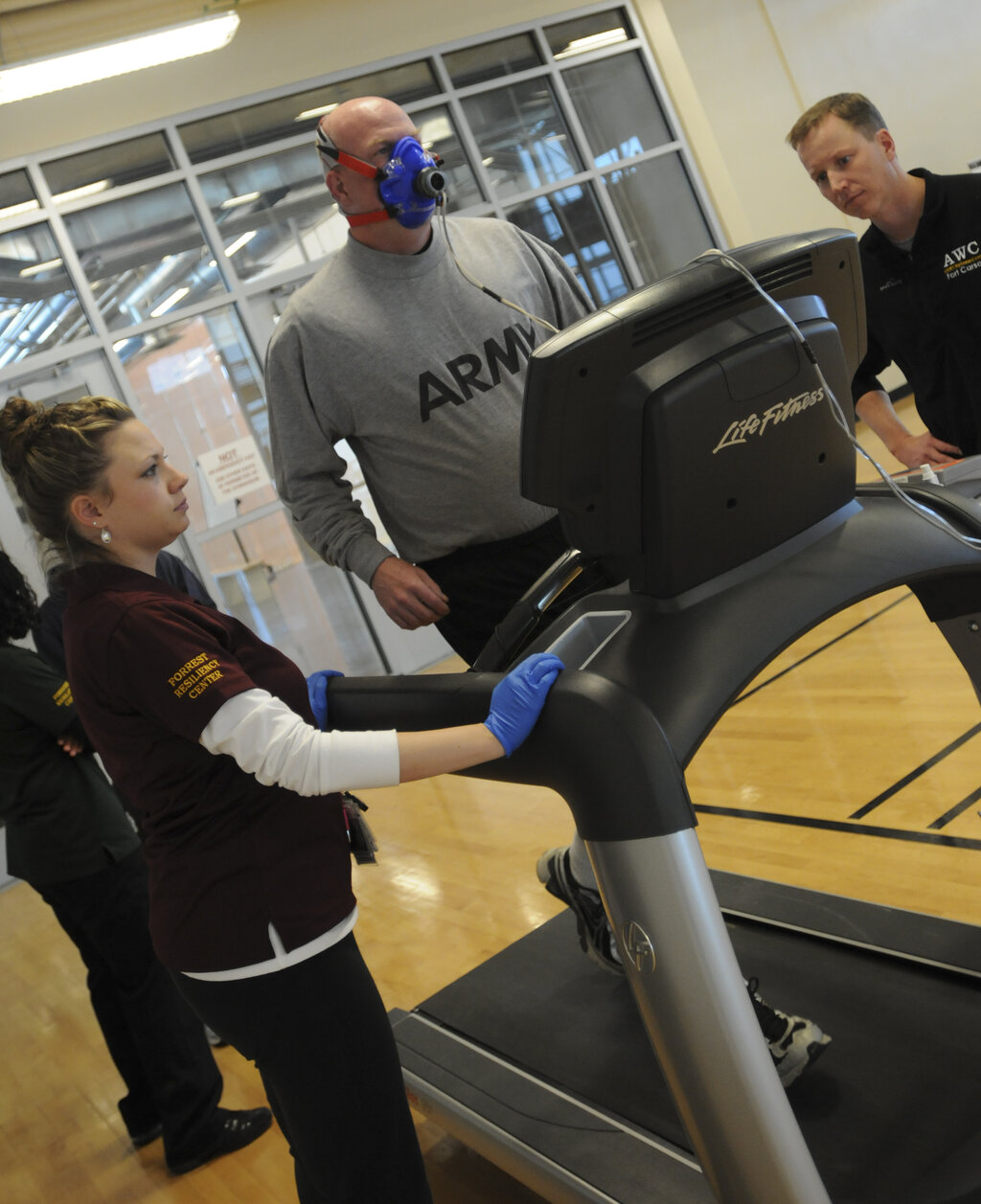
A common and accessible option is the 12-Minute Cooper Run. The goal is simple: cover as much distance as you can in 12 minutes. This test is best done on a track where you can accurately measure distance. The result gives a good estimate of your VO₂ max, a key indicator of aerobic fitness.
| Age | Gender | Excellent | Good | Average | Below Average | Poor |
|---|---|---|---|---|---|---|
| 20-29 | Male | > 2800m | 2400-2800m | 2200-2399m | 1600-2199m | < 1600m |
| 20-29 | Female | > 2700m | 2200-2700m | 1800-2199m | 1500-1799m | < 1500m |
| 30-39 | Male | > 2700m | 2300-2700m | 1900-2299m | 1500-1899m | < 1500m |
| 30-39 | Female | > 2500m | 2000-2500m | 1700-1999m | 1400-1699m | < 1400m |
If you don't have access to a track, the 3-Minute Step Test is a great alternative. You'll need a 12-inch (30 cm) step or bench and a stopwatch. Step up with one foot, then the other. Step down in the same order. Repeat this at a steady pace of 24 steps per minute for three minutes. Immediately after, sit down and take your heart rate for one full minute. A lower recovery heart rate indicates better cardiovascular fitness.
Gauging Your Strength
Muscular fitness has two main components: strength and endurance. Strength is the maximum force you can exert in a single effort, while endurance is the ability to repeat a movement over time without fatigue.
A classic measure of maximal strength is the one-repetition max (1RM), the heaviest weight you can lift just once. However, testing your true 1RM can be unsafe without supervision. Instead, you can estimate it. Warm up, then find a weight you can lift for 5-10 repetitions. Plug that number into an estimation formula.
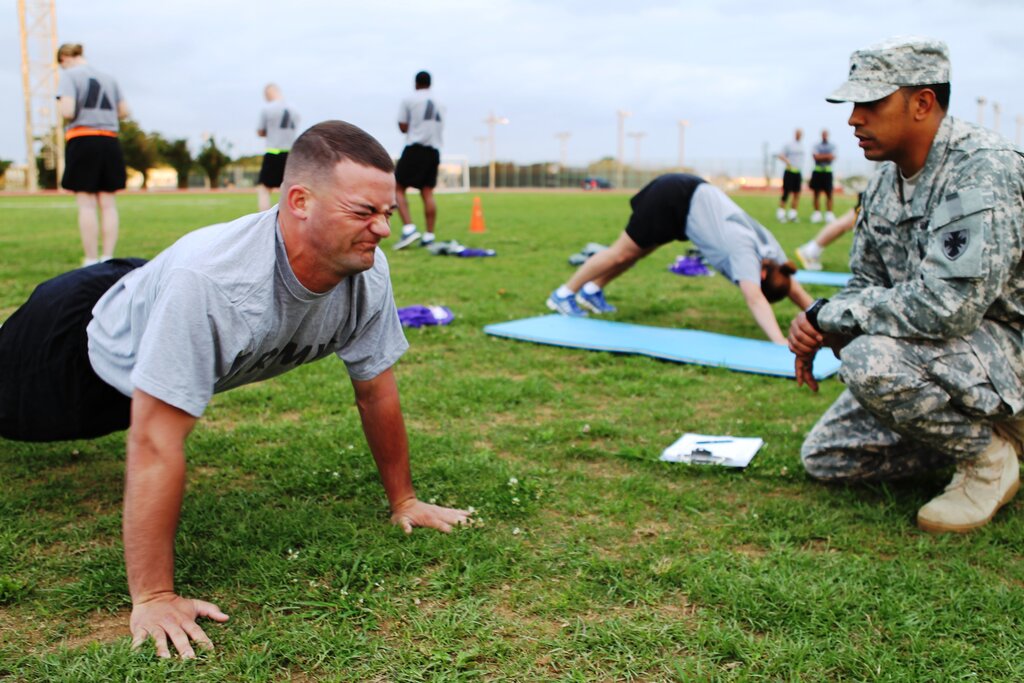
For muscular endurance, bodyweight tests are simple and effective. The Push-Up Test measures upper body endurance. Perform as many standard push-ups as you can with good form before you have to stop. For the Plank Test, hold a standard plank position, keeping your body in a straight line from head to heels. Time how long you can hold it before your form breaks.
Flexibility and Composition
Flexibility is your joints' ability to move through a full range of motion. Good flexibility helps with posture and reduces the risk of injury. The Sit-and-Reach Test is a standard way to measure the flexibility of your lower back and hamstrings.
To perform it, sit on the floor with your legs extended straight ahead. The soles of your feet should be flat against a box or step. Place a ruler on the box with the zero mark at your feet. With arms outstretched, slowly reach forward as far as you can, holding the position for a few seconds. The distance you reach is your score.
Finally, body composition refers to the proportion of fat mass to lean mass (muscle, bone, and water) in your body. While bathroom scales measure total weight, they don't tell the whole story. A simple screening tool is the Body Mass Index (BMI).
BMI is useful for population studies but can be misleading for individuals, as it doesn't differentiate between fat and muscle. Other methods like skinfold callipers or bioelectrical impedance analysis (found on many smart scales) can provide more detailed estimates.
Once you have these baseline numbers, you have a clear picture of your current fitness. This isn't the finish line; it's the starting block. Use these results to guide your training and celebrate your progress as the numbers change.