Permaculture Design Essentials
Introduction to Permaculture
What Is Permaculture?
Think of a forest. Fallen leaves create soil, trees provide shade for smaller plants, and animals spread seeds. Everything works together. There's no waste, and the system sustains itself over time. Permaculture applies this same logic to how we design our own world, from gardens and farms to entire communities.
Permaculture is an ecological design system for sustainability in all aspects of human endeavor.
At its core, permaculture is about working with nature, not against it. Instead of forcing a system to work through constant effort, like weeding a massive single-crop field, you design a system that largely takes care of itself. It’s a holistic approach, meaning it looks at the whole picture—the soil, water, plants, animals, and people—and finds ways for them to support one another.
The Roots of a Movement
The idea of permaculture emerged in the 1970s in Australia. An ecologist and university lecturer named Bill Mollison and his student, David Holmgren, were deeply concerned about the destructive practices of modern industrial agriculture. They saw soil erosion, pollution, and a heavy reliance on fossil fuels and believed there had to be a better way.
They began to study natural ecosystems, from rainforests to deserts, looking for the universal principles that allowed them to thrive. Their goal was to create a design system that could be used by anyone, anywhere, to create stable, productive environments.
In 1978, Mollison and Holmgren coined the term “permaculture,” originally a blend of “permanent agriculture.” They envisioned food-growing systems that could last for generations without depleting resources. Over time, they realized their principles applied to more than just farming. The concept grew into “permanent culture,” encompassing all aspects of human life, including housing, energy, and social structures.
Designing Like Nature
Permaculture is fundamentally a design system. It doesn't offer a rigid set of rules, but rather a way of thinking to create sustainable solutions tailored to a specific location. It encourages careful observation to understand the unique conditions of a place—the sun, wind, water flow, and existing life—before making any changes.
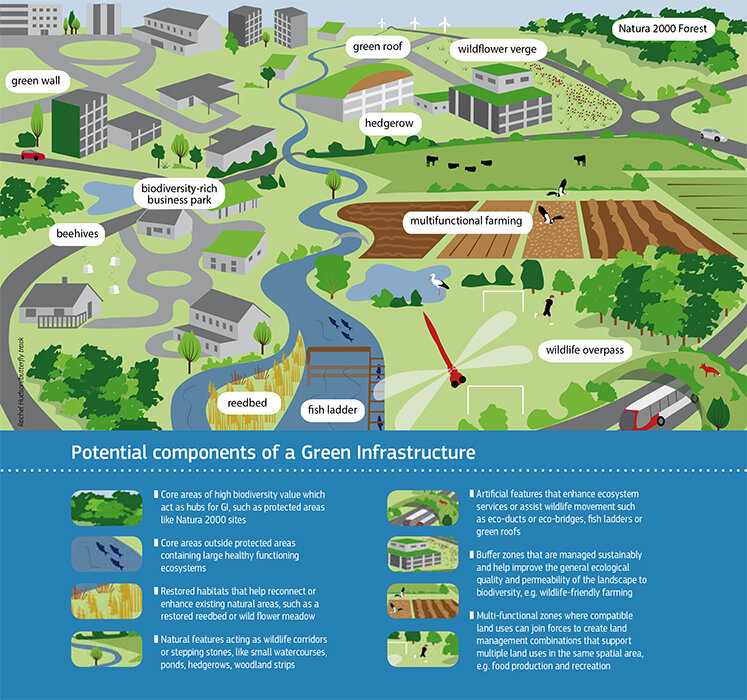
The goal is to create connections between different elements so they form a self-regulating system. A chicken coop might be placed uphill from a garden. The chickens eat pests and weeds, their manure is easily washed down to fertilize the garden soil, and they provide eggs for the household. Each element serves multiple functions, and the waste from one part becomes a resource for another.
This approach stands in sharp contrast to conventional systems that often treat problems in isolation. If you have pests, you spray pesticides. If the soil is poor, you add chemical fertilizers. Permaculture seeks to design the problem out of the system from the beginning, creating resilient environments that are productive, low-maintenance, and regenerative.
Now, let's check your understanding of these foundational ideas.
What is the fundamental principle behind permaculture?
The term "permaculture," as coined by Bill Mollison and David Holmgren, was originally a blend of what two words?
Permaculture provides a framework for thinking differently about our relationship with the planet. It’s a practical, solutions-oriented approach to building a more sustainable and abundant future.