Periodic Table Reactions with Indian Characters
Periodic Table Basics
Charting the Elements
The periodic table is chemistry's most important chart. It’s a systematic catalog of all the known chemical elements, from hydrogen to oganesson. But it's more than just a list. The table’s clever organization reveals deep patterns in the properties of the elements, making it an essential tool for scientists.
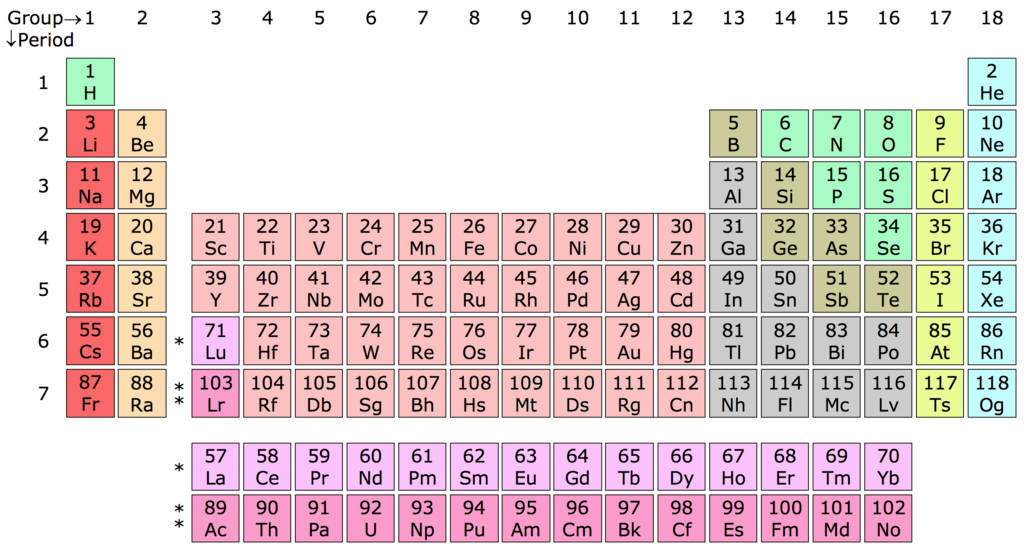
Think of it as a map of the chemical universe. Just like a geographical map shows you how cities and countries relate to one another, the periodic table shows you how elements are connected. Each box represents one element, containing its atomic number, symbol, and name.
The Organizing Principle
The fundamental rule for organizing the periodic table is the atomic number. Every element is defined by the number of protons in its atomic nucleus. Hydrogen has one proton, so its atomic number is 1. Helium has two protons, giving it an atomic number of 2. This number is unique to each element.
Atomic number
noun
The number of protons found in the nucleus of an atom. It is the characteristic that identifies a chemical element.
As you read the table from left to right and top to bottom, the atomic number increases by one for each element. This simple, sequential ordering is the key to the table's predictive power.
Rows and Columns
The table is arranged in a grid of rows and columns, each with a specific meaning related to an element's atomic structure. The horizontal rows are called periods. There are seven periods in the standard table. What do elements in the same period have in common? They have the same number of electron shells.
The vertical columns are called groups or families. Elements in the same group share similar chemical properties. This is because they have the same number of electrons in their outermost shell, known as valence electrons. These are the electrons involved in forming chemical bonds, so they largely determine an element's chemical behavior.
For example, all elements in Group 1 (the alkali metals) have one valence electron. All elements in Group 17 (the halogens) have seven valence electrons. This shared electronic structure makes them react in predictable ways.
| Group 1 | Electron Configuration | Valence Electrons |
|---|---|---|
| Lithium (Li) | 2, 1 | 1 |
| Sodium (Na) | 2, 8, 1 | 1 |
| Potassium (K) | 2, 8, 8, 1 | 1 |
The Periodic Law
The structure of the table reflects a fundamental principle called the periodic law. This law states that when elements are arranged in order of increasing atomic number, their physical and chemical properties show a periodic, or repeating, pattern.
The properties of the elements are periodic functions of their atomic numbers.
This repetition isn't a coincidence. It’s a direct result of the repeating patterns in the elements' electron configurations. As you move from one period to the next, the pattern of filling the outermost electron shell starts over. For example, after neon (element 10) completes the second shell, sodium (element 11) begins filling the third shell with a single electron, just like lithium did for the second shell. This recurring electronic structure is what causes the periodic trends in behavior.
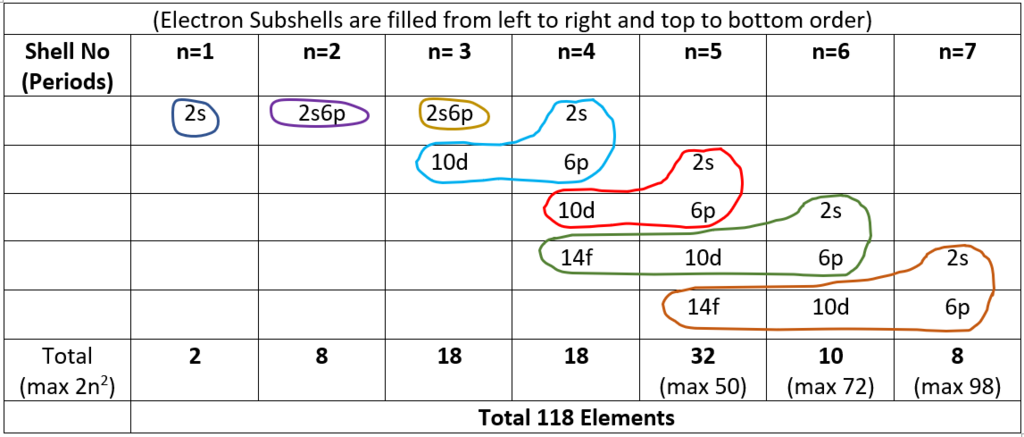
The layout of the periodic table, with its distinct blocks and rows, is a visual representation of how electrons fill up shells and subshells within an atom. By understanding this structure, we can start to predict how an element will behave without ever needing to see it.
Time to check what you've learned.
The modern periodic table arranges elements based on their increasing...
Elements located in the same group (vertical column) of the periodic table share which of the following characteristics?
This basic framework is the key to unlocking the secrets of chemical elements and their interactions.