Periodic Systems Explained
Introduction to Periodic Systems
The Rhythm of the Universe
Many things in the world happen over and over again in a predictable way. The sun rises and sets. The seasons change. A heart beats in a steady rhythm. This quality of repeating at regular intervals is called periodicity.
Periodicity
noun
The tendency to recur at regular intervals.
When we talk about a periodic system, we're referring to any collection of parts that shows this repeating behavior. The "system" could be a single swinging pendulum, the atoms in a crystal, or an entire solar system. The key is that some property of the system, whether it's position, voltage, or temperature, follows a repeating pattern through space or time.
The length of one full, repeating pattern is called the period. For the Earth's rotation, the period is 24 hours. For the second hand on a clock, it's 60 seconds. Understanding this simple concept is the first step to seeing how widespread and important periodicity is.
Periodicity All Around Us
Once you start looking for them, you'll find periodic systems everywhere.
Nature is full of them. The orbits of planets around the sun are periodic. Tides rise and fall in a predictable cycle. Many biological processes, from the firing of neurons in your brain to the annual migration of birds, follow a rhythm. Even at the microscopic level, atoms arrange themselves into repeating, ordered lattices to form crystals, like snowflakes or salt grains.
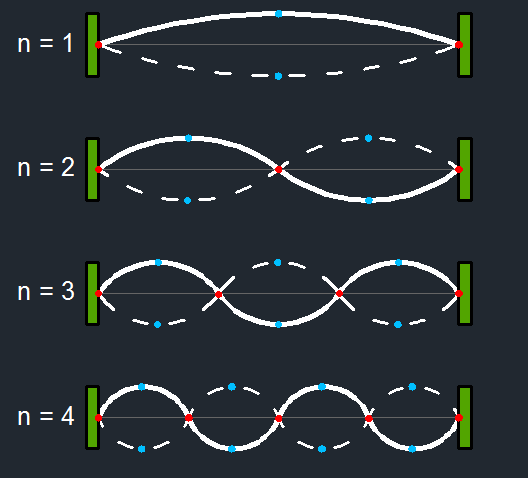
Technology also relies heavily on periodicity. The electricity powering your home is an alternating current (AC), where the voltage swings back and forth in a sine wave pattern 60 times every second. Digital information is encoded in signals that alternate between high and low states. Sound and music are fundamentally about periodic vibrations traveling through the air. The pitch of a musical note is determined by the frequency, or how quickly its sound wave repeats.
What Causes It?
Periodic behavior doesn't happen by accident. It's usually the result of underlying forces or constraints that push a system back and forth around a point of stability. Think about a child on a swing. When you push the swing, gravity constantly pulls it back toward its lowest point. This pull, called a restoring force, causes the swing to oscillate back and forth in a periodic motion.
Another cause is the tendency for systems to settle into their most stable, lowest-energy state. For atoms, this often means arranging themselves in a highly ordered, repeating pattern. This minimizes the energy needed to hold them together, creating the stable, periodic structure of a crystal.
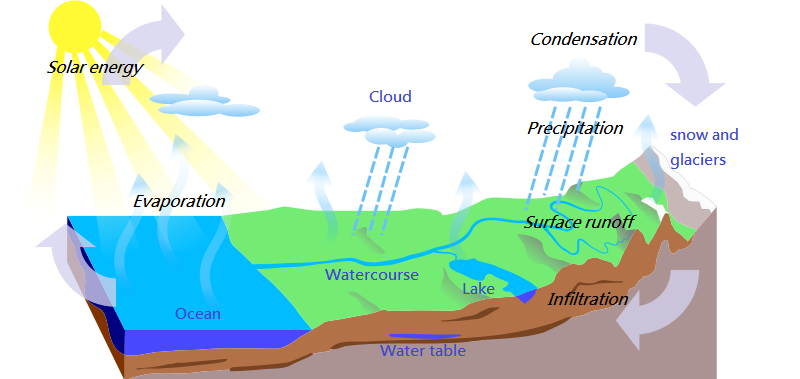
Finally, many complex systems in nature are governed by cycles and feedback loops. For example, the water cycle involves a continuous, repeating process of evaporation, condensation, and precipitation. Each stage leads to the next, creating a massive, periodic system that is essential for life on Earth.
Recognizing these repeating patterns is fundamental to science and engineering. By understanding the periodic nature of a system, we can predict its behavior, harness its properties, and see the underlying order in a complex world.
What is the defining characteristic of a periodic system?
What does the 'period' of a periodic system measure?