Performative Audio Walks
Introduction to Soundwalking
What is a Soundwalk?
Most of the time, we walk to get somewhere. We focus on the destination, and the world around us becomes a blur of sights and sounds we tune out. A soundwalk flips this script. Instead of walking to a place, you walk to listen.
It’s a simple but profound shift. You actively pay attention to the soundscape of your environment, treating it not as background noise but as the main event. It’s about quieting your inner monologue to hear the symphony of the world, from the hum of a distant highway to the rustle of leaves under your feet.
A soundwalk is any excursion whose main purpose is listening to the environment…
The idea was pioneered in the 1970s by Canadian composer R. Murray Schafer and the World Soundscape Project. They were concerned that we were losing our connection to the acoustic environment. By encouraging people to listen carefully, they hoped to foster a deeper appreciation for the sounds that shape our lives and ecosystems. The goal wasn't just to notice noise, but to understand the acoustic character of a place.
soundscape
noun
The acoustic environment as perceived by humans, in context. It includes all the sounds within a specific area, from natural to man-made.
The Art of Active Listening
There’s a big difference between hearing and listening. Hearing is passive; it’s the physical process of sound waves hitting your eardrums. Listening is an active skill. It requires focus and intention.
On a soundwalk, you practice active listening. You’re not just letting sounds wash over you. You're engaging with them. Try to identify the source of each sound. Is it near or far? Is it constant or intermittent? How does it make you feel?
This practice breaks down the wall of noise we build around ourselves. Suddenly, the drone of traffic isn't just one sound. It’s a collection of individual engines, tires on pavement, and horns. A park isn't quiet; it’s filled with birdsong, wind, and the footsteps of others.
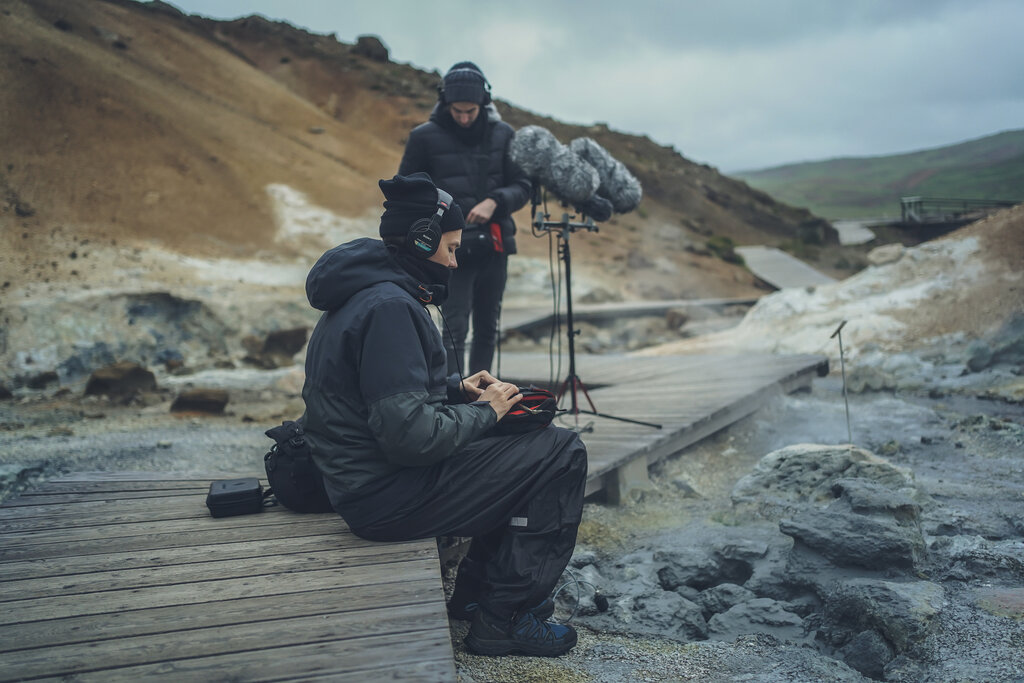
Active listening helps you notice patterns and relationships. You might realize the birds go silent when a dog barks, or that the hum from a nearby factory is louder on weekdays. You start to piece together the story of a place, told entirely through sound.
Active listening turns the world into a symphony you didn't know you were missing.
How to Take a Soundwalk
You don't need any special equipment to go on a soundwalk. All you need is a willingness to listen. Here’s a simple guide to get you started.
| Step | Action | Goal |
|---|---|---|
| 1. Choose a Location | Pick a place to walk. It can be anywhere: a city street, a park, your own neighborhood. | Find a space with an interesting soundscape. |
| 2. Set an Intention | Before you start, remind yourself that the purpose of this walk is to listen. | Shift your focus from seeing to hearing. |
| 3. Walk Slowly and Silently | Move at a relaxed pace. Avoid talking if you're with others. | Minimize the sounds you make so you can hear your surroundings better. |
| 4. Listen in Layers | Try to notice the quietest sound you can hear. Then, the loudest. Identify sounds that are close by and those that are far away. | Deconstruct the soundscape into its individual components. |
| 5. Stop Occasionally | Pause for a minute or two in different spots. Close your eyes to heighten your sense of hearing. | Experience how the soundscape changes from one point to another. |
| 6. Reflect | After your walk, think about what you heard. What sounds were pleasant? What sounds were jarring? Did anything surprise you? | Process your experience and solidify your observations. |
Try doing this for just 15-20 minutes. You might be surprised by how much you notice when you truly tune in.
What is the primary goal of a soundwalk?
According to the text, what is the key difference between hearing and listening?
This practice of mindful listening is the first step toward understanding how sound shapes our world.