Performance Marketing Strategy and Execution
Scaling CAC and LTV
From Cost to Profit Engine
Knowing your cost-per-click is table stakes. To truly scale a business, you need to move beyond campaign metrics and into unit economics. This means understanding the real cost to acquire a customer and what that customer is worth over their entire relationship with you. The two pillars of this approach are Customer Acquisition Cost (CAC) and Lifetime Value (LTV).
A simple CAC calculation (Total Ad Spend / New Customers) is a good start, but it's misleading. Not all acquisition channels are created equal. A customer from a Google search ad might cost $50, while one from a TikTok campaign costs $15. A weighted CAC gives you a more accurate picture by averaging these costs based on the volume from each channel.
| Channel | Spend | New Customers | CAC |
|---|---|---|---|
| Google Ads | $10,000 | 200 | $50 |
| Facebook Ads | $5,000 | 250 | $20 |
| TikTok Ads | $3,000 | 200 | $15 |
| Total | $18,000 | 650 | ~$27.69 |
The weighted average of ~$27.69 is a much more useful number than any single channel's CAC. But even this doesn't capture the full picture. A truly accurate calculation uses a , which accounts for all the hidden costs of acquisition. This includes marketing team salaries, software subscriptions for analytics and design tools, agency fees, and even a portion of office overhead. It's the total cost of your growth engine, not just your ad spend.
Predicting Future Value
Just as we need a nuanced view of cost, we need a forward-looking view of value. Calculating LTV based on past customers is useful, but predictive LTV modeling is where strategic decisions are made. This involves using historical data to forecast how much revenue a new customer is likely to generate over their lifetime.
The most effective way to do this is through You group customers by when they were acquired (e.g., the "January 2023 cohort") and track their spending behavior over time. By observing how older cohorts behaved, you can build a reliable model for how new cohorts will likely perform. This allows you to estimate a customer's LTV months or even years before they've reached the end of their lifecycle.
The Golden Ratio
With an accurate CAC and a predictive LTV, you can finally calculate the most important metric for sustainable growth: the LTV/CAC ratio. This simple ratio tells you how much value you're generating for every dollar you spend on acquisition.
While every industry is different, a common benchmark for a healthy business is a ratio of 3:1 or higher. This means for every dollar you spend to get a customer, you can expect to get three dollars back over their lifetime.
A high LTV:CAC ratio, often targeted at 3:1 or higher, signals a profitable and scalable customer acquisition engine.
This ratio is your strategic guide. If your LTV/CAC is 5:1, you have room to be much more aggressive. You can afford to bid higher in competitive ad auctions, explore new, more expensive channels, and invest heavily in growth because you know your unit economics are solid. If the ratio dips to 1:1, you're losing money on every new customer once you factor in the cost of goods sold and operational expenses. It's a clear signal to pause, diagnose the problem, and optimize either your acquisition costs or your product's ability to retain and monetize users.
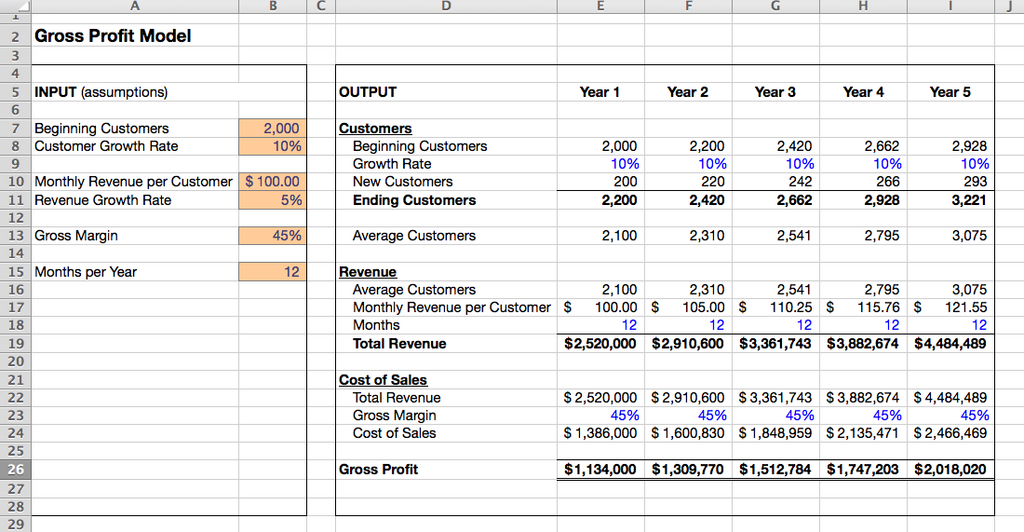
The final layer of analysis is to segment your LTV/CAC ratio by acquisition source. You might discover that customers from LinkedIn have a CAC of $150 but an LTV of $900 (a 6:1 ratio), while customers from Instagram have a CAC of $25 but an LTV of only $50 (a 2:1 ratio). This insight allows you to strategically allocate your budget, focusing resources on the channels that deliver the most valuable customers, not just the cheapest ones.
With these tools, you move from reactive budget management to proactive financial planning, using unit economics to build a truly scalable growth strategy.
A company is calculating its Customer Acquisition Cost (CAC). Which of the following represents a "Fully Loaded CAC"?
A SaaS company discovers its overall LTV/CAC ratio is 1:1. What is the most immediate strategic implication of this finding?