Peptides Explained
Peptide Basics
The Small Chains of Life
At the molecular level, life is all about building. Small units link together to form larger, more complex structures. We see this with proteins, the workhorses of our cells. But before you get to a large, complex protein, you start with something smaller: a peptide.
Peptides are short chains of amino acids linked by peptide bonds.
Think of amino acids as individual beads. When you string a few of them together, you get a peptide. String a whole lot of them together, and you get a protein. Peptides are the essential link between single amino acids and full-blown proteins.
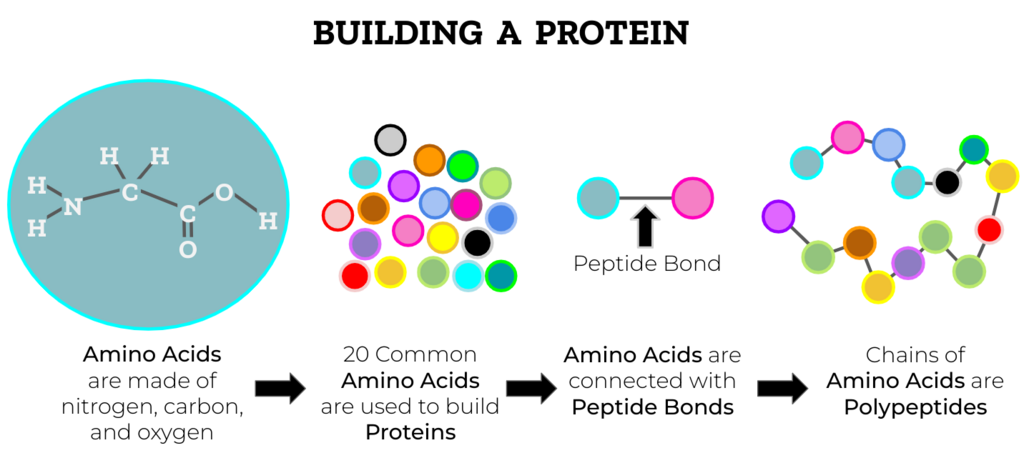
All peptides and proteins are made from the same 20 common types of amino acids. Each amino acid has a similar core structure but a unique side chain, often called an R-group. This side chain is what gives each amino acid its distinct properties, like being acidic, basic, or neutral.
Forming the Peptide Bond
So how do these amino acid beads get strung together? The connection happens through a chemical reaction that forms a special link called a peptide bond. This bond forms between the carboxyl group () of one amino acid and the amino group () of the next.
During this process, a molecule of water is released. Because a water molecule is lost, this is called a dehydration or condensation reaction. The result is a strong, covalent bond that creates a stable backbone for the growing chain.
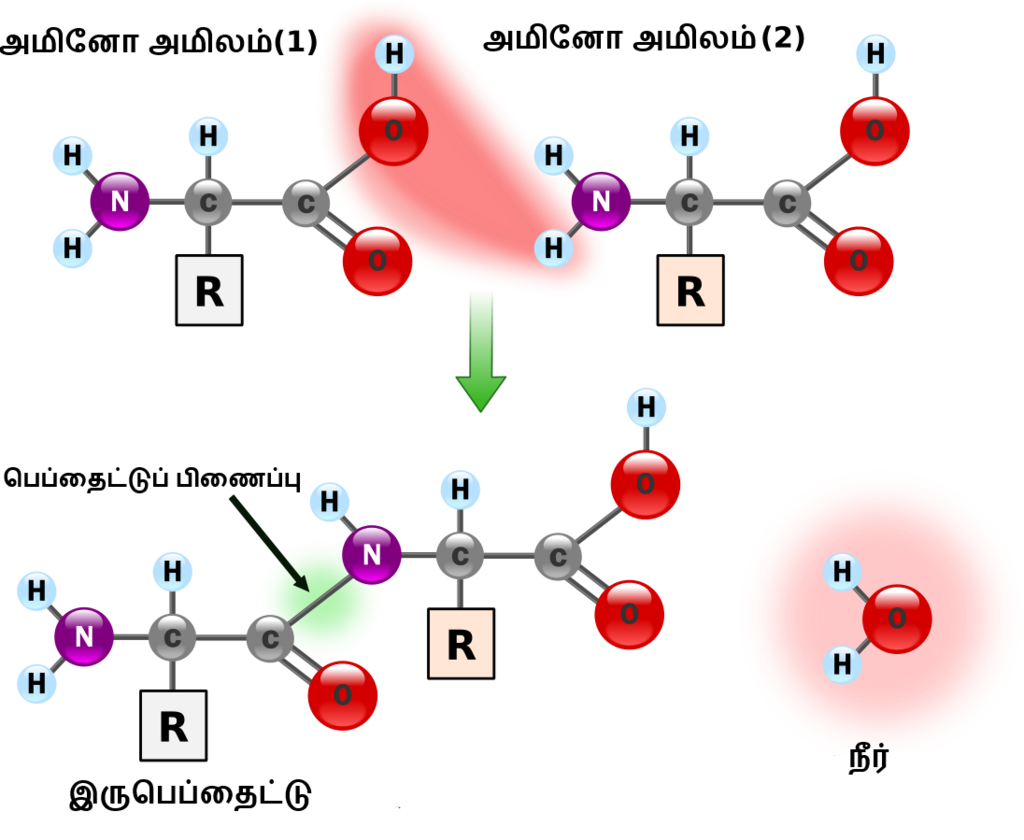
Every peptide chain has a beginning and an end. The beginning, called the N-terminus, has a free amino group. The end, called the C-terminus, has a free carboxyl group. This gives the peptide a direction, which is crucial for how it's read and how it functions.
Peptide vs. Protein
The line between a peptide and a protein can be a bit blurry, but the main difference is size. It's like the difference between a puddle and a lake—both are made of water, but the scale is vastly different.
Generally, chains with fewer than 50 amino acids are called peptides. Chains with more than 50 are called polypeptides or proteins. This isn't a strict rule, but it's a useful guideline.
The key distinction is complexity. Proteins are large enough to fold into stable, intricate three-dimensional shapes. These specific shapes are what allow proteins to perform their diverse jobs, like acting as enzymes or providing structural support. Peptides are typically too short to form such complex, stable structures.
| Feature | Peptide | Protein |
|---|---|---|
| Size | 2-50 amino acids (generally) | >50 amino acids (generally) |
| Structure | Simple, linear chain (or small ring) | Complex, stable 3D structure |
| Function | Often act as hormones or signaling molecules | Diverse roles (enzymes, structural, etc.) |
Classifying Peptides
Peptides can be categorized in a couple of useful ways: by their length and by their function.
By Length: This is the most straightforward classification. The name tells you exactly how many amino acids are in the chain.
- Dipeptide: Two amino acids
- Tripeptide: Three amino acids
- Tetrapeptide: Four amino acids
- ...and so on. A chain with many amino acids is called a polypeptide.
polypeptide
noun
A long, continuous, and unbranched peptide chain.
By Function: While we're avoiding the deep details for now, it's helpful to know that peptides are grouped by their jobs in the body. For example, some peptides act as hormones, carrying signals from one part of the body to another. The hormone insulin, which regulates blood sugar, is a well-known peptide. Others function as neurotransmitters, passing signals between nerve cells. Many antibiotics are also peptides.
These small chains are far more than just protein precursors. They are active, essential molecules in their own right.
Let's check your understanding of these core concepts.
What type of chemical bond is formed between the carboxyl group of one amino acid and the amino group of another?
The formation of a peptide bond is a dehydration reaction.
Understanding peptides is the first step toward understanding the much larger world of proteins and their role in biology.