Peptides Explained
Peptide Basics
The Building Blocks
At the heart of many biological processes are molecules called peptides. Think of them as short chains made from smaller units called amino acids. These amino acids are the fundamental building blocks. To form a peptide, amino acids link together one by one, like beads on a string.
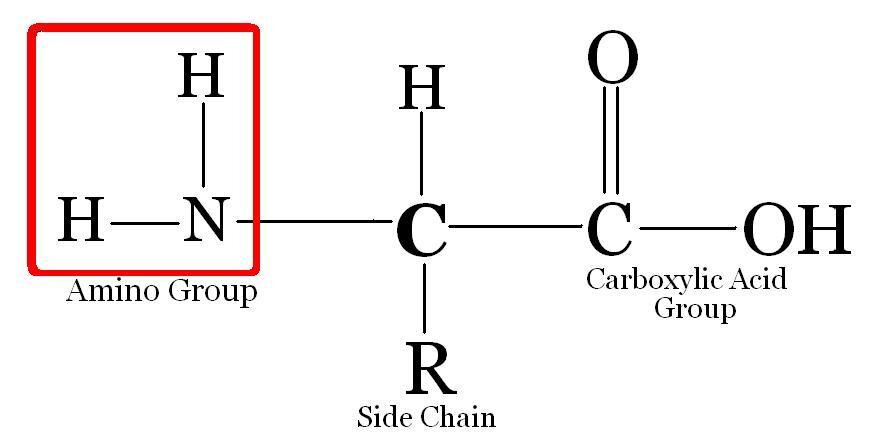
Every amino acid has a central carbon atom connected to four different groups: an amino group (), a carboxyl group (), a hydrogen atom, and a unique side chain known as the R group. It's this R group that gives each of the 20 common amino acids its distinct properties.
Forging the Peptide Bond
So how do these individual amino acids connect? They join together through a chemical reaction that forms a special link called a peptide bond. This happens when the carboxyl group of one amino acid reacts with the amino group of another.
During this process, a molecule of water is released. This type of reaction, where water is removed to join two smaller molecules, is called a condensation or dehydration reaction. The resulting molecule made of two amino acids is called a dipeptide.
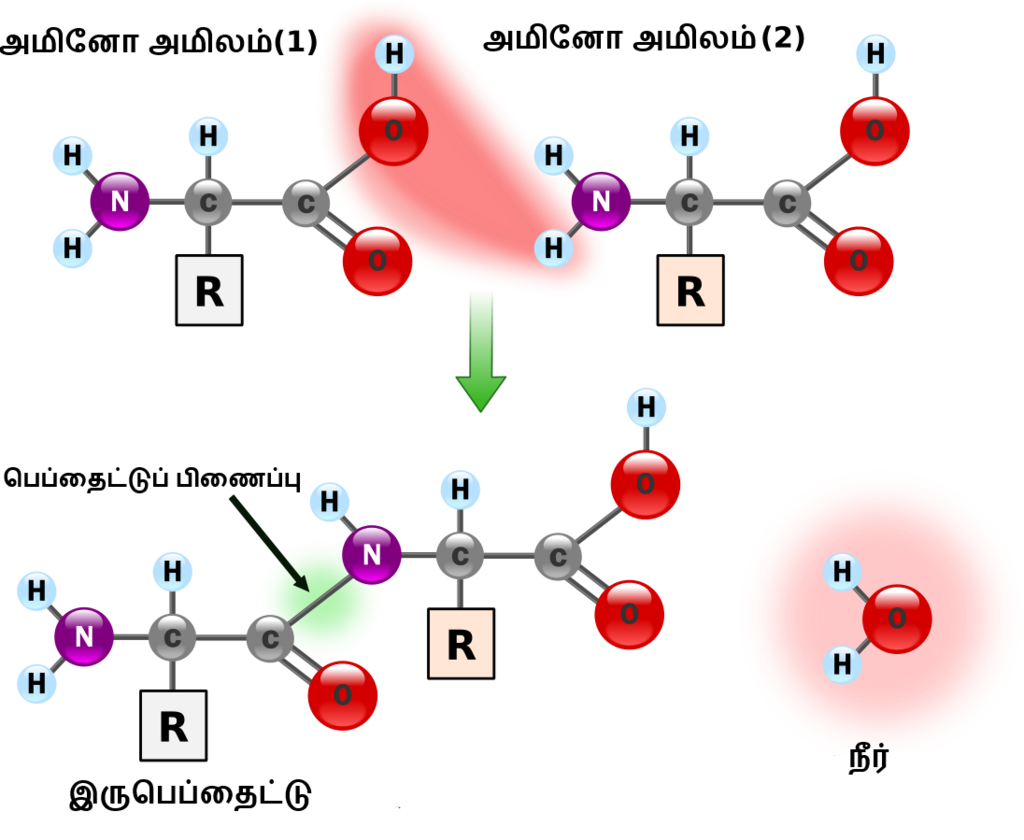
This bond-forming process can happen over and over, adding more amino acids to the chain and making it longer. Each new amino acid attaches to the end of the growing chain, extending it one unit at a time.
Peptides vs. Proteins
You might have heard the terms 'peptide' and 'protein' used in similar contexts. Both are chains of amino acids, but the main difference between them is size. It’s a bit like the difference between a sentence and a book.
Peptides are the sentences. They are shorter chains, typically consisting of 2 to 50 amino acids. Proteins are the books. They are much longer chains, often called polypeptides, that can contain hundreds or thousands of amino acids. These long chains fold into complex, three-dimensional shapes to perform their specific jobs in the body.
| Feature | Peptide | Protein |
|---|---|---|
| Length | Short chain (2-50 amino acids) | Long chain (>50 amino acids) |
| Structure | Simpler, linear chain | Complex, folded 3D structure |
Classifying Peptides
Peptides themselves can be classified based on how many amino acids they contain. While the exact definitions can vary slightly, we generally group them like this:
- Dipeptides: Made of two amino acids.
- Tripeptides: Made of three amino acids.
- Oligopeptides: A general term for shorter peptides, usually containing between 2 and 20 amino acids.
- Polypeptides: Longer chains of amino acids. This term is often used for chains that have more than 50 amino acids and are large enough to be considered proteins.
Essentially, all proteins are polypeptides, but not all polypeptides are large or complex enough to be considered full-fledged proteins.
Now that you understand what peptides are and how they're built, let's test your knowledge.
What are the fundamental building blocks that link together to form peptides?
The formation of a peptide bond is an example of what type of reaction?