Peptide Science and Therapeutic Applications
Structural Classifications
Beyond the Chain
The primary sequence of amino acids is just the beginning of a peptide's story. In solution, a short, linear peptide often resembles a piece of cooked spaghetti. It's conformationally flexible, meaning it doesn't hold a single, rigid shape. Instead, it samples a wide range of different structures, existing as an 'unstructured' ensemble. This flexibility can be a problem. For a peptide to perform a specific biological function, like binding to a receptor, it usually needs to adopt a very particular three-dimensional shape, often called its bioactive conformation. If it's constantly changing shape, the chances of it being in the right one at the right time are low.
This inherent floppiness means that much of the peptide's potential is lost. To improve its function, we need to lock it into its active shape.
Adding Constraints
To overcome the problem of flexibility, scientists introduce structural constraints. By linking different parts of the peptide together, we can force it into a more defined, stable structure. Two popular strategies for this are cyclization and stapling. These modifications essentially tie the peptide's hands, preventing it from wiggling around and encouraging it to adopt its bioactive form.
Cyclic peptides are formed by creating a covalent bond to form a ring. The simplest form is head-to-tail cyclization, where the C-terminus of the peptide is linked to its own N-terminus, creating a continuous loop. Another common strategy is to link the side chains of two amino acids within the sequence. A classic example of this is the disulfide bridge, which forms between two cysteine residues. Finally, we can also link a side chain to the peptide backbone. Some organisms produce highly complex macrocyclic peptides this way, such as cyclotides, which are plant-derived peptides with a knotted structure that makes them exceptionally stable.
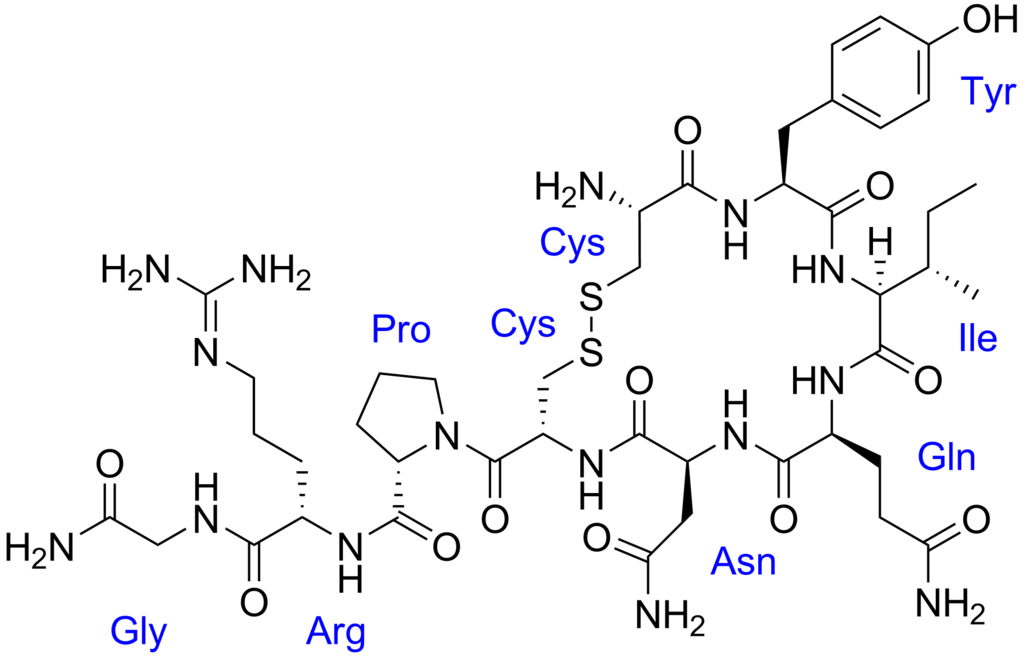
Another powerful technique is peptide stapling. This method introduces a synthetic brace, or 'staple', to lock a peptide into a specific secondary structure, most commonly an alpha-helix. The staple is typically a short hydrocarbon chain that links two amino acid side chains, preventing the helix from unravelling. This is like using a paperclip to hold a coiled spring in place, ensuring it maintains its shape and function.
The Payoff of Rigidity
Why go to all this trouble? The main benefit of constraining a peptide is that it reduces the entropic penalty of binding. Entropy is a measure of disorder or randomness. A flexible, linear peptide has high entropy because it can adopt many different shapes. When it binds to its target, it's forced into a single conformation, losing a significant amount of this randomness. This loss is energetically unfavourable.
Think of it like trying to fit a specific key into a lock. If you have a whole ring of wiggling, undefined keys (high entropy), finding the right one and holding it steady to fit the lock takes effort. But if you have a single, rigid key that's already in the correct shape (low entropy), it slides in easily.
A pre-structured cyclic or stapled peptide has already 'paid' this entropic cost. It's already in or very close to its bioactive conformation. Because it doesn't have to sacrifice as much conformational freedom upon binding, the binding event is more energetically favourable. This translates to a higher binding affinity, meaning it binds more tightly and effectively to its target. Constrained peptides are also often more resistant to being broken down by enzymes, giving them a longer lifespan in the body.
Ready to check your understanding of these peptide structures?
What is the primary reason for introducing structural constraints, such as cyclization, into a linear peptide?
The thermodynamic benefit of constraining a peptide is that it reduces the 'entropic penalty' of binding. What does this mean?
By moving beyond simple linear chains, we can design peptides with enhanced stability and potency, turning them into powerful tools for medicine and research.