Pencil Sketching Foundations
Understanding Drawing Tools
Your Drawing Toolkit
The tools you use can transform your drawing experience. While you can sketch with any pencil and paper, understanding your options will give you much more control over the final result. The three core components of your toolkit are pencils, erasers, and paper. Each one plays a distinct role in creating your artwork.
Choosing Your Pencils
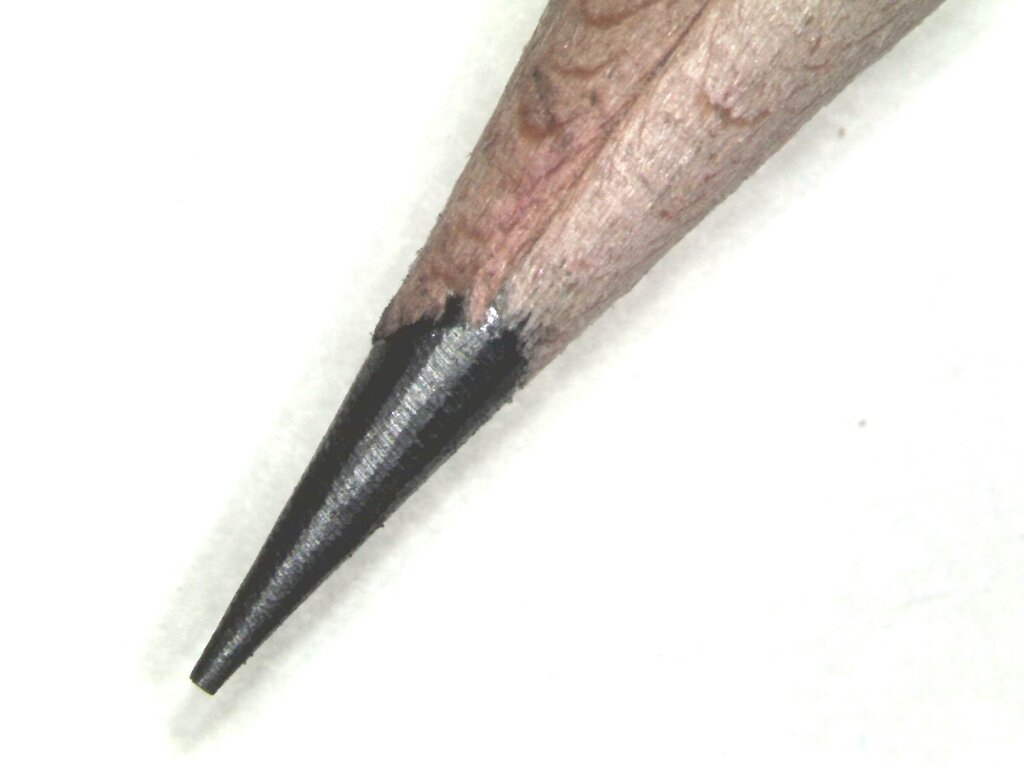
Not all pencils are the same. They vary in hardness, which affects how dark or light your lines are. This is called the pencil's grade. You can find this grade stamped on the side of the pencil—usually a letter and a number.
The scale is centered around HB, a standard multi-purpose pencil. Pencils with an 'H' are hard, creating lighter, finer lines. The higher the number before the H (like 4H or 6H), the harder the graphite and the lighter the mark. Pencils with a 'B' are soft, containing more black graphite, and they create darker, smudgier lines. The higher the number before the B (like 4B or 6B), the softer the graphite and the darker the mark.
Think of H pencils as whispers and B pencils as shouts. One is for faint guidelines, the other for bold statements.
You don't need every single pencil to start. A small set is perfect. Try getting an HB for general sketching, a 2H for light initial outlines that are easy to erase, and a 2B and 4B for adding shadows and darker tones. This small range gives you a lot of creative flexibility.
More Than Just Mistakes
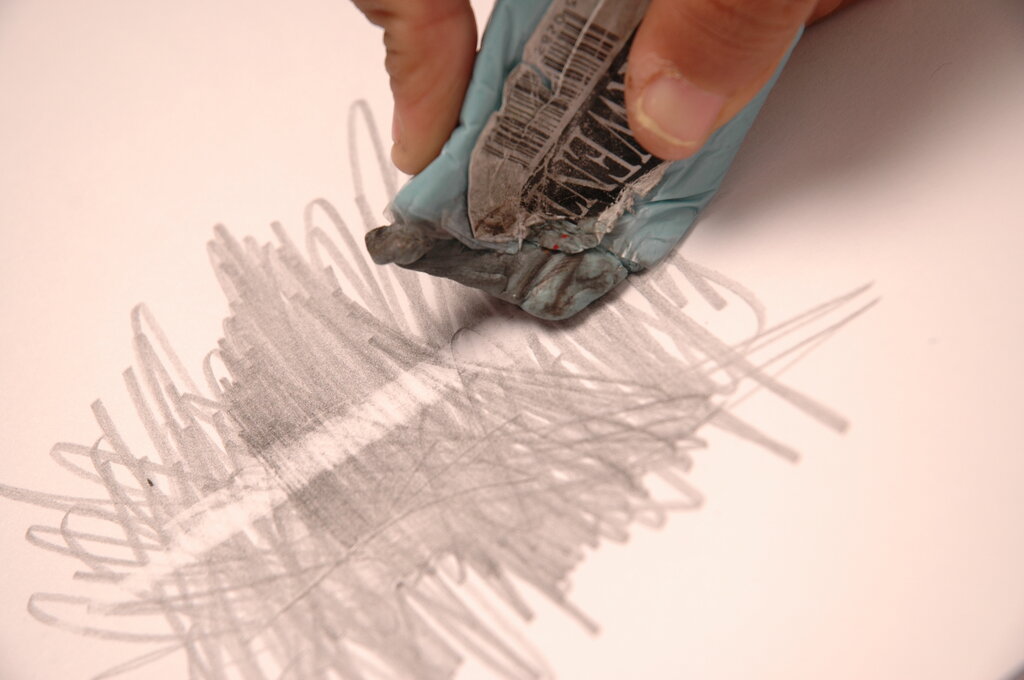
An eraser isn't just for fixing errors; it's a creative tool. Different erasers have different jobs, from cleaning up smudges to actively drawing highlights into a shaded area.
| Eraser Type | Best For | How It Works |
|---|---|---|
| Kneaded | Lifting graphite, creating highlights, gentle erasing | Malleable rubber that absorbs graphite without leaving residue. It can be shaped to a fine point for detail work. |
| Vinyl (Plastic) | Cleanly removing lines from most surfaces | A firm eraser that lifts graphite with minimal crumbling. Good for sharp, clean edges. |
| Gum | Erasing on delicate paper | A soft, crumbly eraser that is very gentle on the paper's surface but can leave behind a lot of residue. |
A kneaded eraser is one of the most versatile tools you can have. Because it's soft and pliable like putty, you can shape it to erase tiny details or dab it on a shaded area to gently lift some of the graphite, creating soft highlights. It doesn't wear away like other erasers, it just gets dirtier over time. To clean it, you just knead it until a fresh surface appears.
The Right Surface
The paper you choose will have a huge impact on your drawing. The key characteristic to consider is its texture, often called its "tooth." A paper with more tooth has a rougher surface that grabs onto the graphite from your pencil, resulting in a more textured look. Smoother paper, with less tooth, is great for fine lines and detailed work.
For sketching, a general-purpose sketchbook with medium-tooth paper is a great place to start. It's forgiving and works well with a variety of pencil grades. Avoid very smooth paper like printer paper, as it can be difficult to build up layers of shading. Experiment with different textures as you get more comfortable to see what you like best.
The paper's tooth determines how the pencil's graphite clings to the page, affecting the texture and depth of your drawing.
Now that you know the basics of the tools, let's test your knowledge.
You are starting a new drawing and want to create a light initial sketch that will be easy to erase. Which pencil would be the best choice?
Which of these drawing tools is best described as being soft and pliable, used for lifting graphite to create highlights?