Pedagogy of Giftedness
Foundations of Gifted Education
What Is Giftedness?
The term "gifted" often brings to mind images of straight-A students who ace every test. While high academic achievement can be one sign, the reality is much more complex. Giftedness isn't just about being smart; it's about having an intellectual ability significantly higher than average. This often manifests in unique ways.
giftedness
noun
An intellectual ability significantly higher than average, often characterized by advanced cognitive skills, creativity, and intense curiosity.
Gifted individuals often learn at a much faster pace, grasp complex and abstract concepts with ease, and have an intense curiosity that drives them to ask deep, probing questions. They might show incredible creativity, leadership skills, or a specific academic aptitude in areas like math or language.
One of the most important characteristics to understand is asynchronous development. This means their intellectual, emotional, and physical development can be out of sync. A five-year-old might discuss astronomy at a middle-school level but have a tantrum like any other child their age when a toy is taken away. Their mind is older than their emotions.
Asynchronous development is a hallmark of giftedness: a gifted child's mental age is often far beyond their chronological age, while their social and emotional skills may be closer to their peers or even younger.
A Brief History
The formal study of giftedness is relatively new. Early in the 20th century, psychologists like Lewis Terman focused almost exclusively on IQ scores. His groundbreaking, long-term study of high-IQ children helped shape the field, but it also cemented a narrow view of giftedness as something you could measure with a single number.
Over time, our understanding has broadened. The launch of the Sputnik satellite by the Soviet Union in 1957 was a major catalyst in the United States. It sparked fears of falling behind in science and technology, leading to a surge of investment in programs designed to identify and nurture the nation's brightest students.
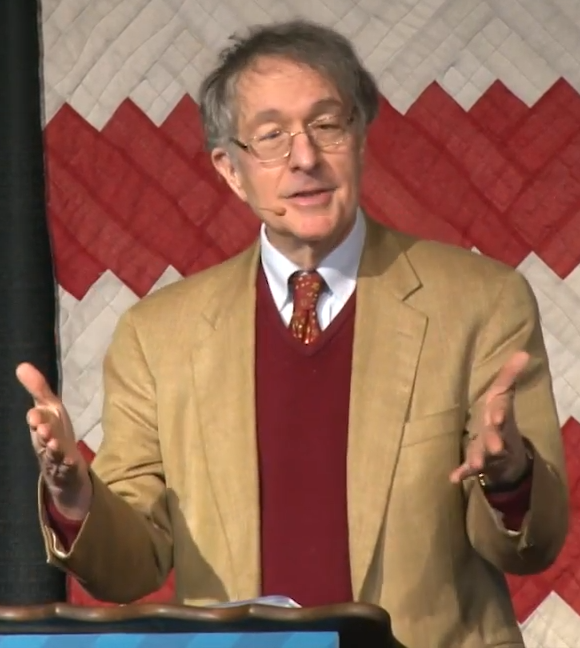
Psychologists like Howard Gardner further expanded the definition with his theory of multiple intelligences, arguing that people can be gifted in different ways, such as musically, spatially, or interpersonally. This shift moved the focus from a single score to a wider profile of a student's abilities.
Today, the concept of giftedness is more inclusive, recognizing that it can appear in children from all backgrounds and in many different forms. However, this complex reality also brings challenges for the gifted individuals themselves.
Being gifted is not easy. Giftedness comes with all kinds of challenges like asynchronous development, overexcitabilities, perfectionism, imposter syndrome, and pressure from others. All of this can lead to a variety of social issues.
Why Specialized Instruction Matters
Imagine asking a marathon runner to only ever jog a single mile for practice. They would quickly become bored, their skills would stagnate, and they might even lose their passion for running. This is what can happen when a gifted student is placed in a standard curriculum that doesn't match their pace or depth of thinking.
Without appropriate challenges, gifted learners can become disengaged. This can lead to underachievement, where a student performs below their actual ability. They might act out in class due to boredom or develop poor study habits because they've never truly been challenged.
Specialized instruction isn't about giving students more work. It's about giving them different work. It involves providing opportunities for deeper exploration, more complex problem-solving, and a faster pace of learning. The goal is to keep their minds engaged and help them reach their full potential, both academically and emotionally.
The purpose of gifted education is to provide a curriculum that is appropriately paced and challenging, allowing students to engage with material at a level that matches their unique cognitive abilities.
Now, let's review some of the key terms we've discussed.
Ready to check your understanding?
Which of the following scenarios best illustrates the concept of "asynchronous development"?
According to the text, the early 20th-century understanding of giftedness, heavily influenced by psychologists like Lewis Terman, was primarily focused on what measure?
Understanding these core concepts is the first step toward creating effective learning environments for gifted students.