Path to Academic Excellence
Advanced Active Recall
From Facts to Frameworks
You already know that pulling information out of your brain, or active recall, is far more effective than passively reading it. But not all recall is created equal. Simply remembering a definition is like knowing the alphabet; it's a necessary start, but it won't help you write a novel.
The key to elite performance lies in how deeply you process information. The theory suggests that memory isn't just one thing. It's a byproduct of the depth at which you engage with material. Rote memorization is shallow processing. It creates fragile, isolated memories. Deep processing, or semantic encoding, is about understanding meaning and connecting new information to what you already know. It builds a robust, interconnected web of knowledge.
Shallow learning asks "What is it?" Deep learning asks "How does this fit with everything else I know?"
This is where we move beyond basic flashcards. Instead of creating cards for isolated facts, the goal is to build tools that force synthesis. Two powerful methods are Feynman Maps and Active Recall Matrices.
Create Knowledge Networks
A is a visual and conceptual tool. You start with a core concept written at the top of a blank page. Then, you explain it in the simplest terms possible, as if teaching it to a child. This process forces you to identify the core components. From there, you branch out, connecting related ideas, theories, and examples. The key is to draw the connections explicitly: how does theory X relate to case study Y? Where do concepts A and B overlap or contradict each other?
An Active Recall Matrix is a more structured approach. You create a table where the rows are key concepts and the columns are guiding questions (e.g., 'Core Definition', 'Key Proponents', 'Real-World Example', 'Counterarguments'). Filling out this grid forces you to retrieve and synthesize information from multiple angles for each concept.
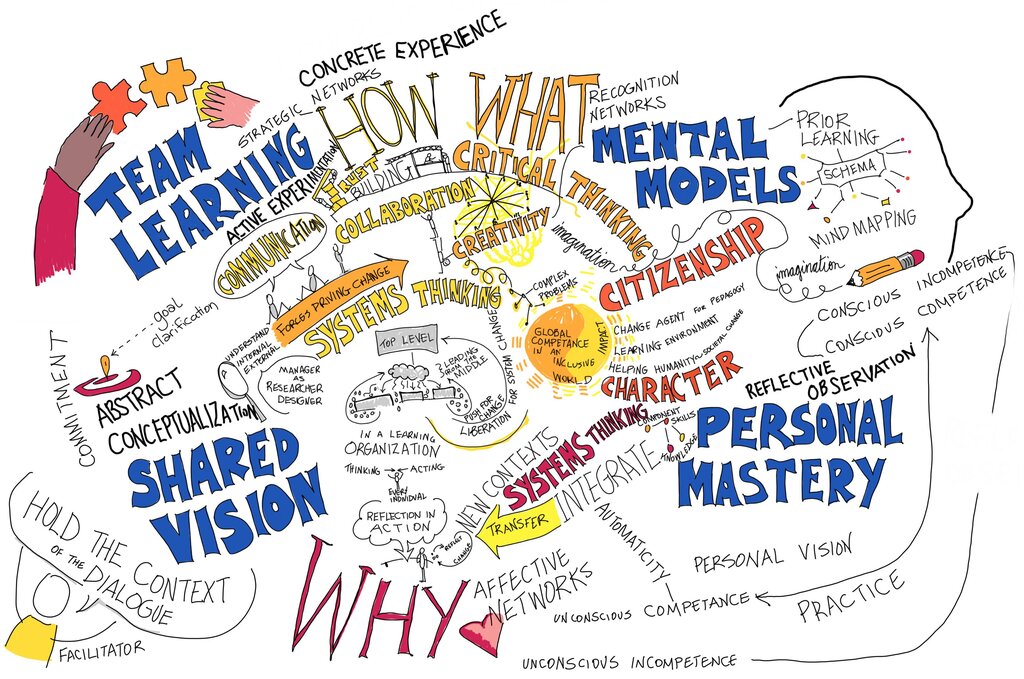
Both of these tools shift the focus from what to why and how. They transform study from a passive review into an active construction of a mental model. The goal is to build a knowledge graph in your head, not just a list of facts.
Focus Your Firepower
You can't build a deep network for every single detail. That’s where the comes in. Often, 80% of the important outcomes in a subject come from understanding 20% of the core concepts. Your first task is to identify that high-yield 20%.
How do you find them? Look for foundational principles that are referenced repeatedly. Pay attention to concepts that unlock other ideas. If understanding Concept A is required to understand Concepts B, C, and D, then Concept A is part of your 20%. Focus your deep synthesis efforts, like creating Feynman Maps, on these cornerstone ideas first.
Ask Higher-Order Questions
The quality of your recall is determined by the quality of your questions. Asking "What is the definition?" is a low-level recall task. To build deep understanding, you need to ask higher-order questions that force analysis, evaluation, and creation.
provides a perfect framework for this. It's a hierarchy of cognitive skills. While your basic flashcards might test the 'Remember' and 'Understand' levels, your advanced study should target the top tiers.
When you study, formulate questions from the top of the pyramid:
- Analyze: How do the components of this theory interact? What are the underlying assumptions?
- Evaluate: What are the strengths and weaknesses of this argument? Which of these two models is more effective and why?
- Create: Can you design a new solution based on these principles? How would you combine these two ideas to form a new theory?
Using these questions to build your Feynman Maps and matrices ensures you're not just recalling facts, you're building a genuine, flexible understanding of your subject.
Ready to test your understanding of these deeper learning strategies? Let's see how well you can synthesize this information.
According to the Levels of Processing theory, what is the primary difference between shallow and deep processing?
What is the main goal of using tools like a Feynman Map or an Active Recall Matrix?
By shifting your active recall from simple facts to complex synthesis, you move from being a student who knows things to a scholar who understands them.