Parenting Two and Five Year Olds
Understanding Child Development
The Toddler Years: Age 2
At age two, a child's world is exploding with new abilities. They are no longer babies but active toddlers, driven by a powerful curiosity to explore everything around them. This is an age of incredible energy and a budding sense of independence, often mixed with a need for the security of familiar caregivers.
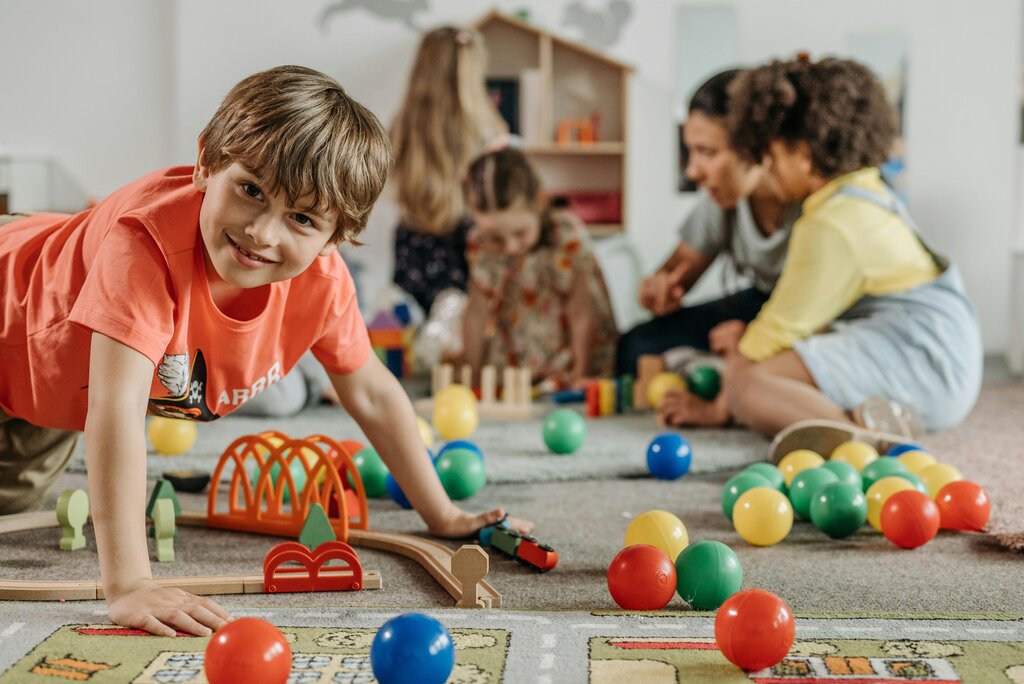
Physically, they are much more mobile. They can walk and run, though perhaps a bit unsteadily. You'll see them kicking a ball, climbing onto furniture, and building towers of four or more blocks. Their fine motor skills are also developing as they learn to scribble and turn pages in a book, one at a time.
Cognitively, two-year-olds are beginning to solve problems. They can sort shapes and colors, engage in simple make-believe play, and follow two-step instructions like "Pick up your toy and put it in the box." They are starting to understand cause and effect.
Socially and emotionally, this is a time of big feelings. They show growing independence but can also experience separation anxiety. A key social behavior is "parallel play," where they play alongside other children rather than with them. And famously, this is the age where "no" becomes a favorite word as they test boundaries and assert their will.
Language skills take a huge leap forward. Their vocabulary expands rapidly from a handful of words to 50 or more. They start putting two words together to form simple phrases like "more juice" or "all gone."
The Preschooler Emerges: Age 3
By age three, children are becoming more coordinated, communicative, and social. They are transitioning from the toddler stage into a true preschooler, capable of more complex thoughts and actions. Their desire for independence grows, but they are also more aware of others and their feelings.
Key shifts at this age include moving from parallel play to more cooperative interactions and forming longer, more complex sentences.
On the physical front, a three-year-old is much more agile. They can run with ease, pedal a tricycle, and climb well. Their fine motor skills have improved, allowing them to draw circles, do simple puzzles, and handle small objects like buttons with increasing skill.
Cognitively, they grasp more complex ideas. A three-year-old can tell you their name and age, understand the concept of "two," and follow three-step commands. Their imagination becomes a powerful tool for play and learning.
Social and emotional growth is significant. They start to take turns in games, show affection for friends without prompting, and understand the concepts of "mine" and "his/hers." Empathy begins to emerge as they comfort an upset friend.
Their language abilities continue to develop. They can speak in sentences of two to three words and carry on a simple conversation. People familiar with them can usually understand most of what they say.
A World of Questions: Ages 4 to 5
The years leading up to kindergarten are marked by an insatiable curiosity. Four- and five-year-olds are full of questions, particularly the classic "Why?". Their imagination is in high gear, fueling elaborate make-believe games and stories. They are also becoming more self-sufficient and ready for more structured learning environments.
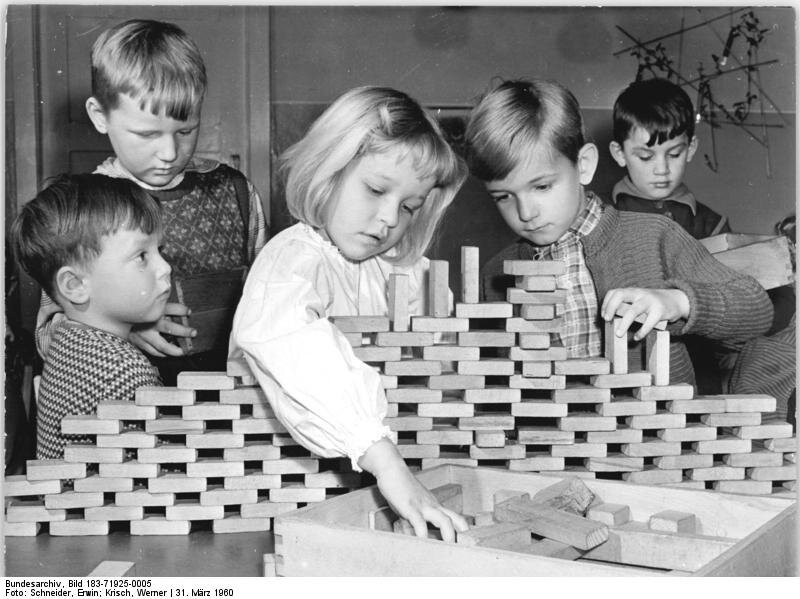
Physically, they are gaining impressive control over their bodies. They can hop on one foot, catch a bounced ball most of the time, and may be able to skip. Fine motor skills are refined enough for them to use scissors, draw a person with two to four body parts, and copy some capital letters.
Cognitively, their understanding of the world deepens. They can name colors and some numbers, understand the idea of counting, and remember parts of a story. They also begin to grasp the concept of time, understanding ideas like "yesterday," "today," and "tomorrow."
This is a highly social age. They enjoy playing with other children and are more likely to agree to rules in games. They are more aware of their own feelings and can talk about what they like and what interests them. Make-believe play becomes more complex and often involves other children in elaborate scenarios.
Language becomes a primary tool for socializing and learning. A four- or five-year-old can tell stories, sing a song or recite a nursery rhyme from memory, and use future tense. They can state their first and last name and generally speak clearly enough for strangers to understand.
Recognising these milestones is essential because they offer a roadmap for tracking a child's progress and identifying potential delays early on.
Watching a child grow from a curious two-year-old to a confident five-year-old is a remarkable journey. Each stage brings new abilities and a different way of seeing the world.