Palazzo del Te Mantua
Introduction to Mannerism
Beyond Perfection
By the early 1500s, Renaissance artists like Leonardo, Michelangelo, and Raphael had achieved a kind of perfection. They mastered realism, perspective, and ideal human proportions. Their work was balanced, harmonious, and clear. For the next generation of artists, this created a challenge: Where do you go from perfection?
Instead of just copying the masters, these younger artists chose a different path. They started to experiment, pushing the boundaries of the classical rules their predecessors had perfected. This new, stylish approach became known as Mannerism.
Mannerism
noun
An artistic and architectural style from the late Renaissance (c. 1520-1600) characterized by its intellectual sophistication, artificial qualities, and departure from classical harmony and balance.
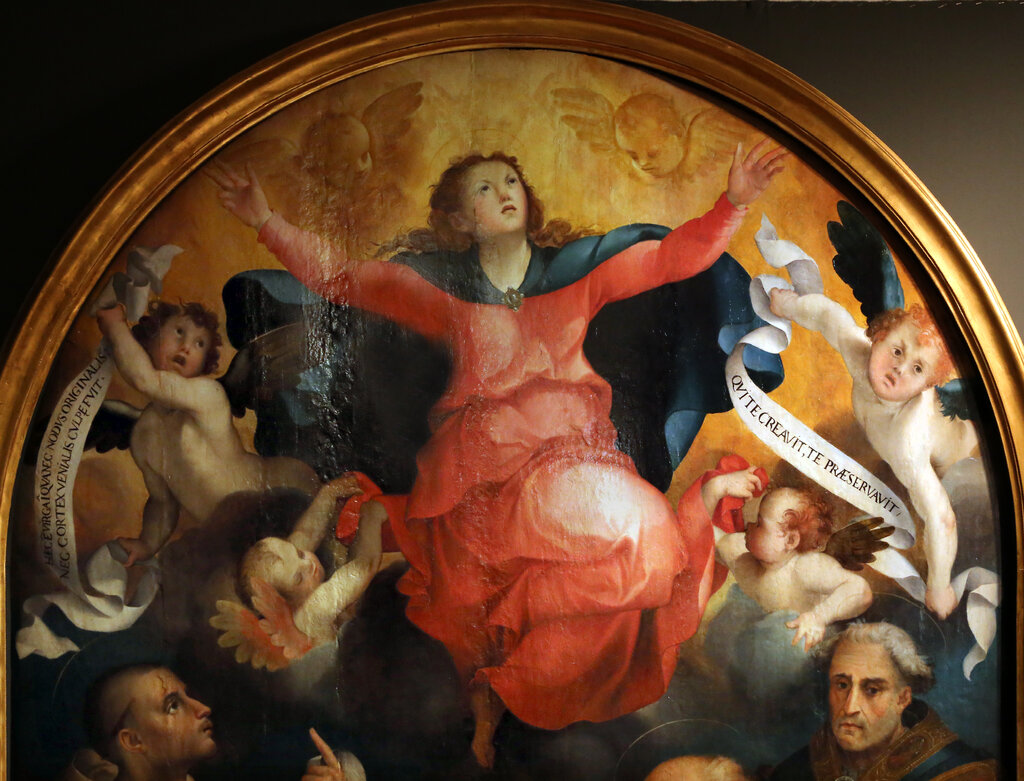
Mannerist art is often described as artificial or stylized. Artists deliberately elongated human figures, creating elegant but unnatural poses. Compositions became crowded and complex, with figures twisting in serpentine shapes. Colors could be jarring and acidic, chosen for emotional effect rather than realism. The calm, stable pyramid compositions of the High Renaissance were replaced with dynamic, swirling, and sometimes chaotic scenes. It was a style that valued virtuosity and invention.
A Style for a Changing World
Mannerism didn't emerge in a vacuum. The 16th century was a time of great upheaval in Europe. The Protestant Reformation, started by Martin Luther in 1517, challenged the authority of the Catholic Church. In 1527, Rome itself was brutally sacked by mutinous troops of the Holy Roman Emperor, a traumatic event that shook the foundations of the Renaissance world.
This climate of uncertainty and anxiety was reflected in the art. The confident, orderly world depicted by High Renaissance artists no longer felt entirely true. Mannerism's tension, emotion, and intellectual complexity captured the spirit of this new, more complicated era. It was a style for a world that was no longer as simple or stable as it once seemed.
Mannerist architecture also played with classical rules. Architects would take familiar elements like columns, pediments, and arches and use them in unexpected, playful, or jarring ways. The goal was to surprise and engage the viewer, not just soothe them with perfect harmony.
Key Figures
Several artists defined the Mannerist style. In Florence, painters like Pontormo and Rosso Fiorentino created intensely emotional and unsettling religious scenes with acidic colors and gaunt figures. Parmigianino, working in Parma, became known for his exquisitely elegant and elongated figures, most famously in his painting Madonna with the Long Neck.
In architecture, Giulio Romano was a key innovator. A former pupil of Raphael, Romano took the classical language he learned from his master and used it with a new sense of freedom and wit. His works often feature rustic elements, strange proportions, and architectural jokes designed to challenge the viewer's expectations.
These artists weren't rejecting the Renaissance; they were building on it. They knew the rules of classical art so well that they could break them with purpose and style. Their work paved the way for the even greater drama and emotion of the Baroque period that would follow.