Pakistan's Socio-Economic Challenges and Solutions
Poverty Reduction Policy
Direct Support and Safety Nets
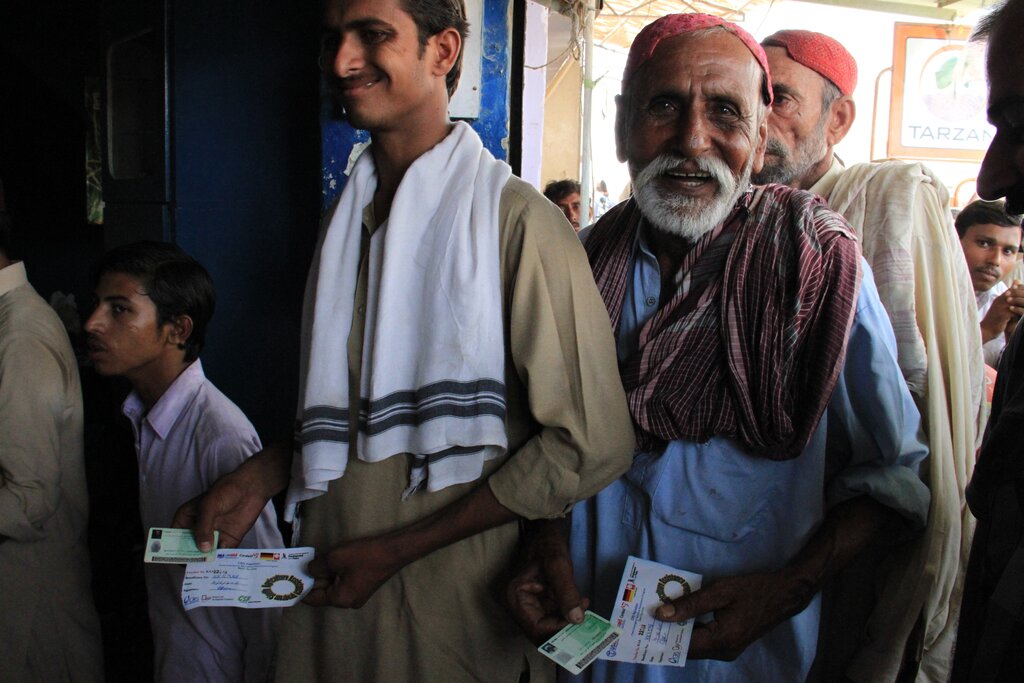
When a household's income falls below a critical level, the most direct way to help is to bridge the gap. This is the core idea behind social safety nets. In Pakistan, these have evolved from simple aid distribution to complex, data-driven systems designed to provide financial stability to the most vulnerable. The primary tool in this toolkit is the cash transfer, which puts money directly into the hands of those who need it most.
Cash transfers generally come in two flavours: unconditional and conditional.
-
Unconditional Cash Transfers (UCTs) provide funds with no strings attached. Beneficiaries can use the money for whatever they deem most urgent, be it food, medicine, or school supplies. The Benazir Income Support Programme (BISP), launched in 2008, is Pakistan's flagship UCT. It provides a regular stipend to millions of low-income female-headed households, empowering women as the primary recipients.
-
Conditional Cash Transfers (CCTs) link payments to specific actions. For example, a family might only receive their stipend if their children maintain a certain level of school attendance or complete routine health check-ups. This model aims to reduce current poverty while also investing in the future human capital of the next generation.
| Transfer Type | Primary Goal | Key Feature | Example Use Case |
|---|---|---|---|
| Unconditional (UCT) | Immediate poverty relief & financial autonomy | No behavioural requirements | A family using funds to repair their home after a flood. |
| Conditional (CCT) | Poverty relief + human capital development | Payments linked to actions (e.g., school) | A family receiving a bonus payment for ensuring their child is vaccinated. |
While cash transfers provide a crucial buffer, they don't necessarily build long-term self-sufficiency. That's where livelihood support programs come in. These initiatives move beyond simply giving cash and focus on providing the tools and skills people need to generate their own income.
Building Sustainable Livelihoods
Livelihood programs are diverse. In rural areas, they often involve distributing agricultural assets like seeds, fertilizer, or livestock. They might also provide training in modern farming techniques to increase crop yields. The goal is to enhance the productivity of a family's primary source of income.
In urban settings, these programs often focus on vocational training and skills development. This could mean teaching someone how to operate industrial machinery, code a website, or manage a small retail business. By equipping individuals with marketable skills, these programs open doors to formal employment or entrepreneurship.
The key difference: cash transfers help families survive, while livelihood programs help them thrive.
Another powerful tool for building financial independence is microfinance . Instead of providing grants, microfinance institutions offer small loans, or "microloans," to individuals who lack access to traditional banking services. These loans enable aspiring entrepreneurs to start or expand small businesses, such as a roadside food stall, a tailoring shop, or a small livestock herd. Over time, access to credit can create a virtuous cycle of investment, profit, and growth, lifting entire families out of poverty.
An Integrated Approach
Recognizing that poverty is a multi-faceted problem, recent policy has shifted towards more integrated models. The , launched in 2019, represents this new way of thinking. It's not a single program but an umbrella initiative that consolidates many different social protection and poverty alleviation efforts.
Under Ehsaas, a family might receive an unconditional cash grant (Kafaalat), an educational stipend for their children (Taaleemi Wazaif), and interest-free loans to start a business (Interest-Free Loan Programme). This layered approach aims to address a household's immediate needs while simultaneously building pathways to long-term economic security.
Measuring the effectiveness of these programs is complex. The government uses various methodologies to track poverty, primarily based on household income or consumption levels. The Cost of Basic Needs (CBN) approach is commonly used to establish a poverty line, which represents the minimum amount of income required to meet basic food and non-food needs.
Now, let's test your understanding of these poverty alleviation strategies.
What is the primary difference between Unconditional Cash Transfers (UCTs) and Conditional Cash Transfers (CCTs) in Pakistan's social safety net?
A programme that provides small loans to individuals to help them start a small business, like a tailoring shop, falls under which category?
These policies represent a continuous effort to create a more equitable society. While challenges in implementation and scale remain, the strategic shift towards data-driven, multi-pronged approaches offers a robust framework for tackling poverty in Pakistan.