Pakistan Foreign Policy Unpacked
Foreign Policy Genesis
Forged in Crisis
In August 1947, Pakistan emerged on the world map not with a clean slate, but with a complex inheritance. Its foreign policy was born from the very ideas that created the nation and the immediate, life-or-death challenges it faced. The ideological foundation was the Two-Nation Theory, the principle that Muslims of the subcontinent were a separate nation deserving of their own state. This wasn't just a domestic political argument; it became a core tenet of foreign policy, creating a natural inclination to seek solidarity with other Muslim-majority countries.
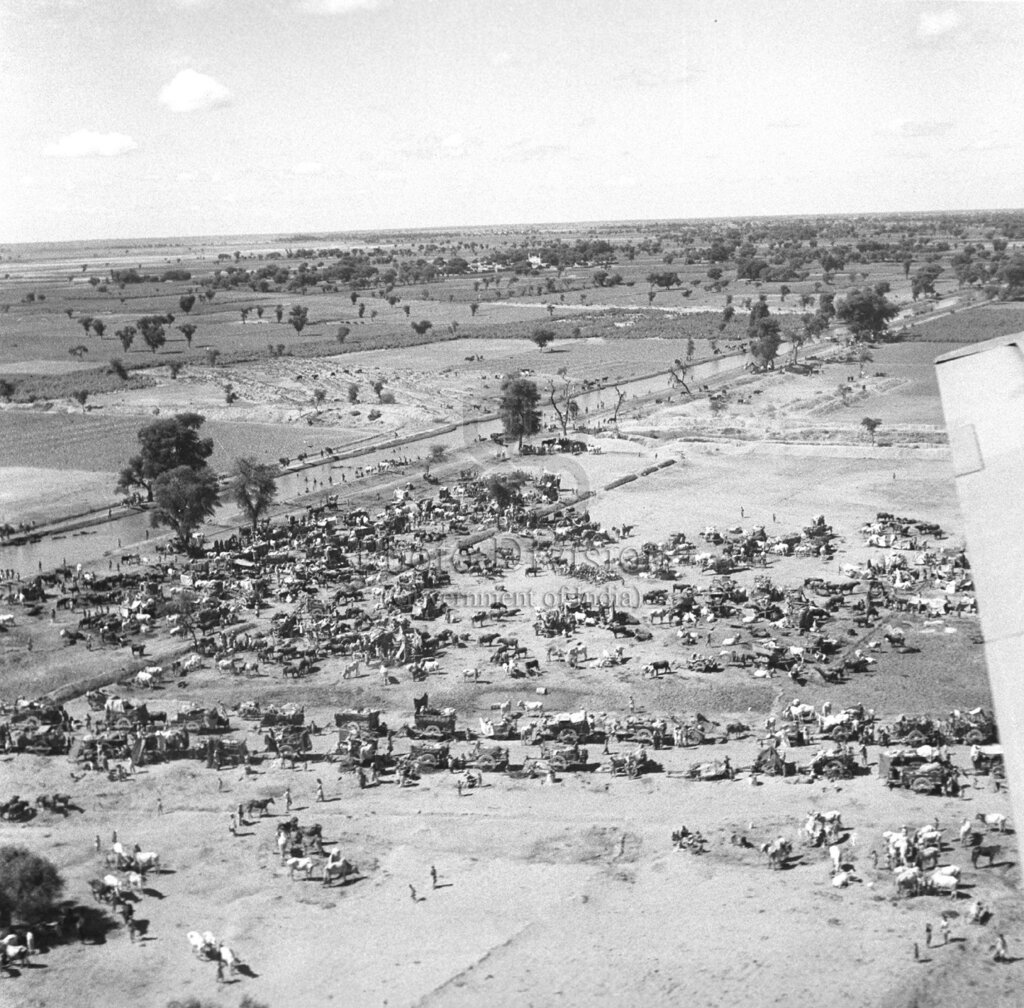
However, ideology was quickly met with harsh reality. The new country was geographically split into two wings, separated by over a thousand miles of hostile territory. The partition of British India was a violent, chaotic affair, leaving a legacy of bitterness and mistrust with its much larger neighbour, India. This defined the primary objective of Pakistan's early foreign policy: survival.
Security and the Kashmir Question
The quest for security was paramount. Pakistan received a disproportionately small share of the British Indian Army's assets, leaving it vulnerable. The borders were new and porous. From day one, the leadership in Karachi was consumed with the fear of being reabsorbed by India. This existential threat drove the urgent search for allies and international support.
This climate of fear was immediately crystallized by the in late 1947. The conflict over the princely state of Jammu and Kashmir became the single most dominant issue in Pakistan's foreign policy. It was seen not just as a territorial dispute but as a direct challenge to the legitimacy of the Two-Nation Theory itself. For Pakistan, a Muslim-majority state contiguous to its border choosing to join India was an unacceptable outcome. From that point on, the Kashmir issue would influence nearly every major foreign policy decision, from alliance-building to defense spending.
For early Pakistani leaders, foreign policy was not an abstract exercise. It was a desperate search for security guarantees against a perceived existential threat.
The Search for Allies
Feeling isolated and vulnerable, Pakistan actively sought alliances to counterbalance India's military and demographic superiority. The initial hope was to form a powerful bloc with fellow Muslim nations, a concept known as Pan-Islamism. While this found cultural resonance, it did not translate into meaningful security guarantees, as most Muslim countries were themselves newly independent and facing their own challenges.
This led Pakistan to look towards the West, particularly the United States and the United Kingdom. During the Cold War, the Western powers were focused on containing the Soviet Union. Pakistan, due to its strategic location bordering Iran, Afghanistan, and China, became an attractive partner. This alignment was driven more by pragmatism than ideology. Pakistan needed security and economic aid; the West needed an ally in a critical region. This mutual need led to Pakistan joining security pacts like the Southeast Asia Treaty Organization (SEATO) and the .
Alongside security, economic development was a critical driver of foreign policy. The new nation had a primarily agrarian economy and lacked industrial infrastructure. Foreign policy became a tool to secure financial aid, technical assistance, and foreign investment to build the country. These early relationships, forged out of a need for security and economic survival, would set the trajectory of Pakistan's international relations for decades.
What was the core ideological principle that formed the foundation of Pakistan's early foreign policy?
The conflict over which princely state immediately became the most dominant issue shaping Pakistan's foreign policy after 1947?
These foundational pillars—an Islamic ideological identity, an overwhelming security imperative, the centrality of the Kashmir conflict, and the need for economic development—were not separate tracks. They were deeply intertwined, shaping a foreign policy that was pragmatic, security-focused, and constantly navigating the pressures of a complex geopolitical landscape.