Pain Reprocessing Therapy Explained
Understanding Chronic Pain
The Lingering Signal
Pain is your body's alarm system. When you sprain your ankle or touch a hot stove, nerves send a rapid signal to your brain. This is acute pain. It’s a helpful, short-term warning that tells you to stop what you're doing to prevent further harm. The pain typically fades as the injury heals.
Chronic pain is different. It’s an alarm that keeps ringing long after the danger has passed. Officially, it's defined as pain that lasts for more than three months. It can persist even when the original injury has fully healed. Unlike acute pain, it serves no useful purpose. Instead, it can disrupt sleep, work, relationships, and mental well-being, becoming a condition in its own right.
Acute pain is a symptom of tissue damage. Chronic pain is a disease of the nervous system.
This isn't a rare problem. Millions of people live with chronic pain, making it one of the most common reasons for seeking medical care. Its impact goes beyond the individual, leading to significant societal costs from lost productivity and healthcare expenses.
How Pain Travels
To understand chronic pain, we first need to look at how any pain signal works. When you get hurt, specialized nerve endings called nociceptors detect tissue damage. They fire off an electrical signal that travels along a nerve pathway to your spinal cord. From there, the signal is relayed up to different parts of your brain.
The brain is the master interpreter. It receives the raw signal and decides what it means. It considers the context, your past experiences, and your emotional state before generating the sensation we call pain. This entire journey, from injury to perception, happens in an instant.
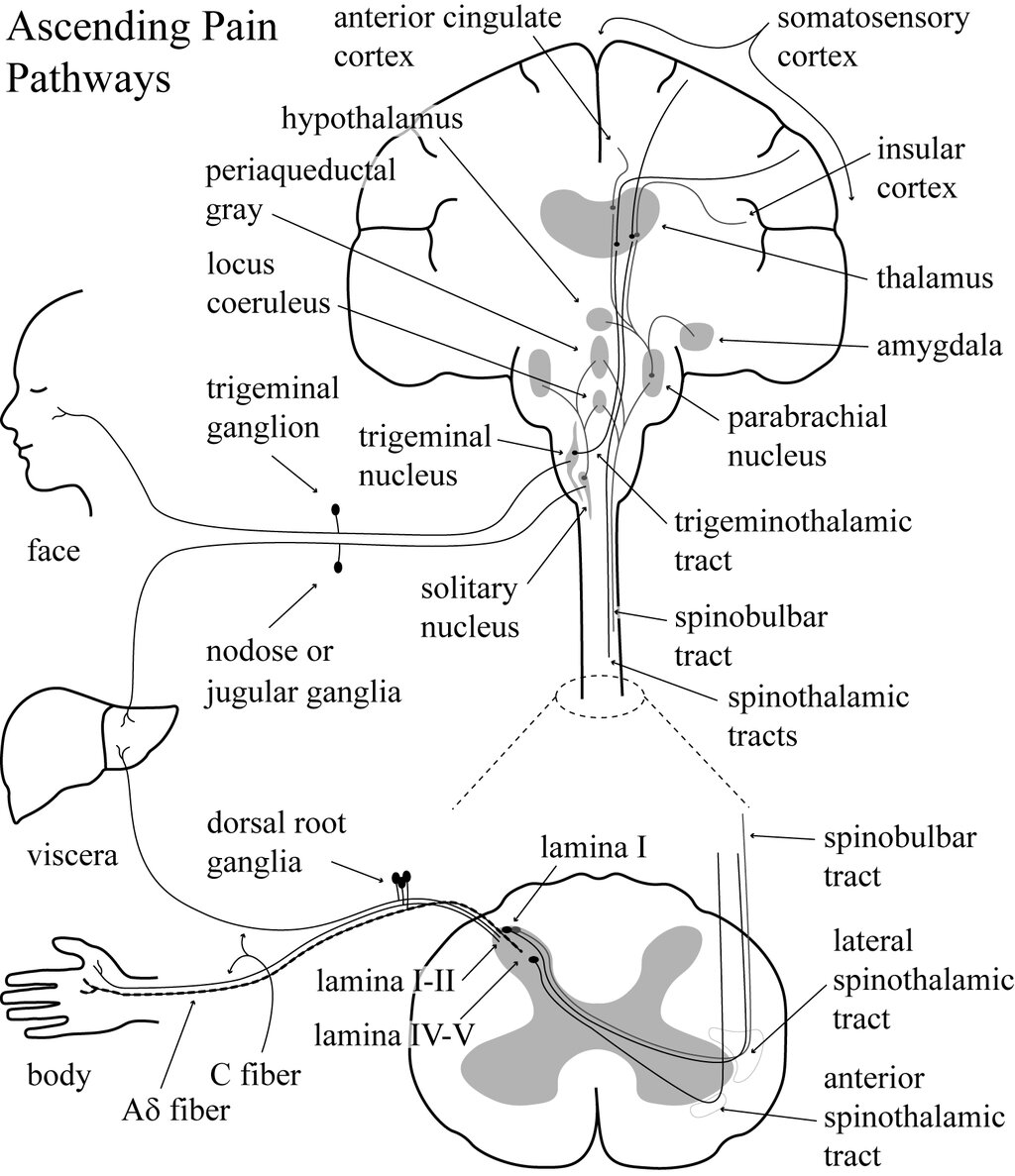
In chronic pain, this communication system goes haywire. The nervous system can become hypersensitive, a state known as central sensitization. The nerves in the spinal cord and brain get stuck in a state of high alert. They start to amplify pain signals, making them feel more intense. Sometimes, they even fire off pain signals for no reason at all, in response to a light touch or a change in temperature.
sensitization
noun
The process by which a repeated stimulus produces a progressively stronger response. In chronic pain, the nervous system becomes sensitized to pain signals.
This means the problem is no longer just in the original body part that was injured. The issue now lies in how the central nervous system processes information. The alarm system itself has become faulty.
It's Not All in Your Head, But Your Brain is Involved
Because the brain is the ultimate decider of pain, psychological factors play a huge role. Stress, anxiety, depression, and fear can all turn up the volume on pain signals. Think about it: when you're already stressed, even small annoyances feel bigger. The same is true for pain.
This can create a vicious cycle. Pain causes stress and fear of movement. That fear leads to avoiding activities you once enjoyed. Inactivity makes your body weaker and stiffer, which can cause even more pain. This cycle can be incredibly difficult to break.
The link between emotion and pain is hardwired into our brains. The areas of the brain that process emotions, like the amygdala and anterior cingulate cortex, are the same areas that process the unpleasantness of pain. They are completely intertwined.
Pain is a complex combination of psychological, social, and biological factors.
This is why managing chronic pain effectively means addressing the whole person. It requires strategies for both the physical sensations and the emotional distress that comes with them. Recognizing that the pain is real, but the original injury may be gone, is a crucial first step.
What is the primary characteristic that distinguishes chronic pain from acute pain?
The process where the central nervous system becomes hypersensitive and starts to amplify pain signals is known as:
Chronic pain is a complex condition, but understanding its mechanisms is the foundation for finding effective ways to manage it.