Pacemakers and Heart Health Explained
Heart's Electrical System
The Heart's Natural Pacemaker
Your heart has its own electrical system that keeps it beating in a steady, coordinated rhythm. This system is led by a tiny cluster of specialized cells called the sinoatrial (SA) node, located in the upper right chamber, or atrium. Think of the SA node as the heart's natural pacemaker. It generates electrical impulses at a regular interval, setting the pace for your entire heartbeat.
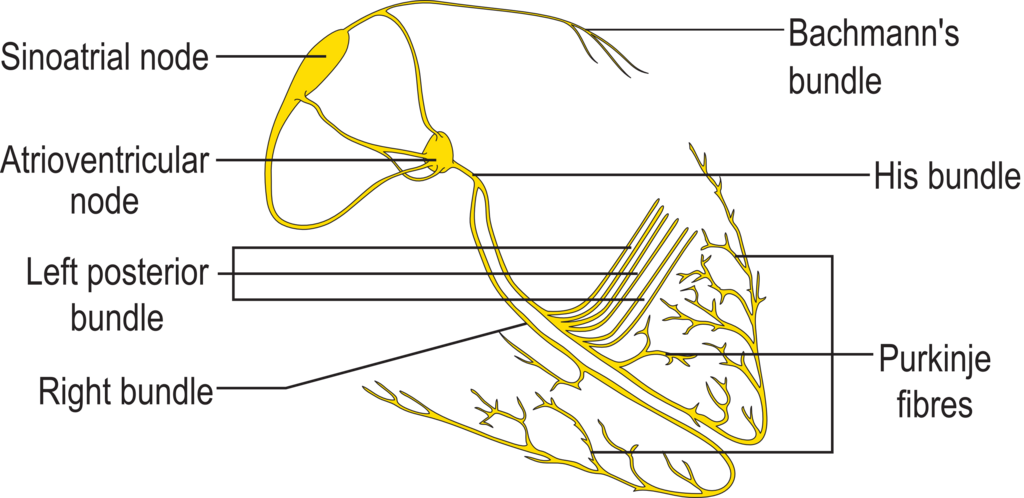
Each impulse from the SA node spreads like a wave across the walls of the atria. This electrical signal causes the atrial muscles to contract. This contraction pushes blood from the atria down into the heart's lower chambers, the ventricles.
The SA node initiates the heartbeat, causing the atria to contract and fill the ventricles with blood.
The Gatekeeper
Before the electrical signal can reach the ventricles, it must pass through another cluster of cells called the atrioventricular (AV) node. The AV node sits between the atria and the ventricles, acting as a crucial gatekeeper.
The AV node slightly delays the impulse before passing it on. This delay is brief but vital. It gives the atria enough time to finish contracting and completely fill the ventricles with blood. Without this pause, the atria and ventricles might contract too close together, making the heart's pumping action less efficient.
Sinoatrial node
noun
A small body of specialized muscle tissue in the wall of the right atrium of the heart that acts as a pacemaker by producing a contractile signal at regular intervals.
The Conduction Highway
After the pause at the AV node, the electrical signal travels down a high-speed pathway. This highway system ensures the powerful ventricles contract in a coordinated, bottom-up motion to effectively pump blood out to the lungs and the rest of the body.
The signal first travels down the Bundle of His, a path located in the wall separating the ventricles. This bundle then divides into right and left bundle branches, which extend down each ventricle. Finally, the signal spreads through a network of tiny fibers called Purkinje fibers, which are embedded in the ventricle walls. This rapid transmission triggers a strong, unified contraction of both ventricles.
This entire sequence, from the SA node's impulse to the ventricular contraction, makes up a single heartbeat. A typical resting heart rate is between 60 and 100 beats per minute. This rhythm is constantly adjusted by your nervous system to meet your body's needs, speeding up during exercise and slowing down during rest. The coordinated function of the SA node, AV node, and the conduction pathways ensures your heart pumps blood efficiently with every beat.
Ready to test your knowledge?
What is the primary role of the sinoatrial (SA) node?
The slight delay of the electrical impulse at the atrioventricular (AV) node is vital because it allows the ventricles time to fill completely with blood.
Understanding this intricate electrical dance is the first step to understanding how heart rhythm is maintained.